What MOQ Actually Means
MOQ is the smallest quantity a supplier is willing to produce under a defined set of specifications. It is not one permanent number that applies to every hoodie, T-shirt or buyer.
A supplier may accept a smaller order when the project uses an available garment, a standard colour, an existing fabric and a simple logo application. The same supplier may need a larger commitment when the project requires a new pattern, custom fabric, special dyeing, several colourways, private labels or individual retail packaging.
Buyers should also ask where the minimum applies. It may be calculated per order, style, fabric, colour, artwork or size. A total quantity that sounds workable can become difficult after it is divided across several designs and colours.
The useful question is not “What is your hoodie MOQ?” It is “What is the MOQ for this specification, and how may I divide it by colour, design and size?”
What Changes the Minimum?
Material purchasing, production setup, decoration efficiency, customisation depth and the number of variants usually have the largest effect on a minimum order.
Material availability is often the first constraint. Stock fabric or ready-made blank garments can reduce dedicated purchasing. A custom composition, exclusive colour, uncommon weight or special finish may require a mill to prepare material specifically for the project, so the garment factory can be constrained by an upstream supplier.
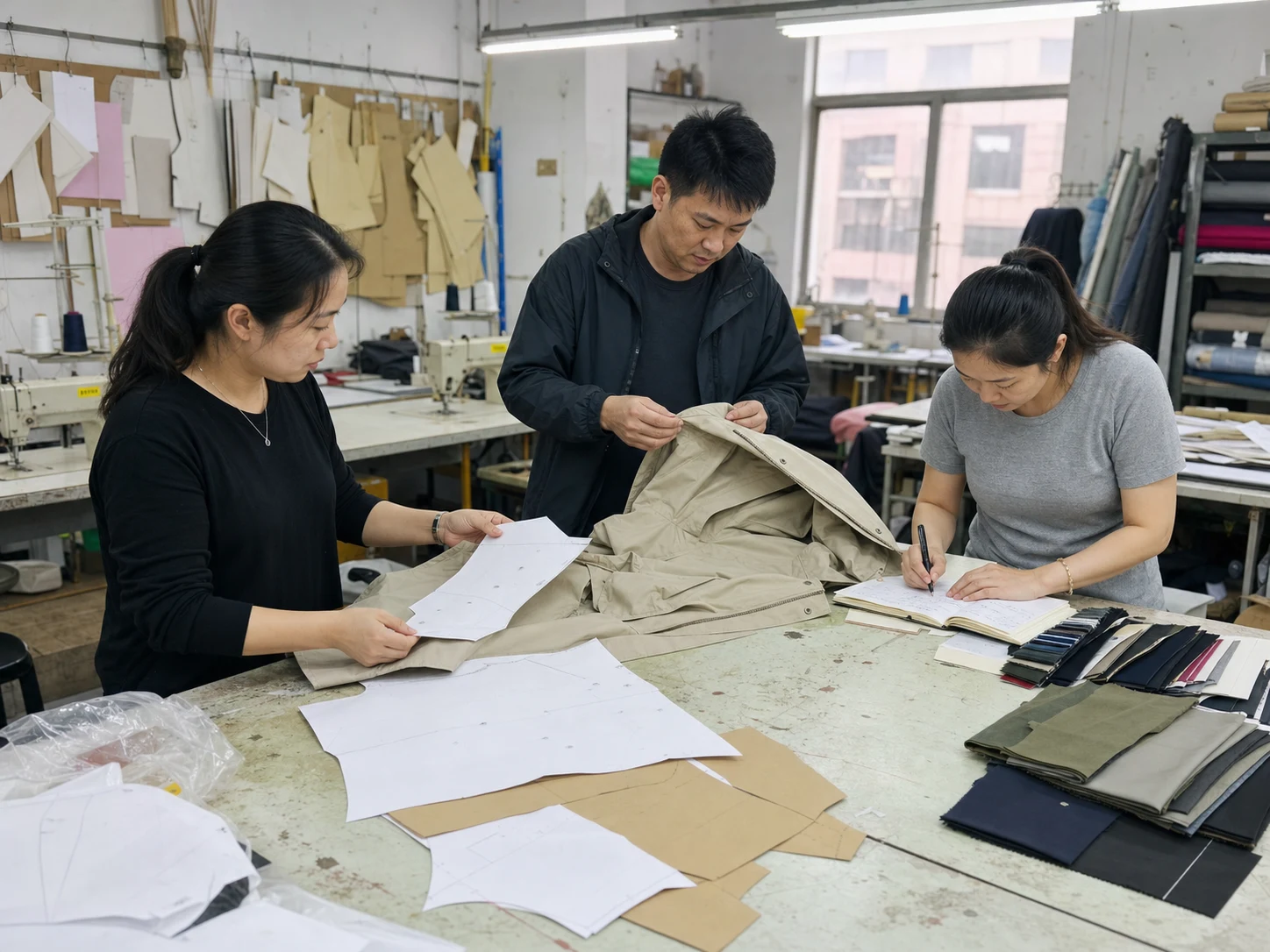
Setup matters as well. Pattern development, grading, cutting preparation, print screens, embroidery programming, colour matching, label setup and quality records all require work before bulk production begins. When that work is spread across a very small run, the unit cost can rise or the project can stop being commercially workable.
Every additional variant creates another production split. Different colours, prints, trims, wash effects or packaging can turn one garment body into several separate jobs. A clear specification lets the supplier identify the real constraint instead of giving a broad number that changes later.
Practical Low-MOQ Options
The most practical routes are decorated blank garments, stock-fabric cut-and-sew production, simplified customisation and consolidated variants. Each route trades some product control for flexibility.
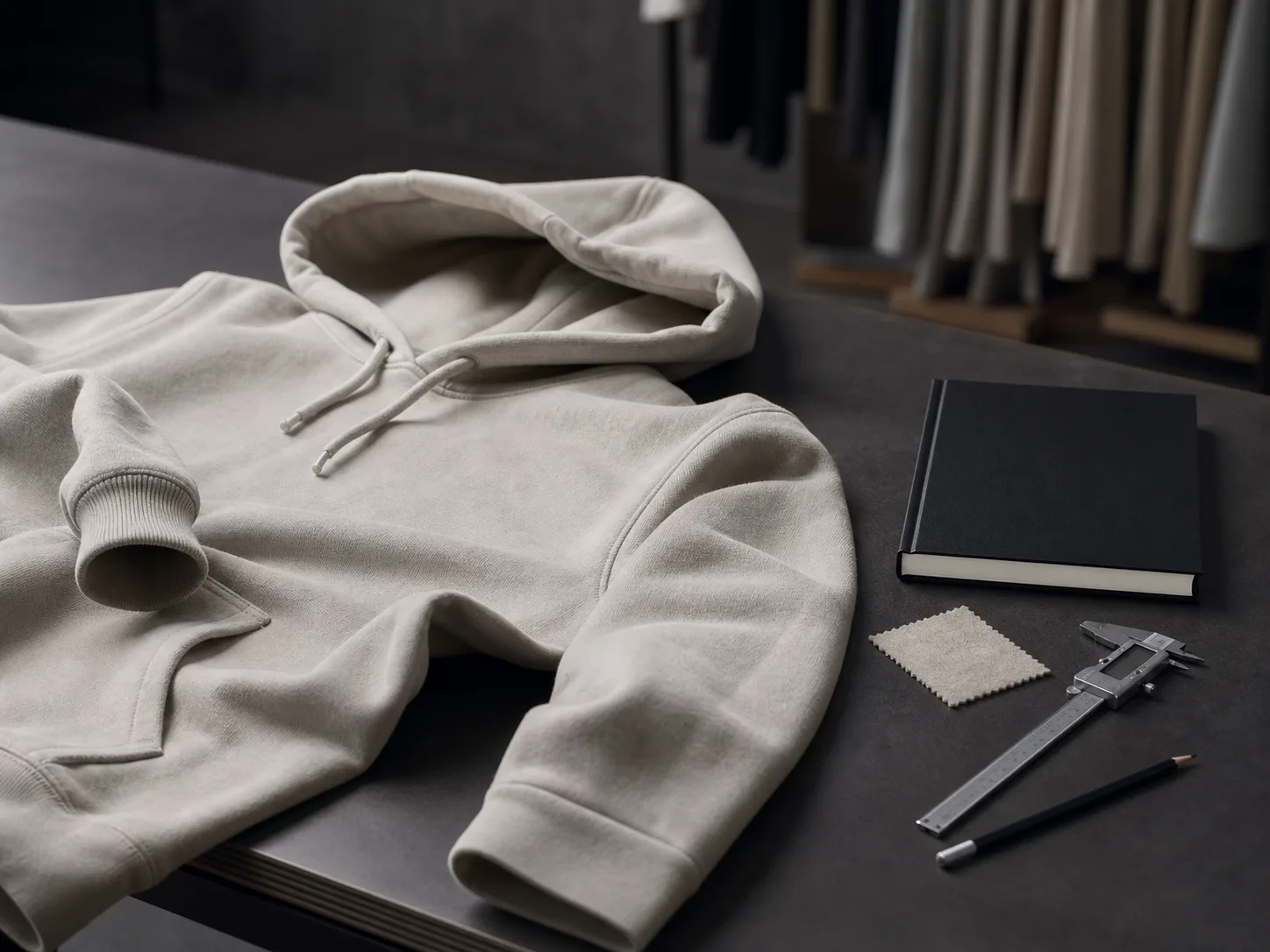
Ready-made blanks can work for testing a logo, an event product or an early merchandise concept because the garment body already exists. The project mainly concerns printing, embroidery and packaging. The trade-off is less control over fit, fabric, construction and base colours.
Stock-fabric cut-and-sew production offers more control over shape while avoiding some material-development requirements. Buyers may adjust the pattern, measurements, pockets, rib, stitching and branding within the supplier’s available material range. Availability should still be reconfirmed before bulk production.
- Start with one garment body and one main fabric.
- Limit the first run to fewer colours and decoration placements.
- Use shared trims and packaging where the brand system allows it.
- Keep essential brand features; postpone optional complexity.
Compare the Complete Offer
Do not choose a supplier on the headline quantity alone. Compare the product, complete commercial scope, repeatability and operating risk.
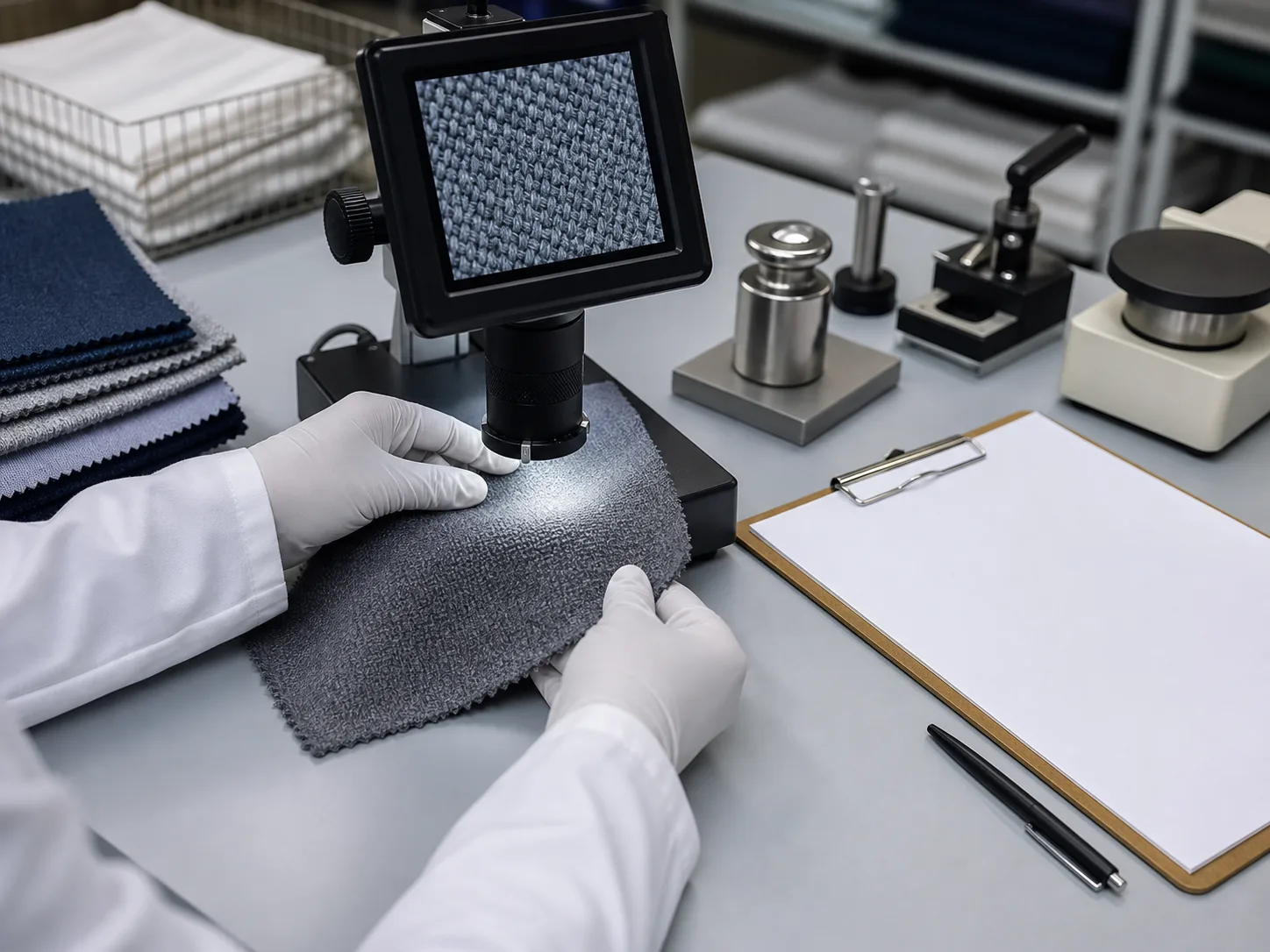
A low minimum has little value if the garment does not meet the brand standard. Compare fabric composition and weight, colour consistency, measurements, sewing details, decoration limits, label options and packing. Then request a written quotation that separates sampling, garment production, decoration, labels, packaging, testing if required, transport and setup charges.
Repeatability matters for a growing brand. Ask whether the same blank garment, fabric, trim and decoration process are likely to remain available, and what approval is needed before any substitution.
| Garment route | Main advantage | Main trade-off |
|---|---|---|
| Decorated blanks | Fastest way to test a design or logo | Limited control over fit, fabric and base colours |
| Stock-fabric cut and sew | More control over shape and construction | Material choice depends on current availability |
| Simplified custom run | Keeps the core brand idea with fewer production splits | Optional colours and details may need to wait |
| Fully custom development | Highest control over the finished product | More setup, approvals and material commitment |
Request an Accurate Breakdown
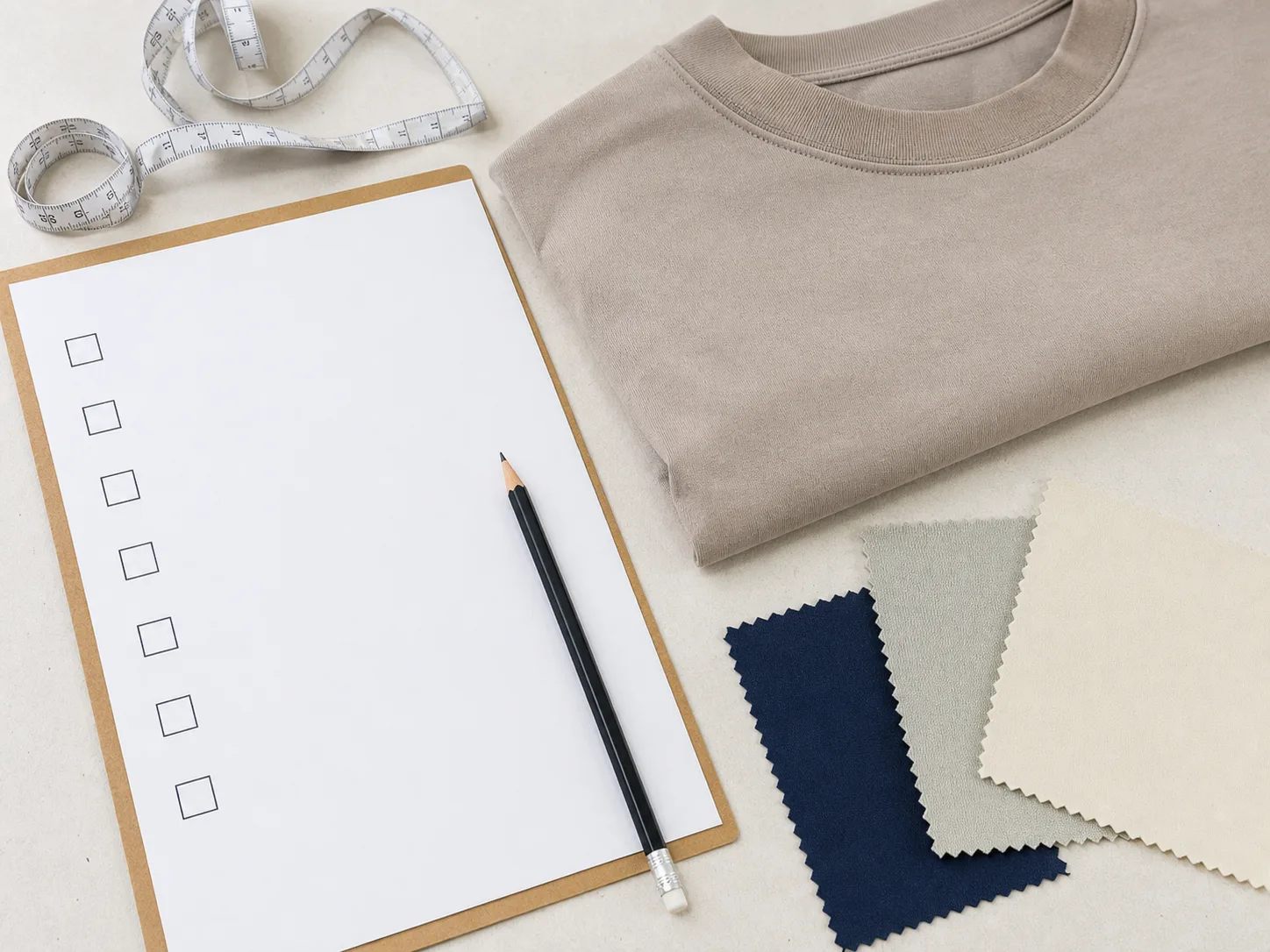
Send every shortlisted supplier the same concise product brief, then ask for both the standard MOQ and the lowest workable alternative. Reference images can show direction, but they should not replace written specifications and measurements.
Ask the supplier to state the minimum by style, colour, artwork and size, together with any required total quantity. Request alternatives such as stock fabric, available blanks, shared fabric across styles, fewer colours or a simpler decoration method. This turns a yes-or-no MOQ question into a practical product discussion.
Before comparing quotations, check that each supplier priced the same scope. One quote may include labels and packing while another covers only an undecorated garment. Record assumptions, exclusions, material status, sample charges, payment stages and the point at which the order becomes non-cancellable.
- Garment type, reference image or technical file
- Target fit, fabric direction and approximate weight
- Colours, size range and quantity split
- Artwork, decoration locations, labels and packaging
- Destination and desired delivery window
- Items that are confirmed and items that remain flexible
Sample Before Bulk Production
Approve a representative sample and a written production specification before bulk production, even when the order is small. A small batch is not automatically low risk: fit errors, artwork placement, fabric performance, colour differences, shrinkage or packing mistakes can still affect the entire run.
Confirm what type of sample is being supplied. A development sample may test fit and construction with substitute materials. A pre-production sample should represent the intended bulk materials, colours, artwork, labels and workmanship more closely. Record every known difference and how the final version will be approved.
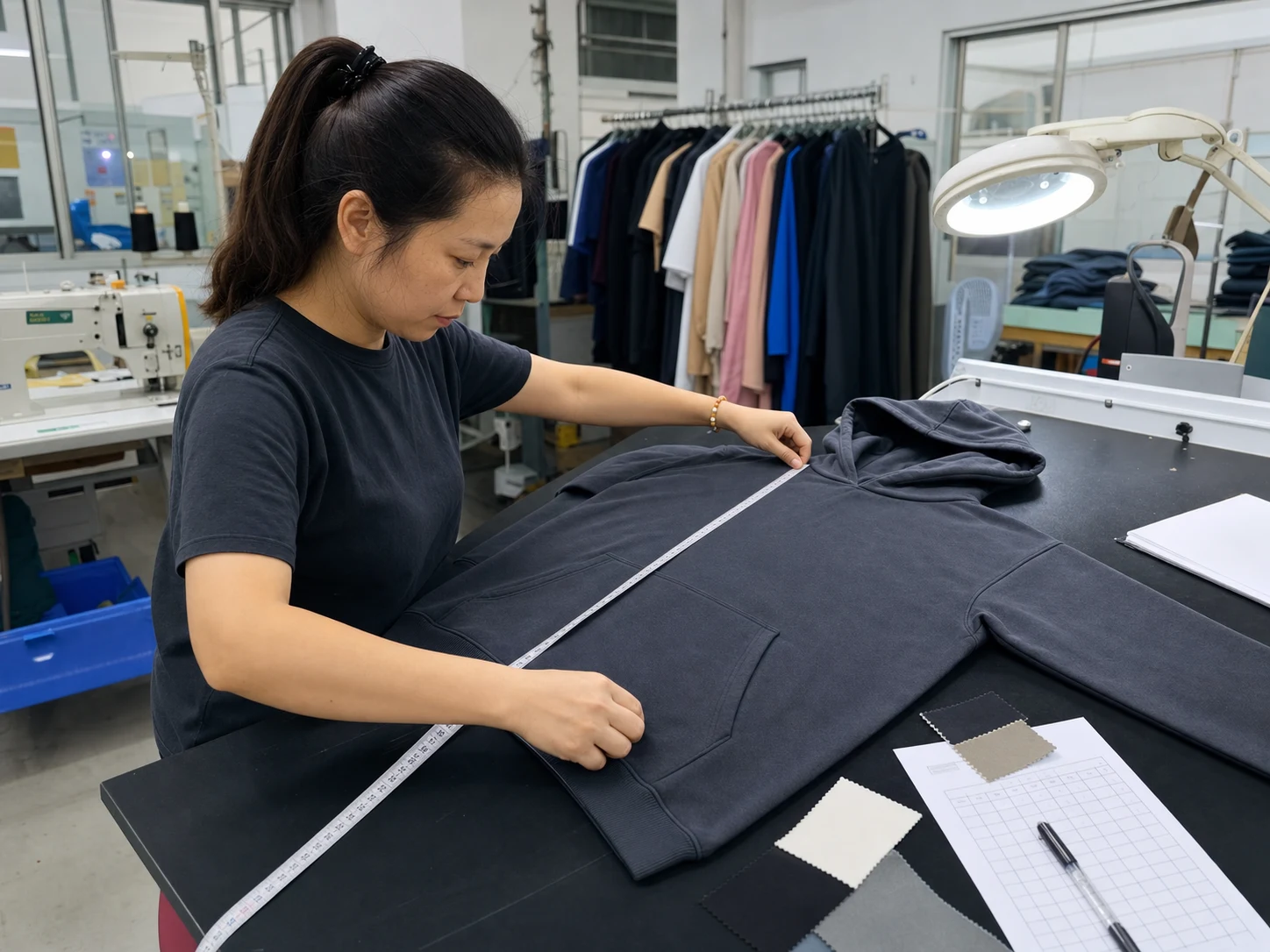
The production specification should keep measurements and tolerances, material details, colour references, artwork dimensions and placement, stitching notes, labels, packing and inspection expectations together. Both sides should work from the same approved version.
The Right First Run
Choose a production route that matches the evidence of demand, the product difference buyers need, the cash exposed and the brand’s ability to manage inventory.
For an untested concept, flexibility can matter more than the lowest possible unit price. A blank-garment or stock-fabric route can help test design appeal, sizing and customer response while limiting inventory exposure. When demand becomes more predictable, the business can decide whether custom fit, exclusive fabric, custom dyeing or specialised trims create enough value to justify a larger commitment.
The best MOQ is therefore not necessarily the smallest quantity offered. It is the smallest commercially workable quantity that protects product quality, cash flow and the customer experience.
- Does the product meet the standard customers expect?
- Can the business sell or use the quantity within a realistic period?
- Is the total landed commitment manageable if sales are slower than planned?
- Can the supplier reproduce the approved product consistently?
Frequently Asked Questions
Is MOQ calculated per size?
Not always. Many suppliers calculate it mainly by style, fabric, colour or artwork and allow the total to be divided among sizes. Ask for the permitted size ratio and any minimum per size in writing.
Can a brand negotiate a lower MOQ?
Sometimes, when there is a workable alternative. The result may involve a higher unit cost, stock materials, available blanks, fewer colours, shared components or simpler decoration. Document every compromise so the approved scope remains clear.
Does ordering a sample mean the same product can be made at a low MOQ?
No. Sample production and bulk production use different material, setup and scheduling conditions. Confirm the bulk minimum, material availability and commercial terms separately.
Should a new brand use blanks or fully custom manufacturing?
Use the simplest route that can still deliver the product promise. Blanks can support faster validation and lower inventory exposure. Fully custom production gives more control over fit, fabric, construction and branding when that control is essential.