Raised Screen Print
Puff Printing
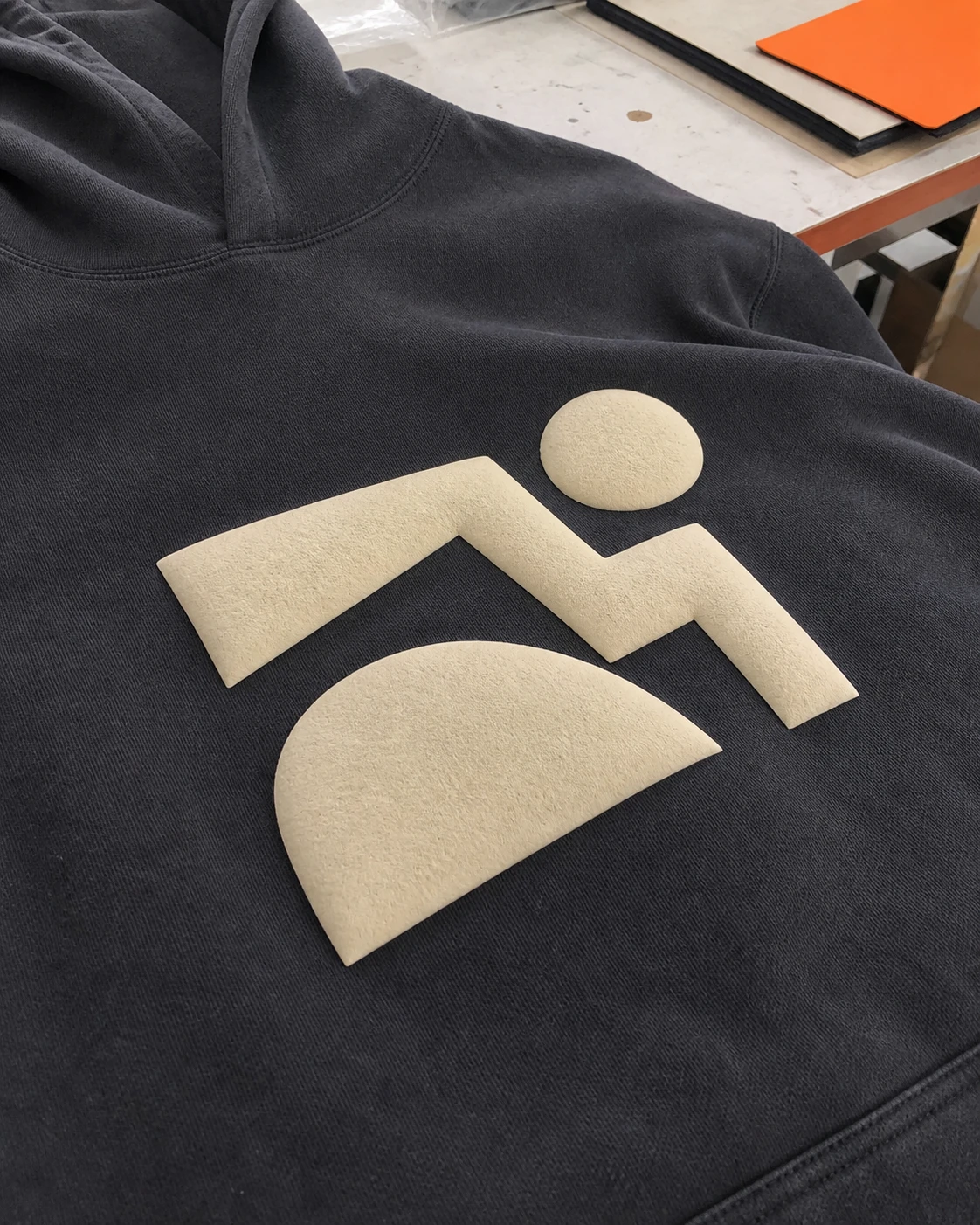
Puff ink expands in the curing oven. The result can be soft and raised, but the artwork, fabric and heat setting must be tested together.
Heat-Activated Expansion
When Flat Ink Rises
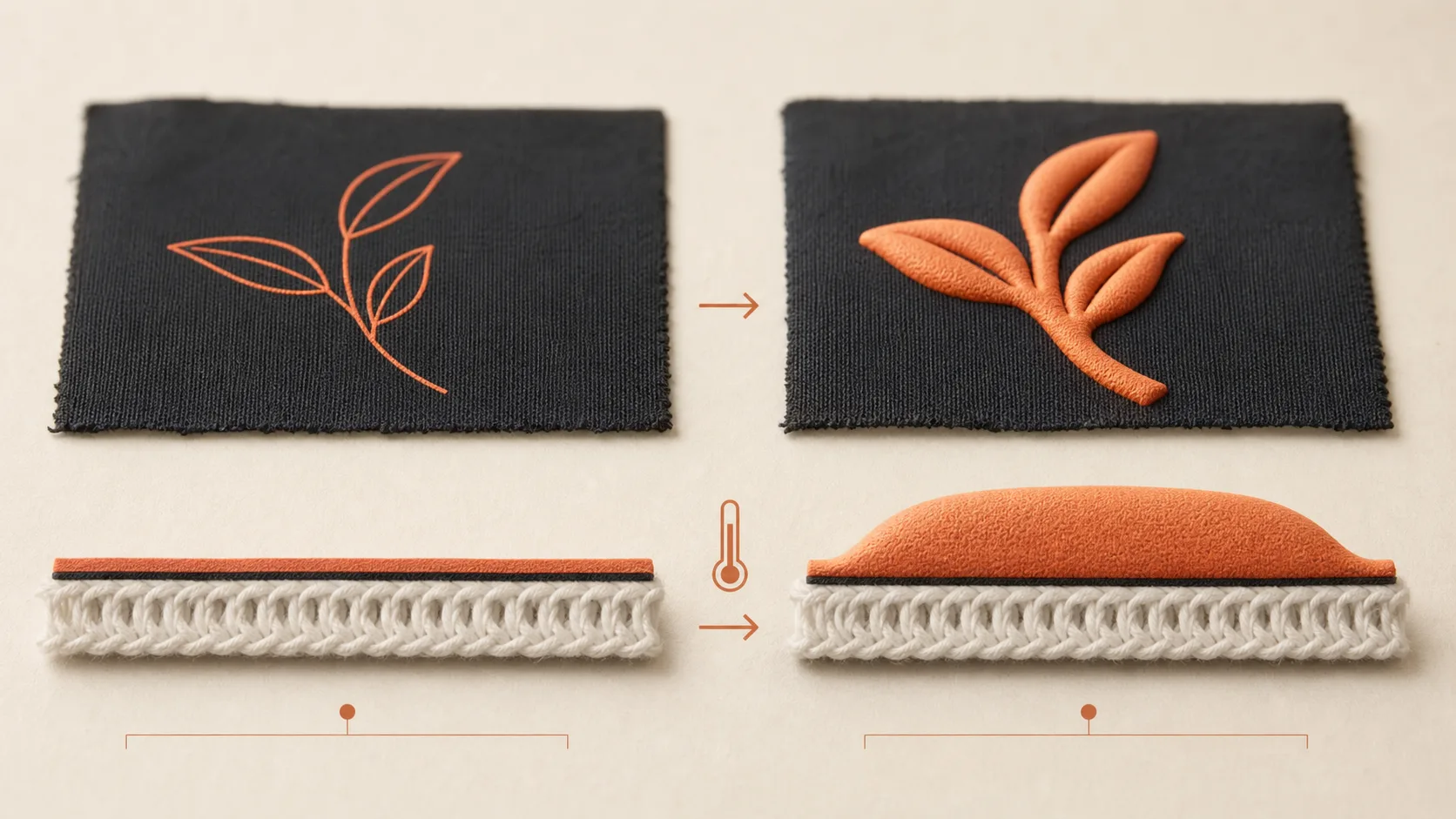
A heat-activated ink system expands during curing.
The required heat window belongs to the approved ink system, not to puff printing as one universal recipe.
Before Heat
The printed layer is still flat.
Heat Window
The approved ink reaches its product-specific cure and expansion range.
Raised Surface
The cooled layer holds a raised surface that must be checked against the sample.
- Thermally expandable microspheres contain a blowing component inside a polymer shell and expand when heated.
- Ready-to-use water-based puff pastes and plastisol puff bases or additives all exist.
Artwork Gate
Art That Can Expand
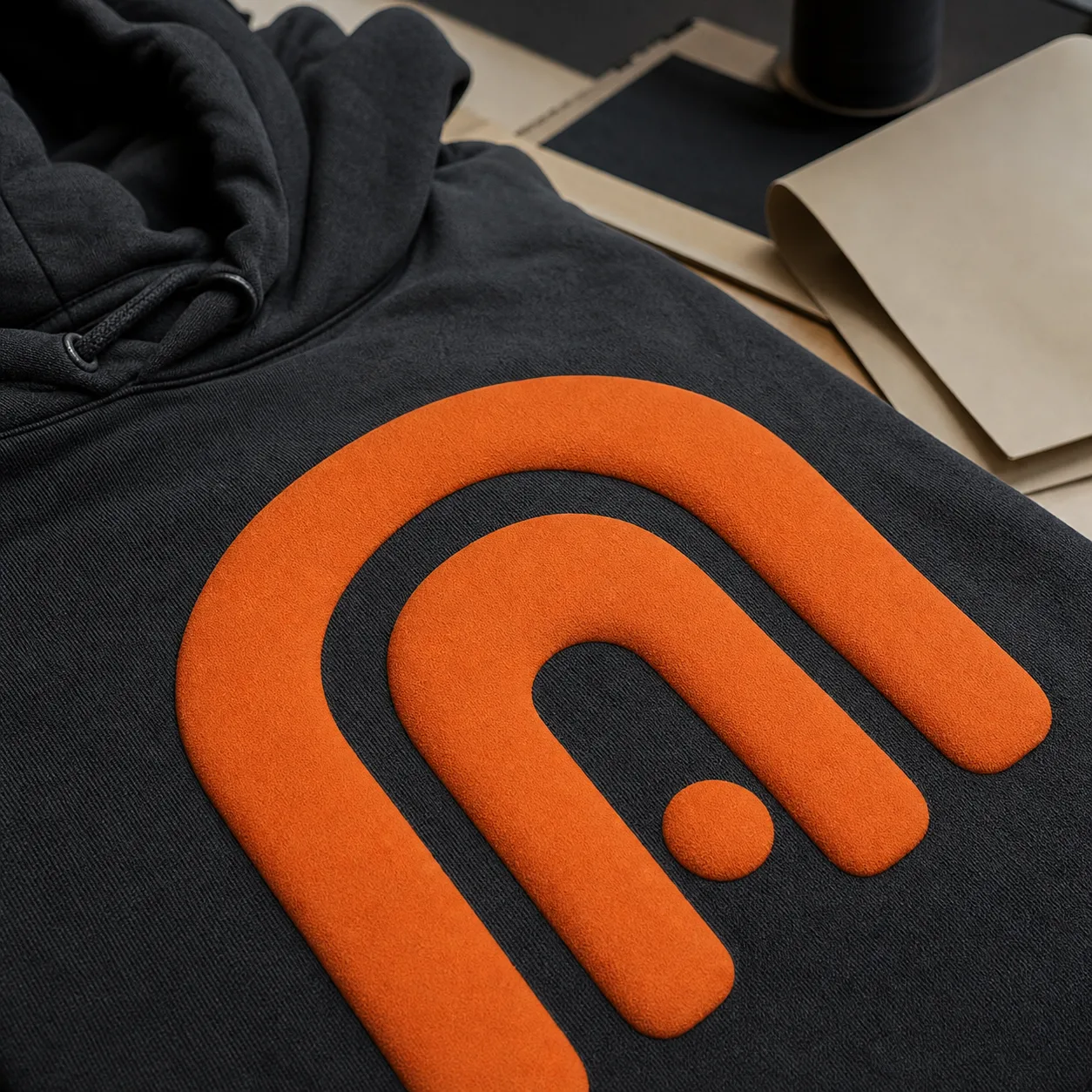
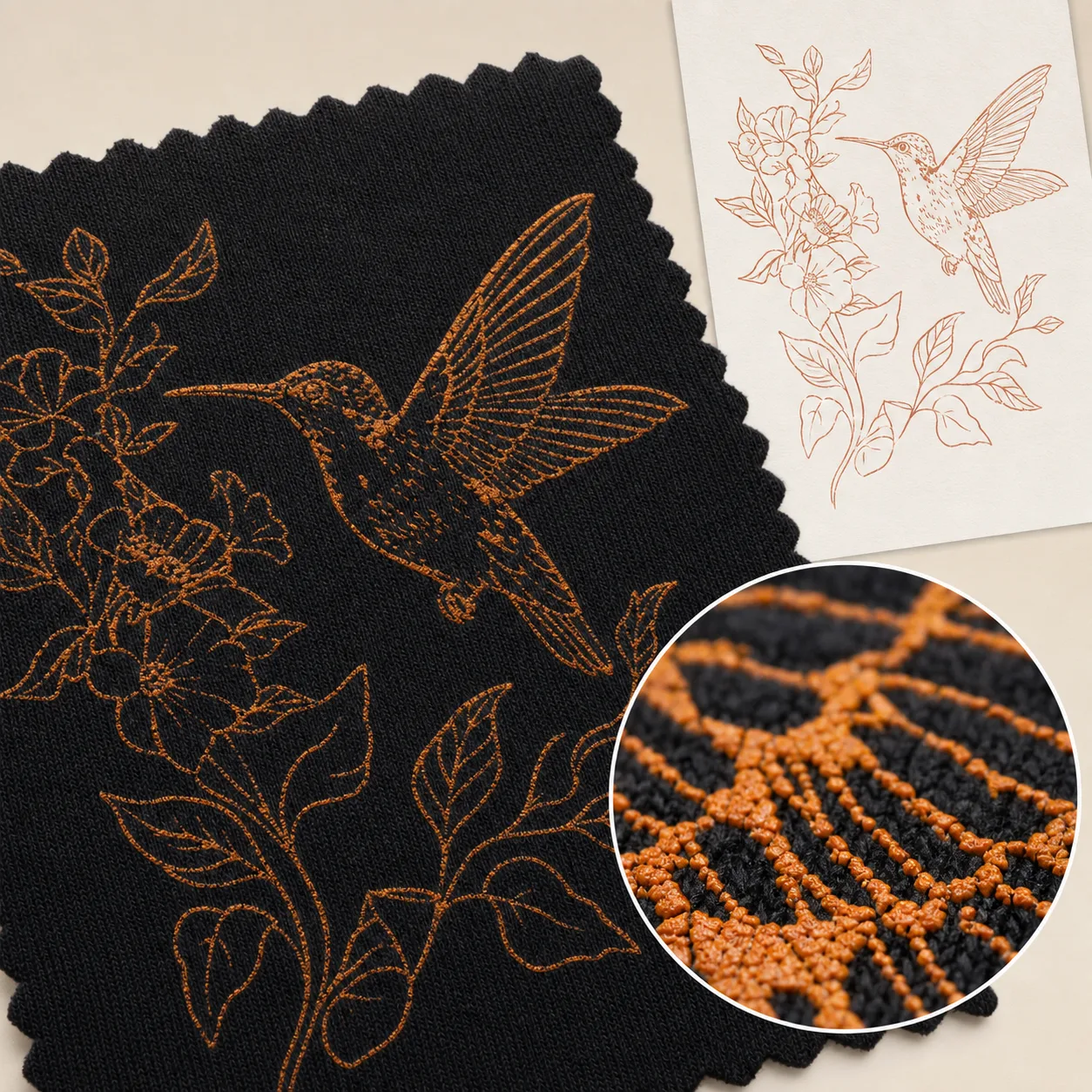
Puff can expand beyond the original flat printed edge.
The narrowest line, smallest counter and tightest open space should be tested before making the production screen.
Works Well
Bold lettering, simple shapes, clear negative space and selected raised accents.
Usually Needs Revision
Hairlines, small reversed text, tight gaps and large solids on lightweight fabric.
- Ink deposit, multiple passes and stencil build change the raised effect.
- Large puff areas on lightweight fabric can cause puckering.
- Supplier artwork guidance gives puff larger show-through requirements than other screen printed formulas and warns that open areas can close.
- Puff ink can expand outward as well as upward, so fine or crowded details may be lost unless tested.
Surface Direction
Choose the Surface
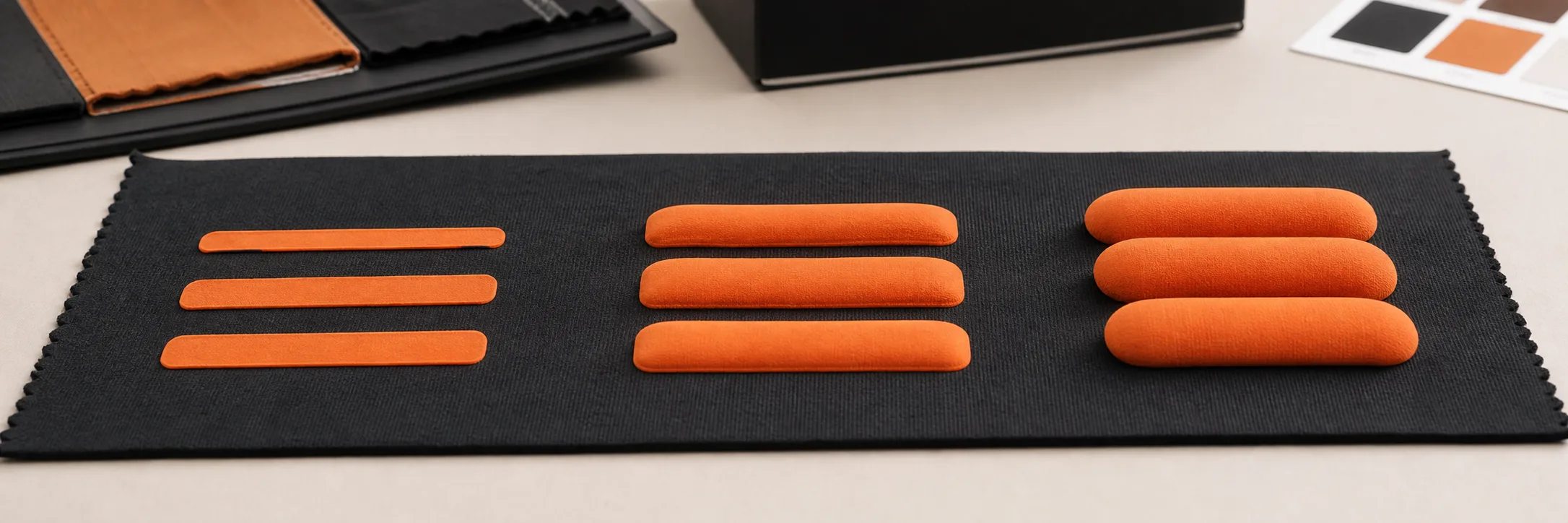
These are visual directions, not fixed millimetre specifications.
The approved strike-off sets the production reference.
Low Rise
A quieter raised accent with less surface change.
Medium Rise
A clearly visible three-dimensional surface.
Full Rise
A stronger effect that needs more room in the artwork and more fabric testing.
- Multiple print passes, flash curing and stencil build can change the puff effect.
- Continued heating beyond a microsphere system's expansion peak can lead to loss of expansion.
Fabric First
Start With the Fabric
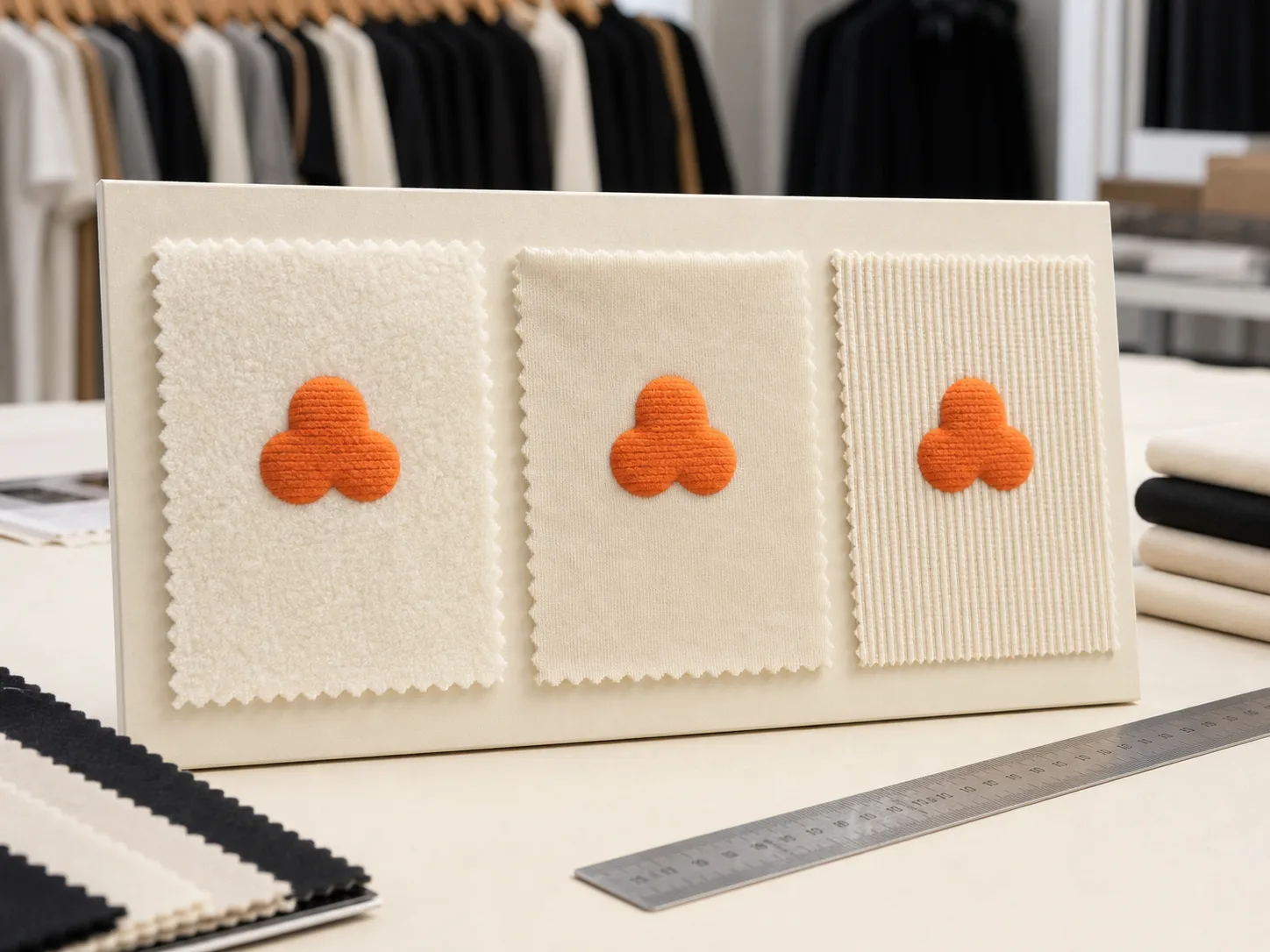
Cotton fleece and medium-weight jersey are practical first samples for bold artwork.
Polyester, stretch, brushed and finished surfaces require the exact production material.
Good First Samples
Cotton fleece hoodies, cotton-rich sweatshirts and medium-weight jersey T-shirts.
Test the Exact Material
Blends, brushed fabric, stretch jersey, polyester and dark performance fabric.
High-Risk Combinations
Lightweight fabric with large solids, heat-sensitive finishes and print across thick seams.
- Commercial puff systems are specified for cotton, blends, polyester or other synthetic fabrics, but their ranges differ by product.
- Polyester printing requires control of cure temperature and dye migration.
Production Control
One Print. One Heat Window.
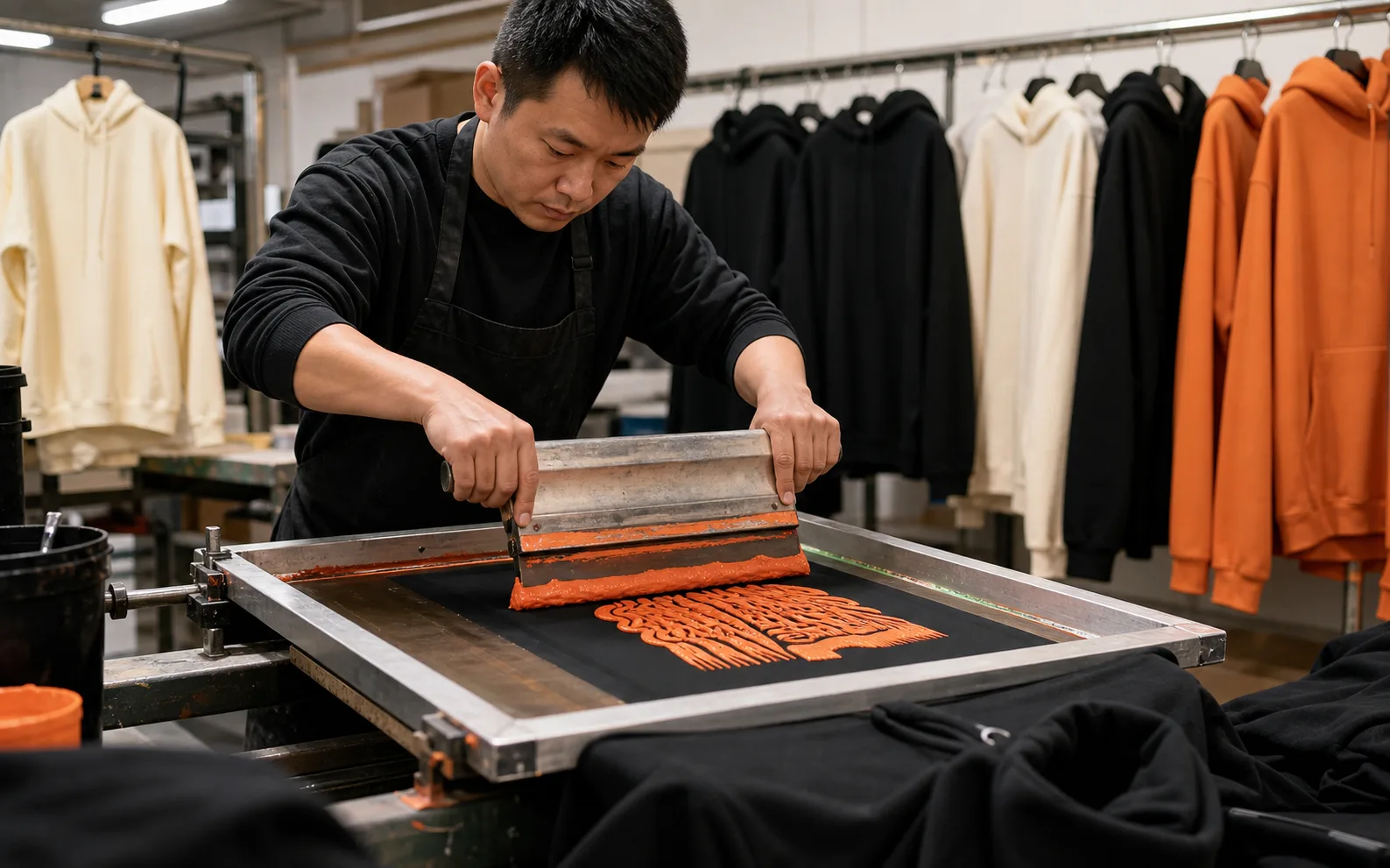
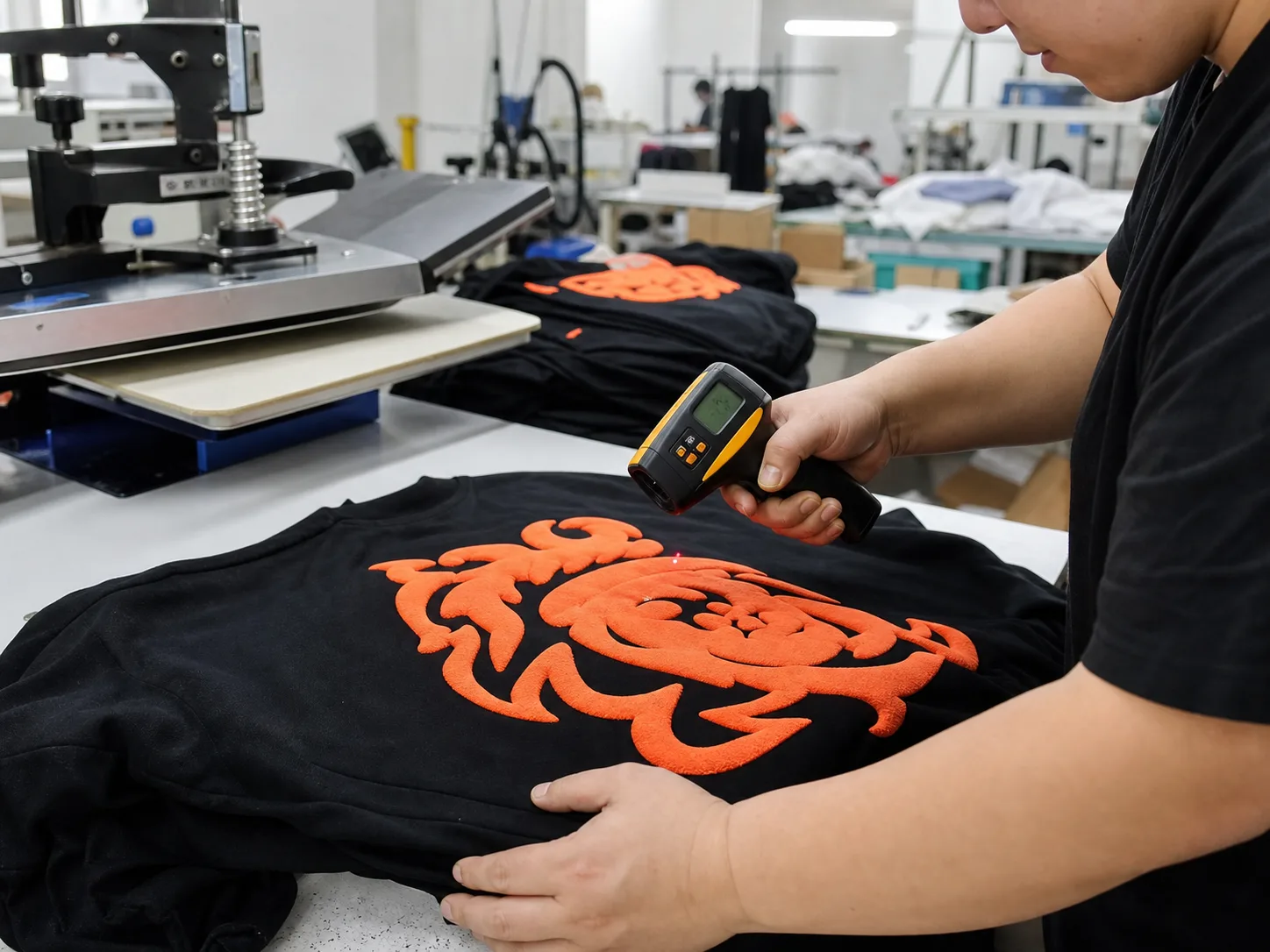
Separate the puff areas, match the ink to the fabric, build the deposit, cure, cool and inspect.
Use the selected ink's current technical data sheet rather than one public cure recipe.
Prepare
Separate the puff areas and confirm the real fabric.
Use the approved screen, stencil and deposit.
Expand
Cure to the ink system's own time and film-temperature requirement.
Verify
Cool, inspect and wash the approved sample before bulk.
- Product-specific puff systems publish different cure temperatures and dwell times.
- Puff is commonly printed late in a multi-colour sequence or flashed before overprinting.
Quality Check
Read the Failure
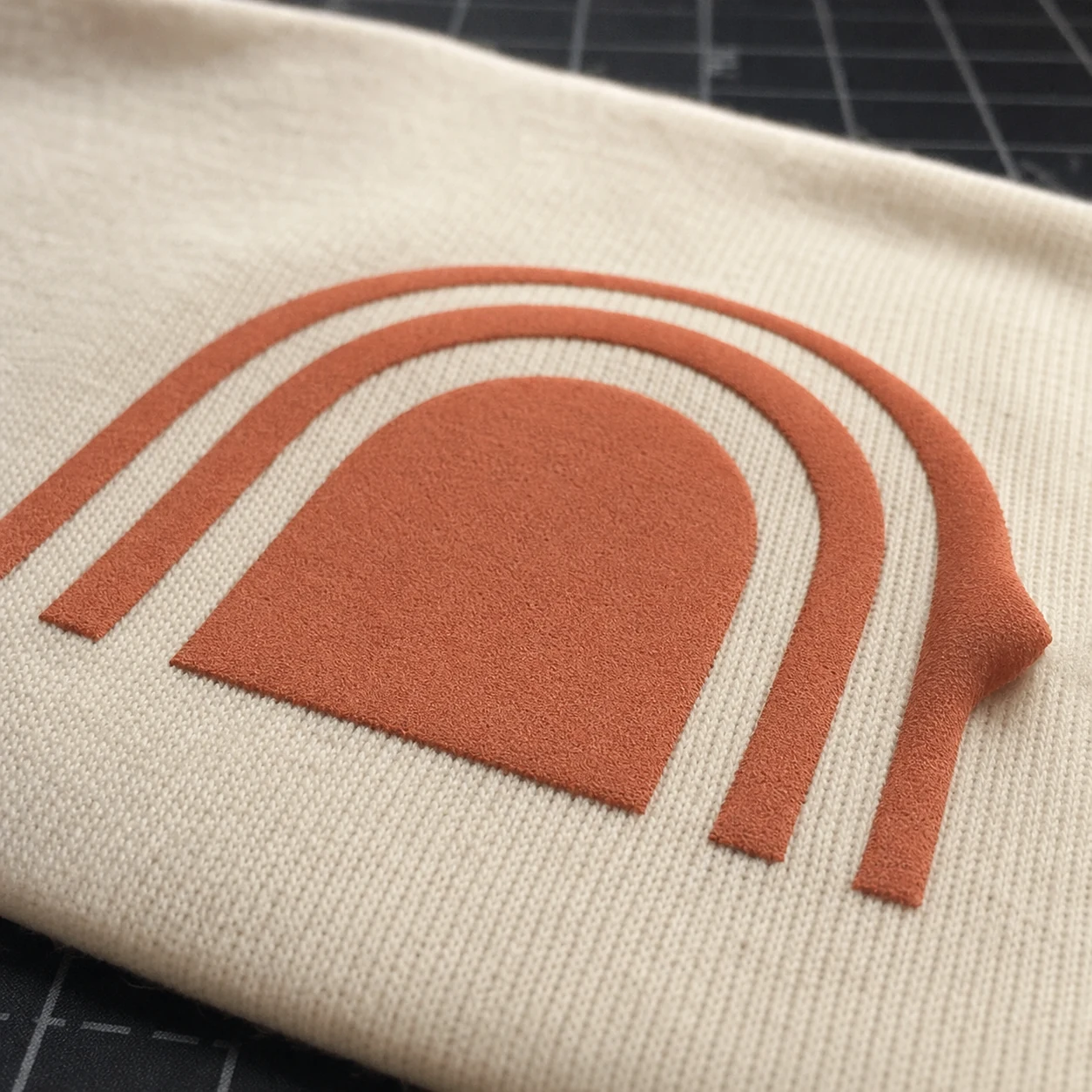
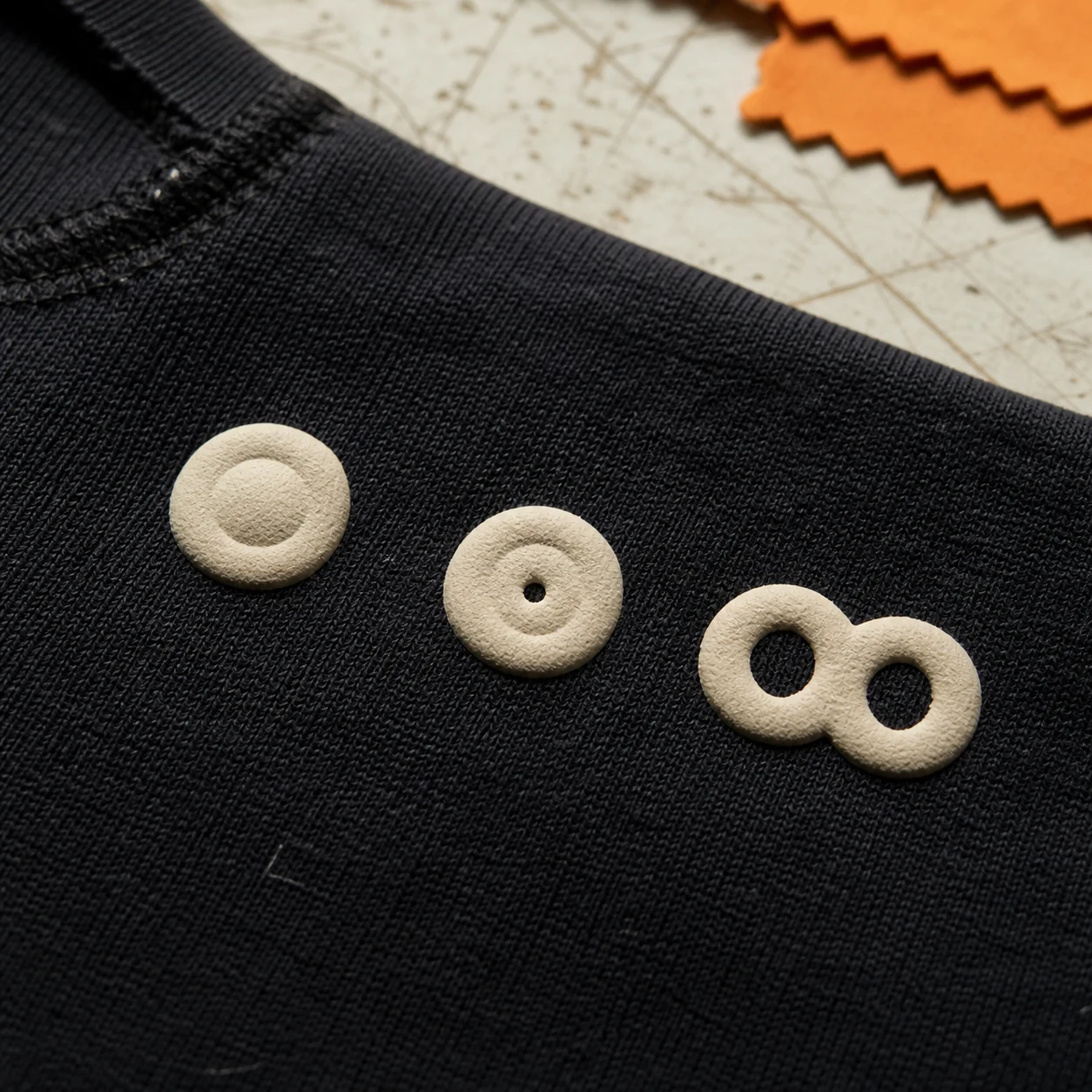
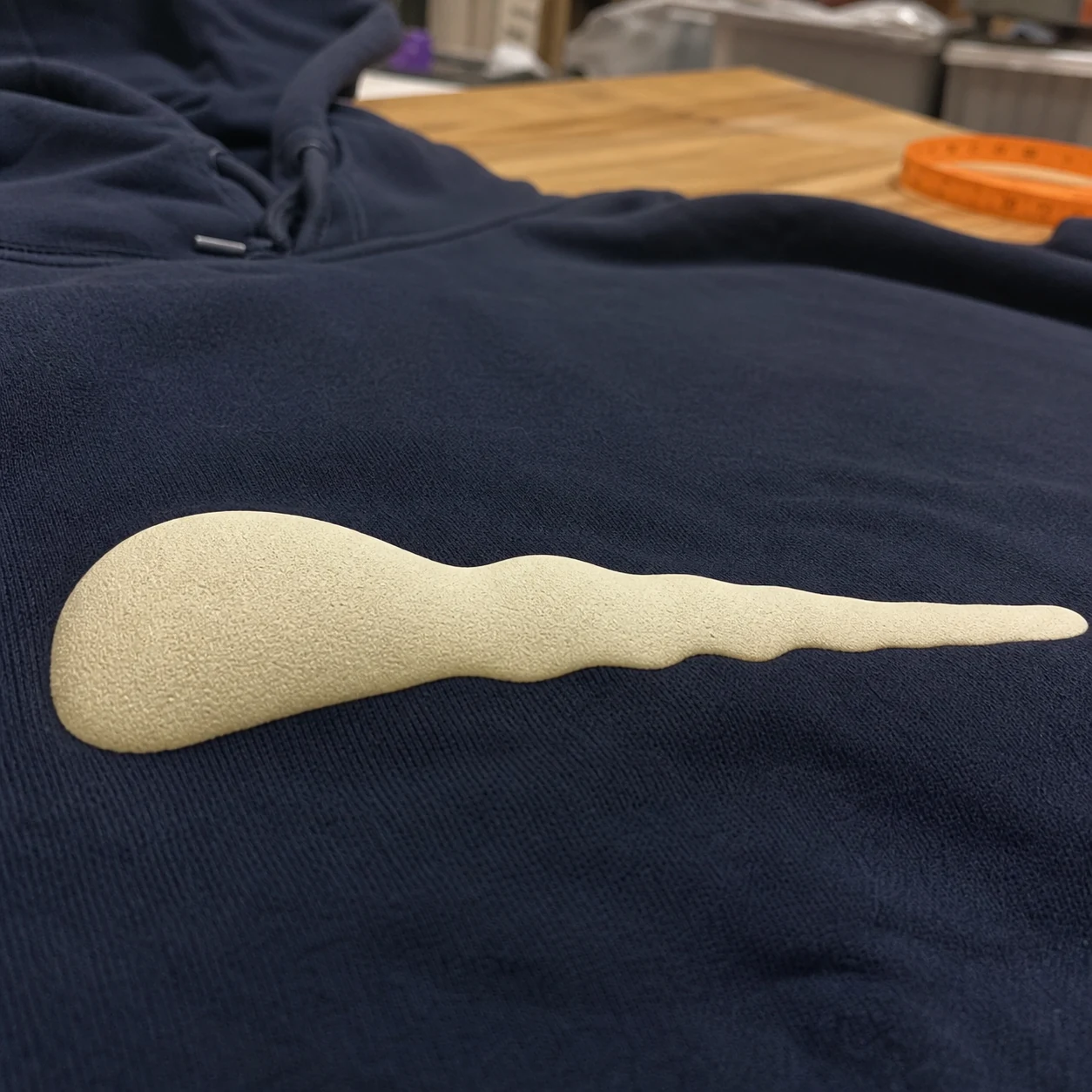
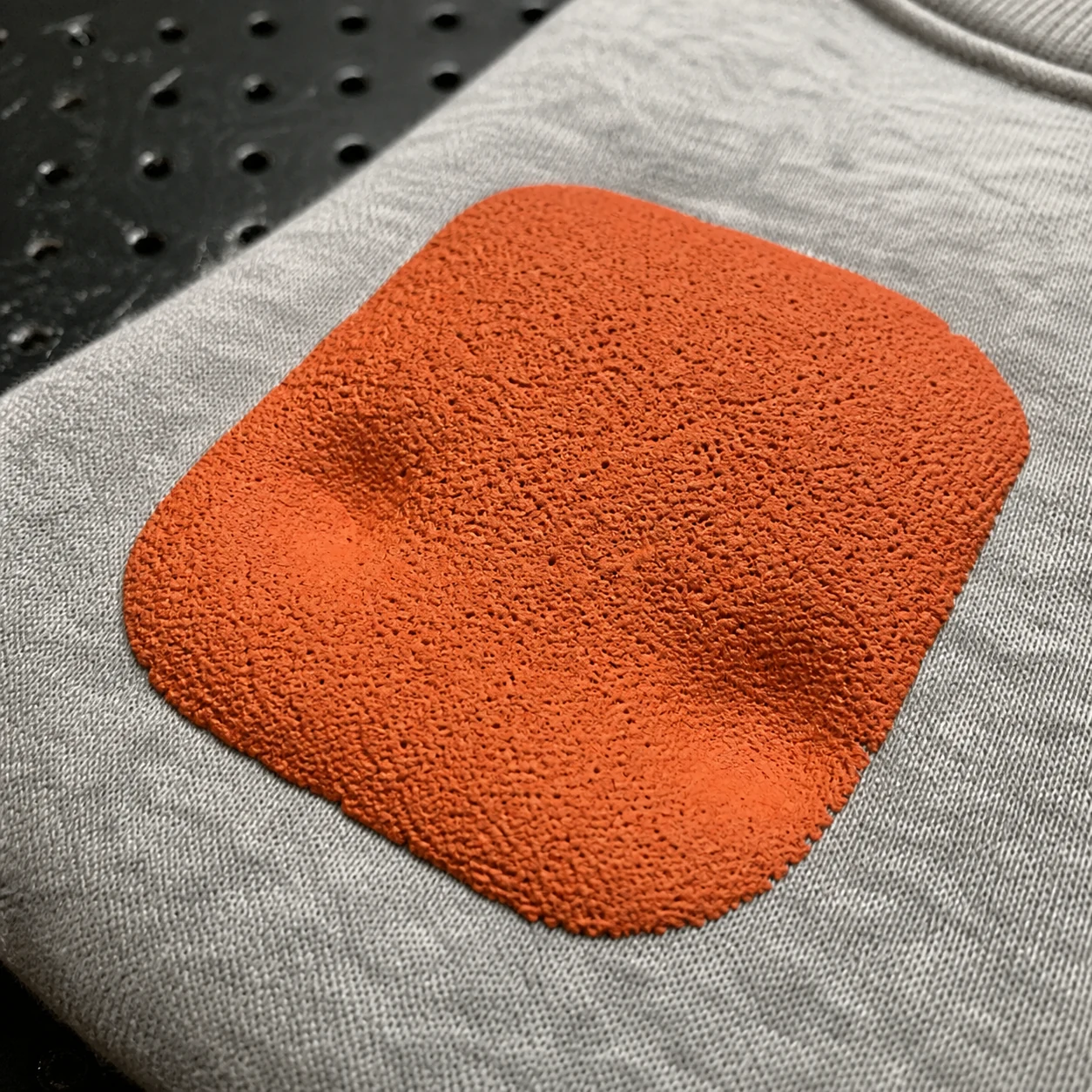
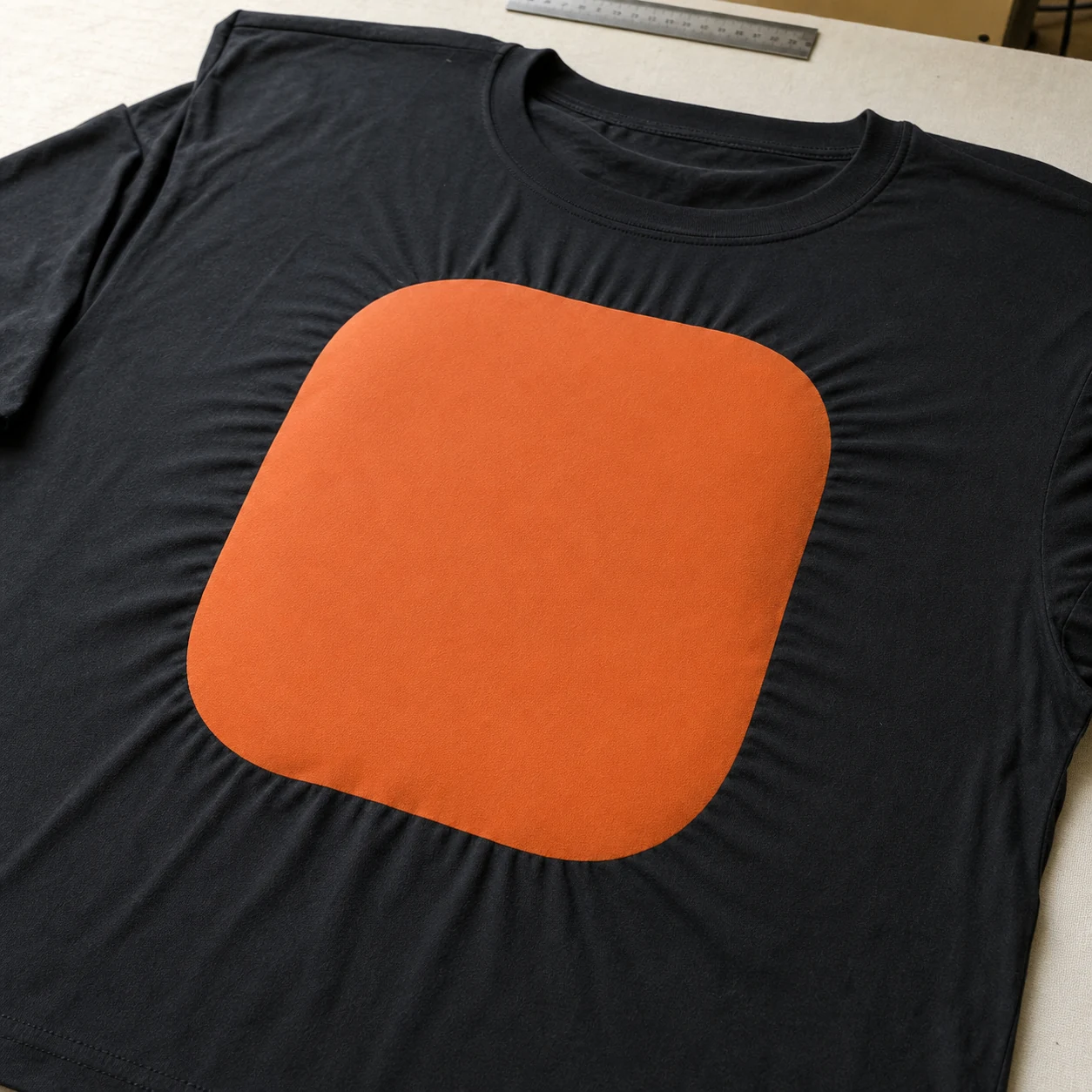
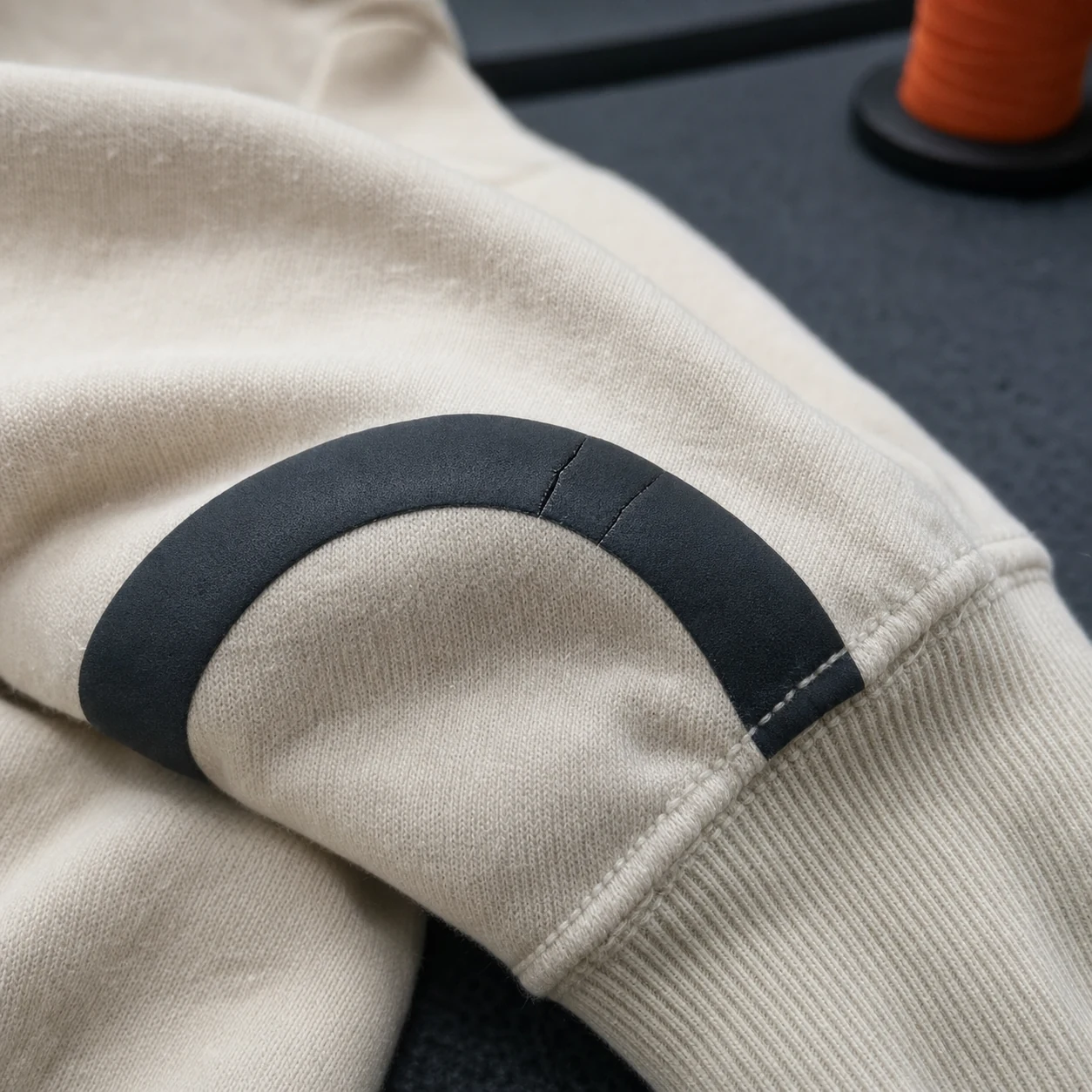
A failed surface points back to artwork, deposit, heat, fabric or wash response.
Diagnose the sample before bulk instead of hiding the variation behind a general quality claim.
Under-Raised
Check deposit and whether the ink film reached its required cure.
Closed Detail
Increase open space or reduce the requested rise.
Uneven Height
Check screen, pressure, fabric surface and heat distribution.
Overblown
Review the product recipe and actual heat exposure.
Fabric Puckering
Reduce solid area or change the material or process direction.
Wash Cracking
Review cure, stretch compatibility and the agreed wash test.
- Excess pressure, deposit, flash and cure conditions influence the final raised effect.
- Heat exposure and ink selection affect dye migration on polyester.
Alternative Check
Compare the Raised Surface
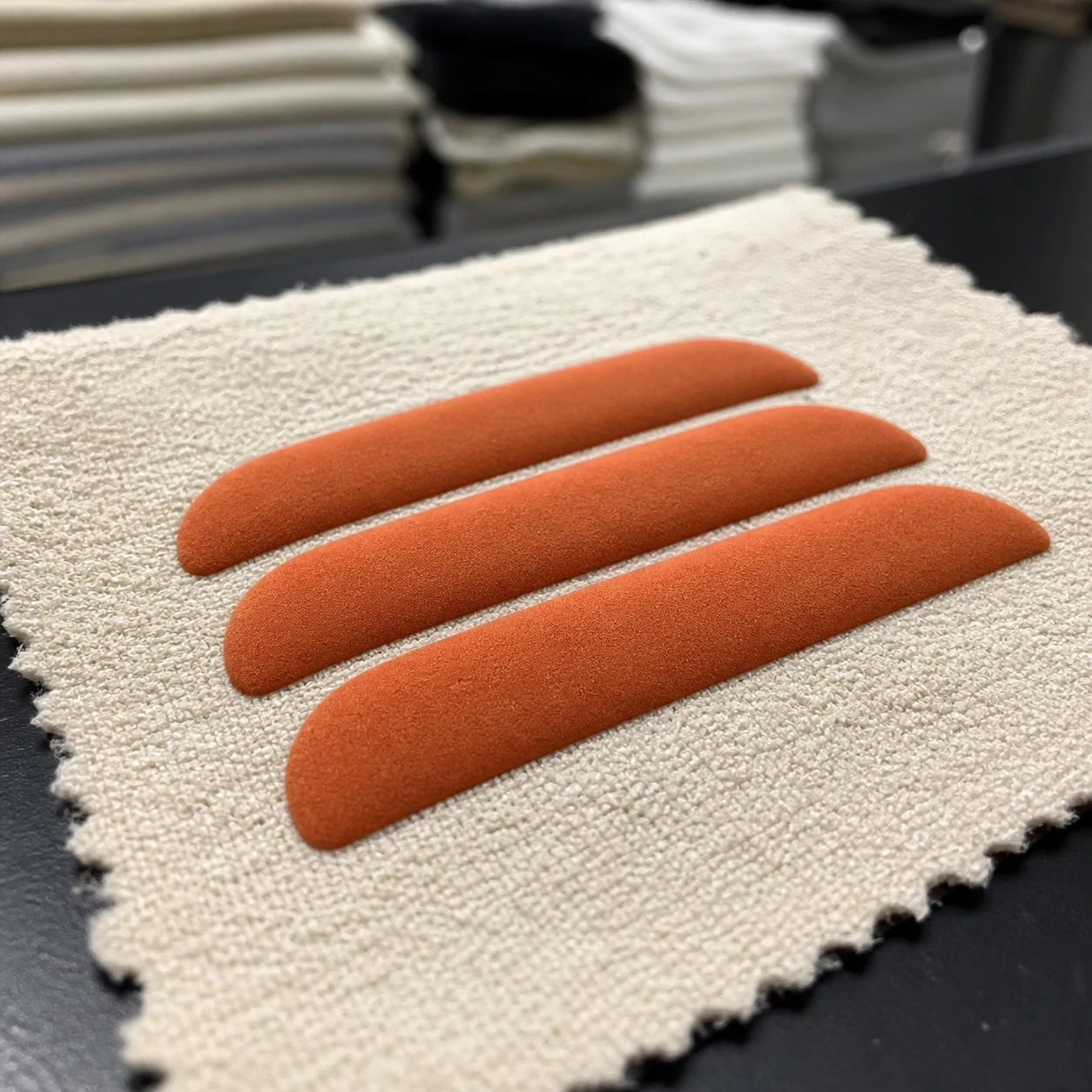
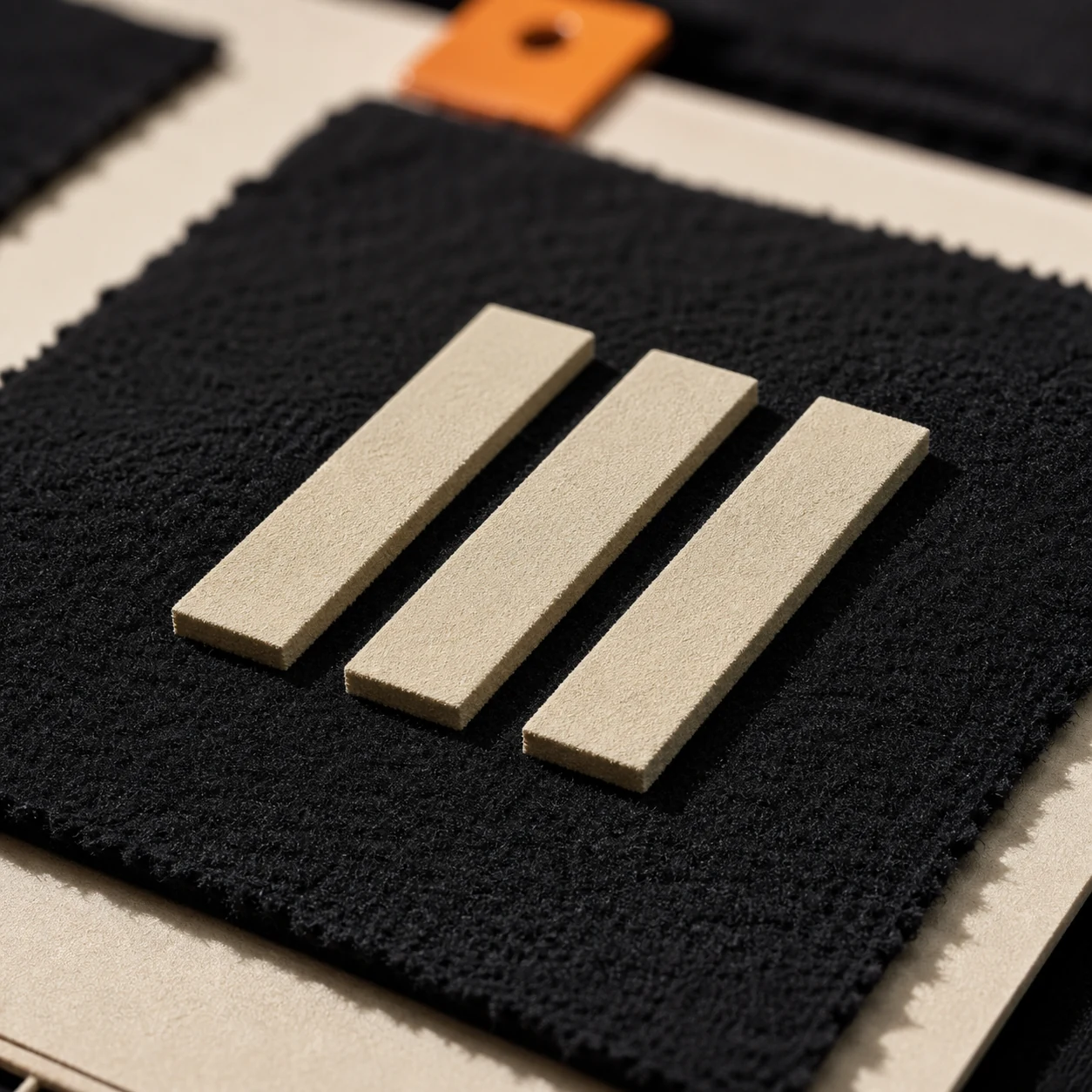
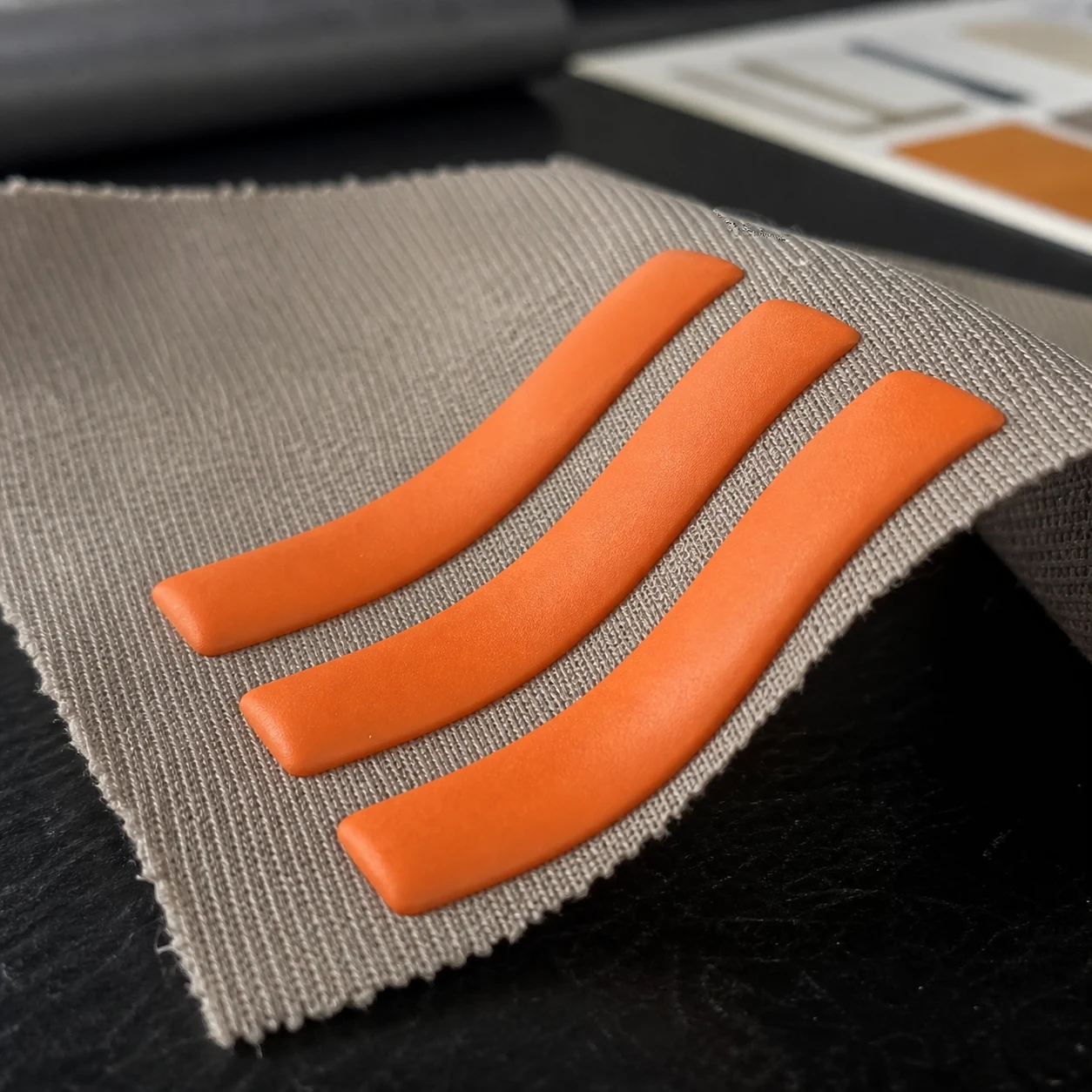
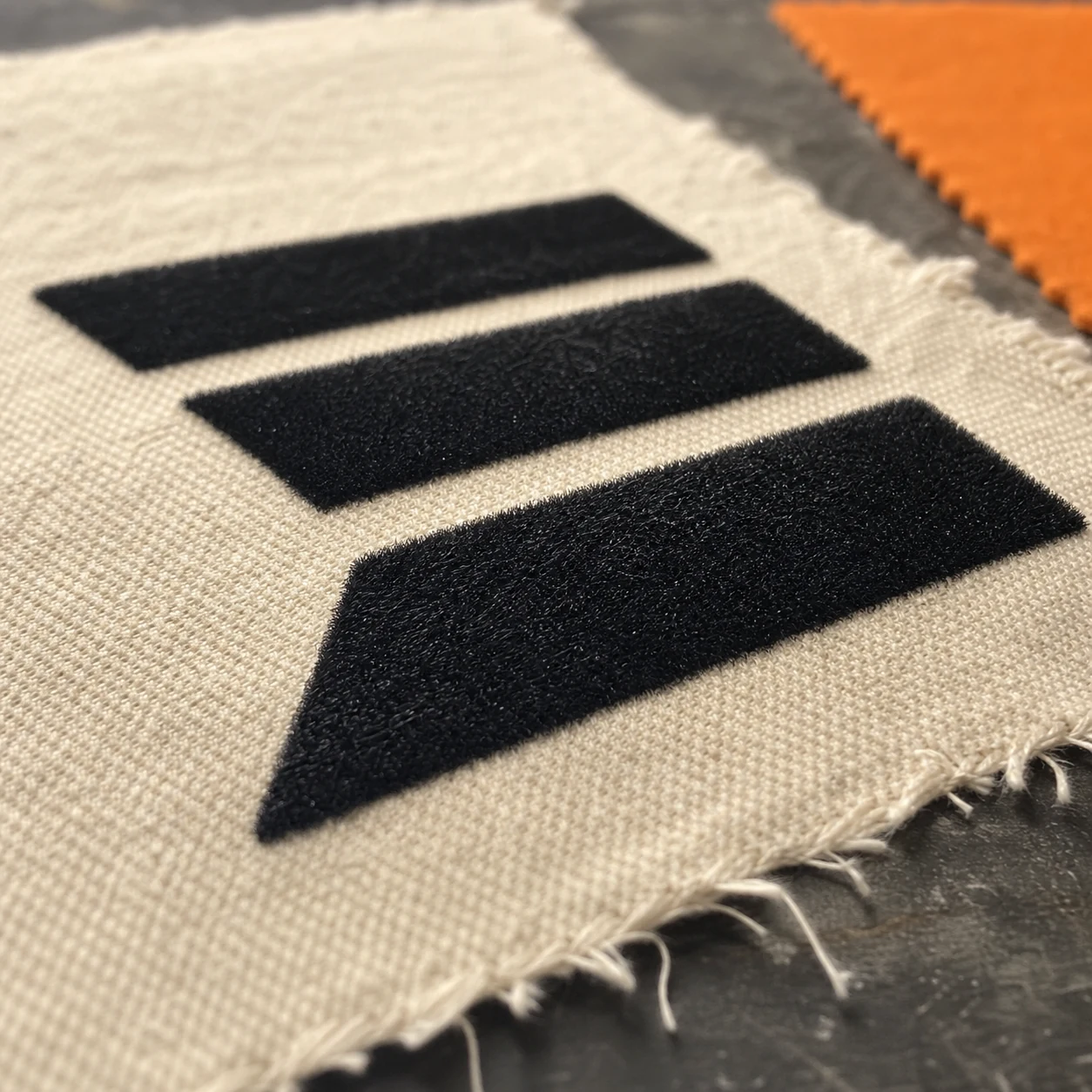
Puff, flat screen printing, heat transfer, high density, silicone, embroidery and flock solve different surface problems.
Choose by material route, artwork detail, handfeel, garment position and sample test rather than by the word raised.
Puff
Heat-expanded; often rounded or foam-like depending on ink and deposit; best for bold artwork.
Flat Screen Printing
Screen-applied ink without a puff target; considered for flat colour areas and sharper ordinary print detail.
High Density
Built from stencil and deposit; considered for sharper controlled edges.
Heat Transfer
Uses a carrier and heat/pressure route; considered for films, transfers, names, numbers or specific transfer systems.
Silicone
Flexible and rubber-like; considered for stretch and performance fabric.
Embroidery
Built from thread and stitch structure; considered for visible yarn texture or badge-like logos.
Flock
A fibre pile surface; compare when the buyer wants velvet feel rather than foam expansion.
- High-density build is controlled by stencil thickness and ink deposit rather than thermal puff expansion.
- Heat transfer printing transfers patterns from a paper or carrier route to fabric through heated rolls or a heated press.
- Silicone systems can be formulated for elastic polyester performance garments and use a catalyst.
- Embroidery is built from stitch data, thread, underlay and backing decisions; 3D foam embroidery places foam under stitches rather than using expanding print ink.
Commercial Inputs
What Changes the Quote
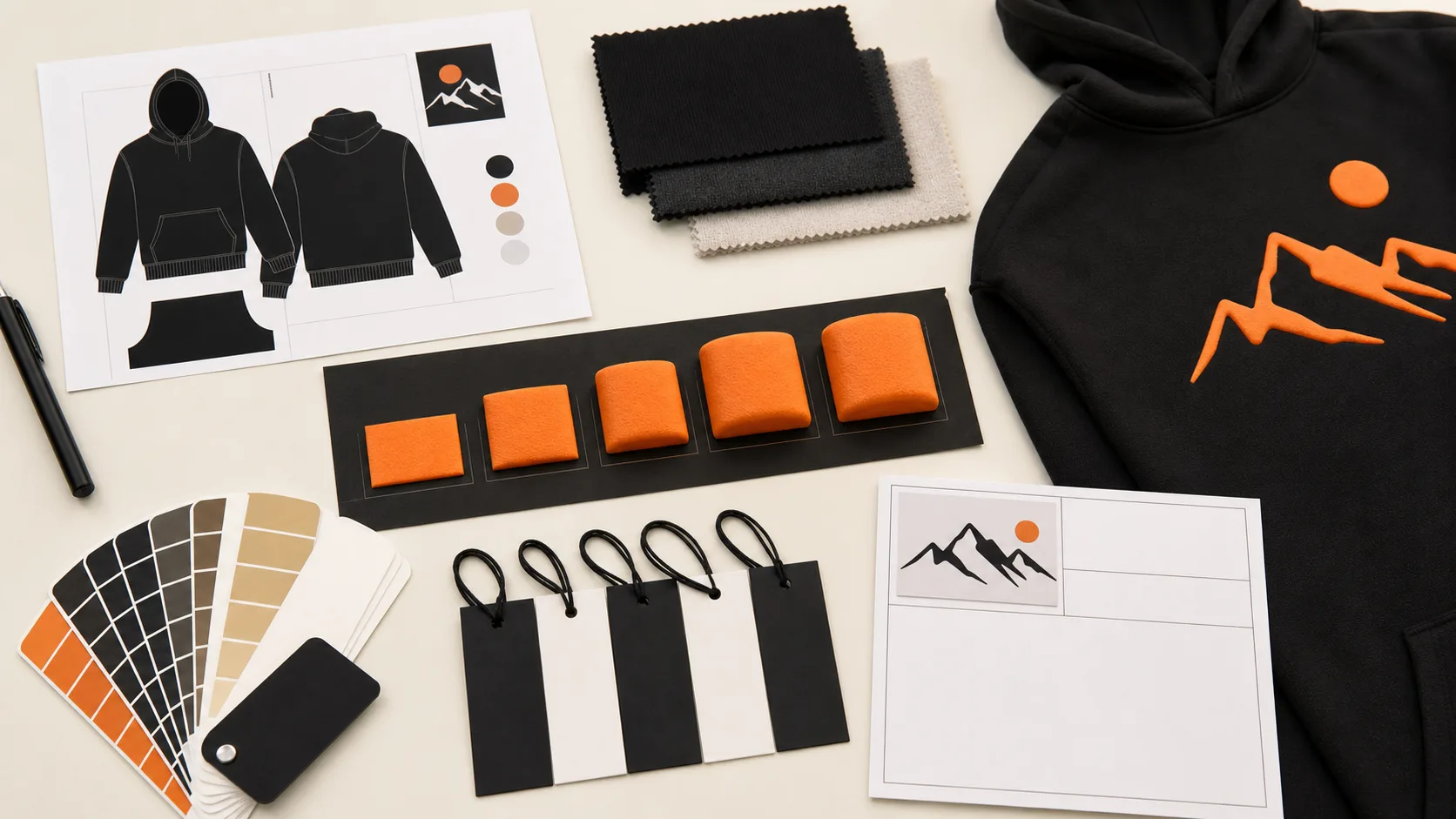
Our usual starting point is 100 pieces per style and colour.
Material, style and print details can change what is practical.
Artwork
Number of colours, screens, dimensions and puff area.
Fabric
Composition, colour, finish, heat and migration risk.
Order
Quantity per style and colour, placements and delivery schedule.
Approval
Number of sample directions and agreed wash or stretch checks.
- Canton Fashion's approved public MOQ baseline is 100 pieces per style and colour, with material or style exceptions.
Bulk Gate
Approve the Real Sample
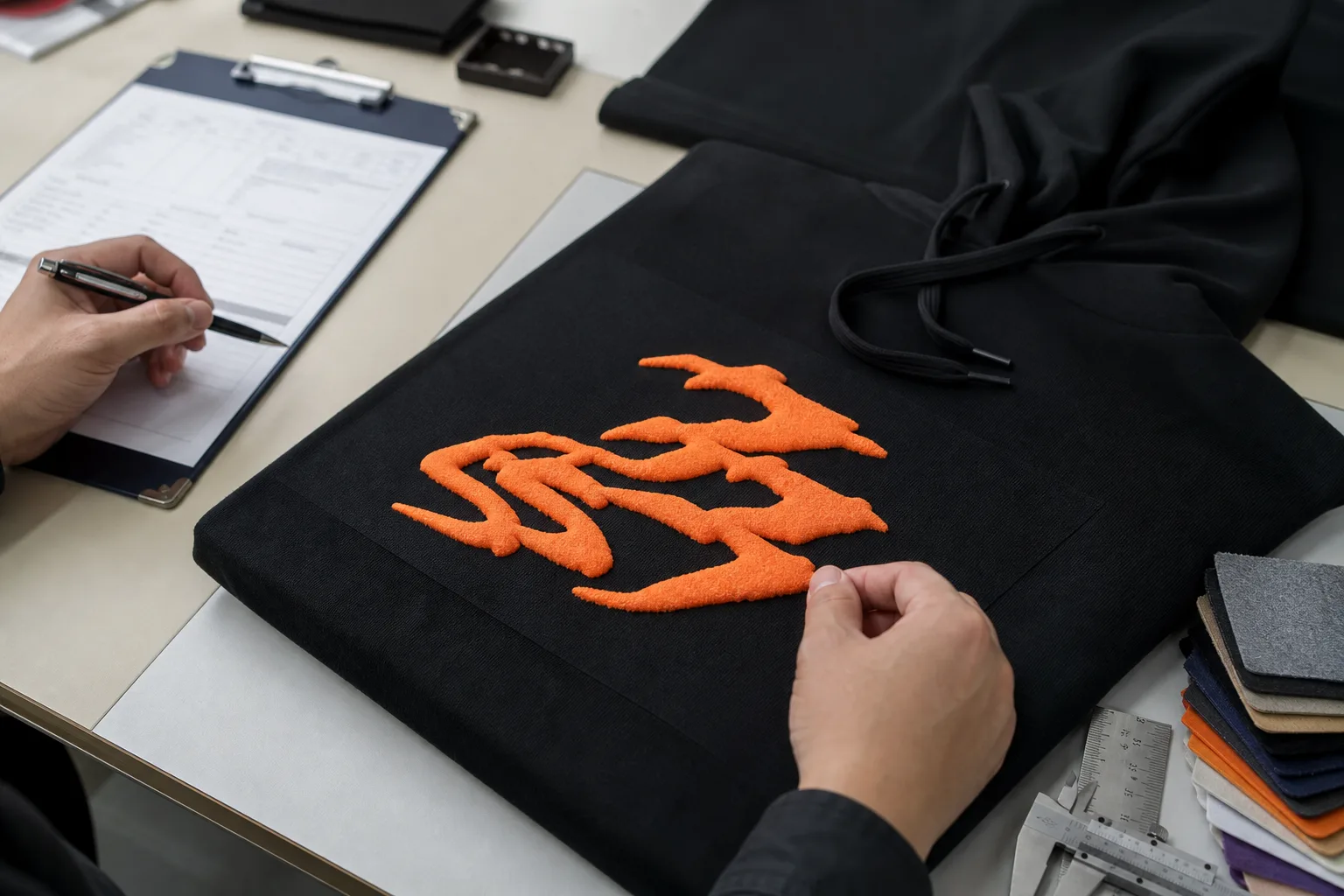
Approve the production fabric, print size, surface range, edge clarity, handfeel and wash response.
Record the approved sample ID and the process settings used to make it.
Approve
Position, colour, rise, handfeel, open detail, fabric shape and agreed wash result.
Record
Ink system, screen, stencil, passes, flash, cure, fabric batch, date and sample ID.
- Puff ink suppliers instruct printers to test durability before the production run.
- AATCC TM61 evaluates accelerated laundering colourfastness and surface change, while TM8 evaluates colour transfer by rubbing.
Visual Directions
Project Directions
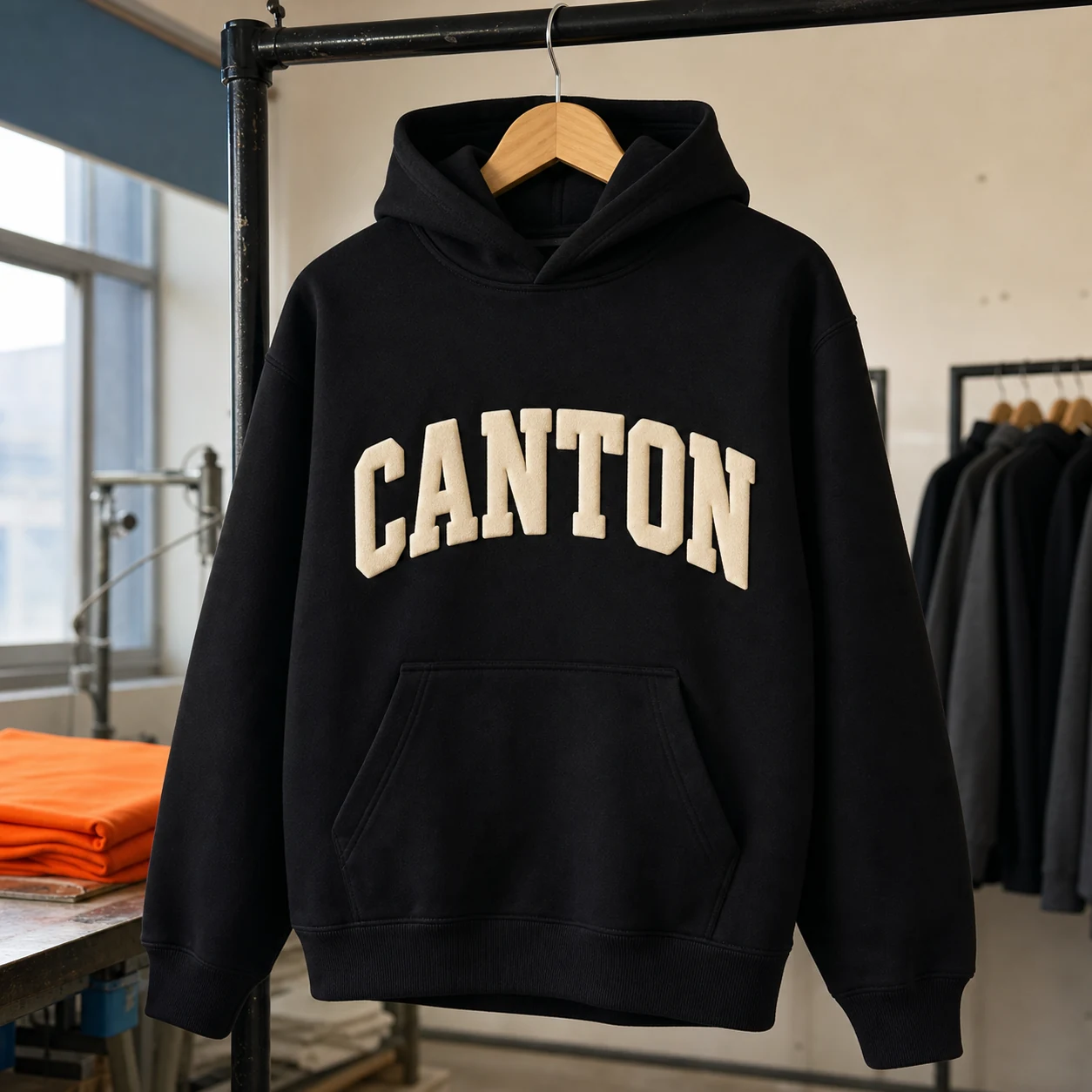
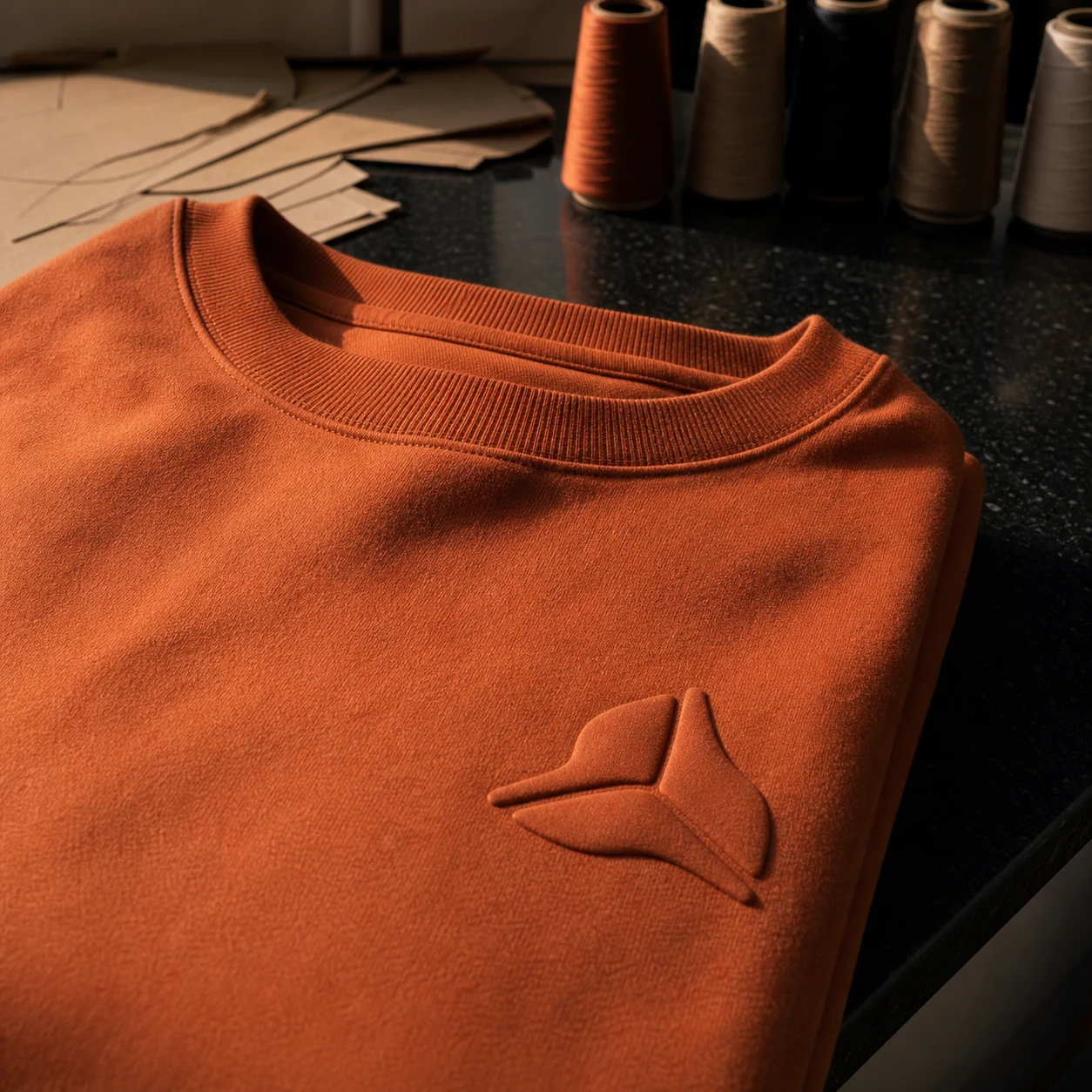
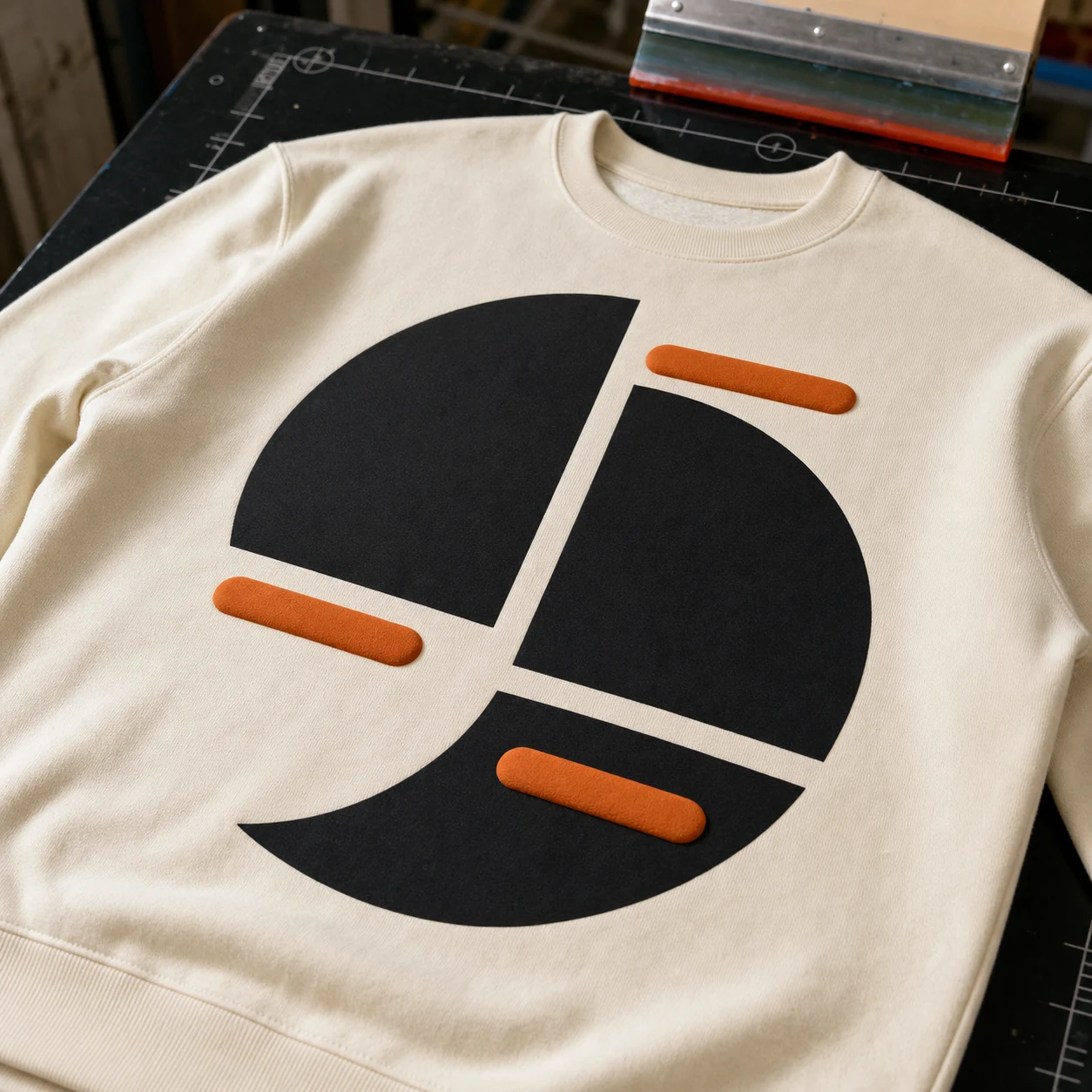
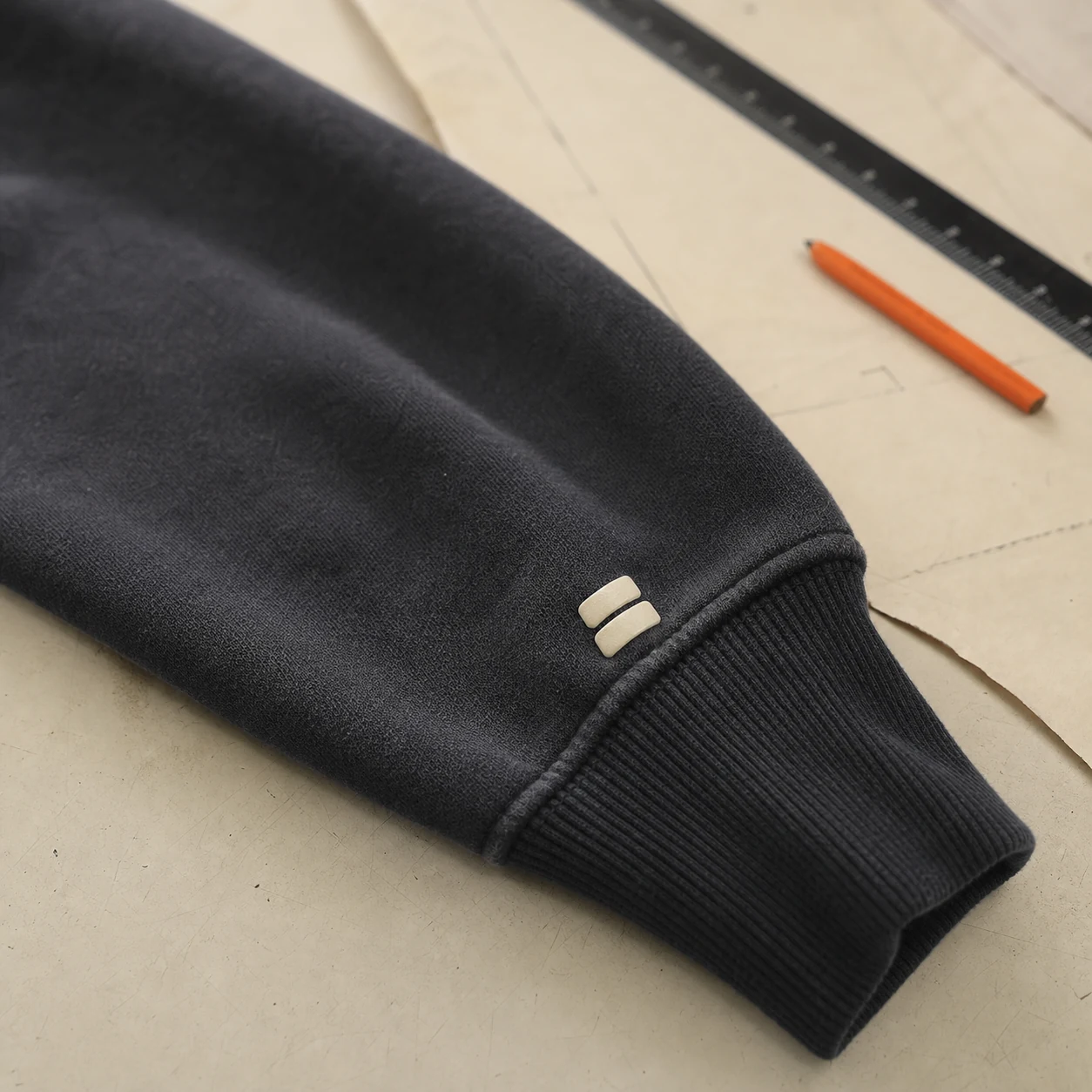
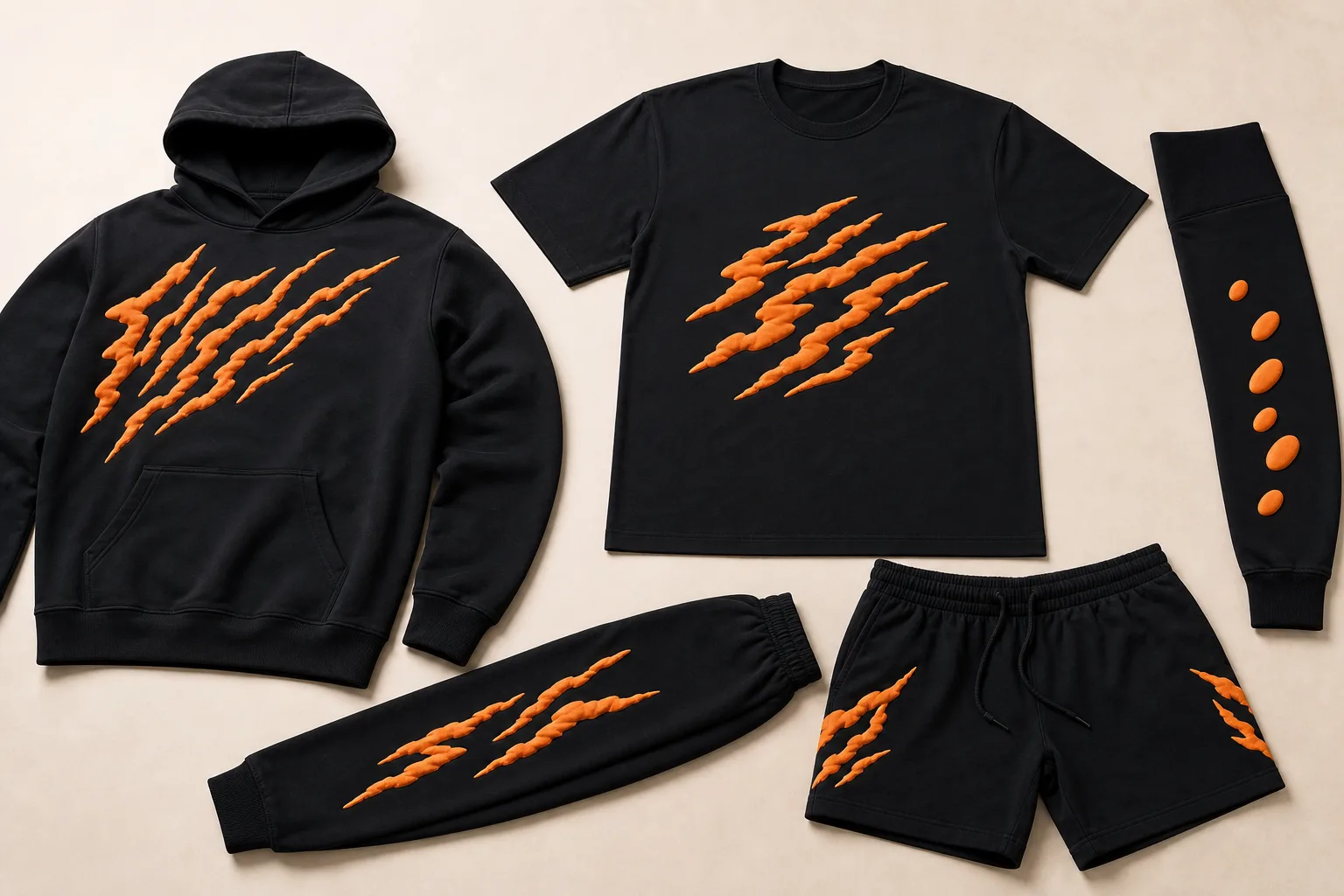
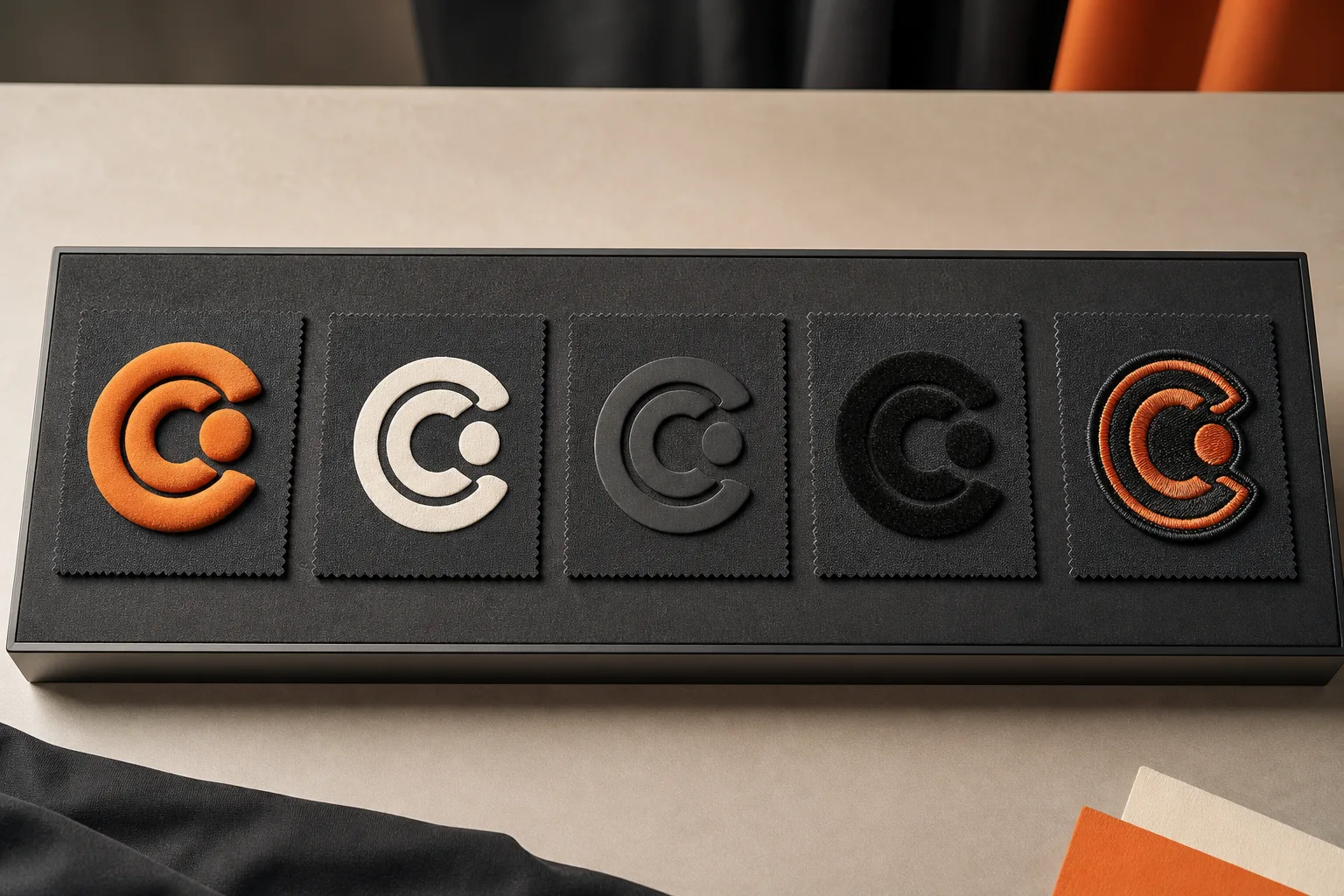
Temporary visual directions. Replace them with approved Canton Fashion project photos when available.
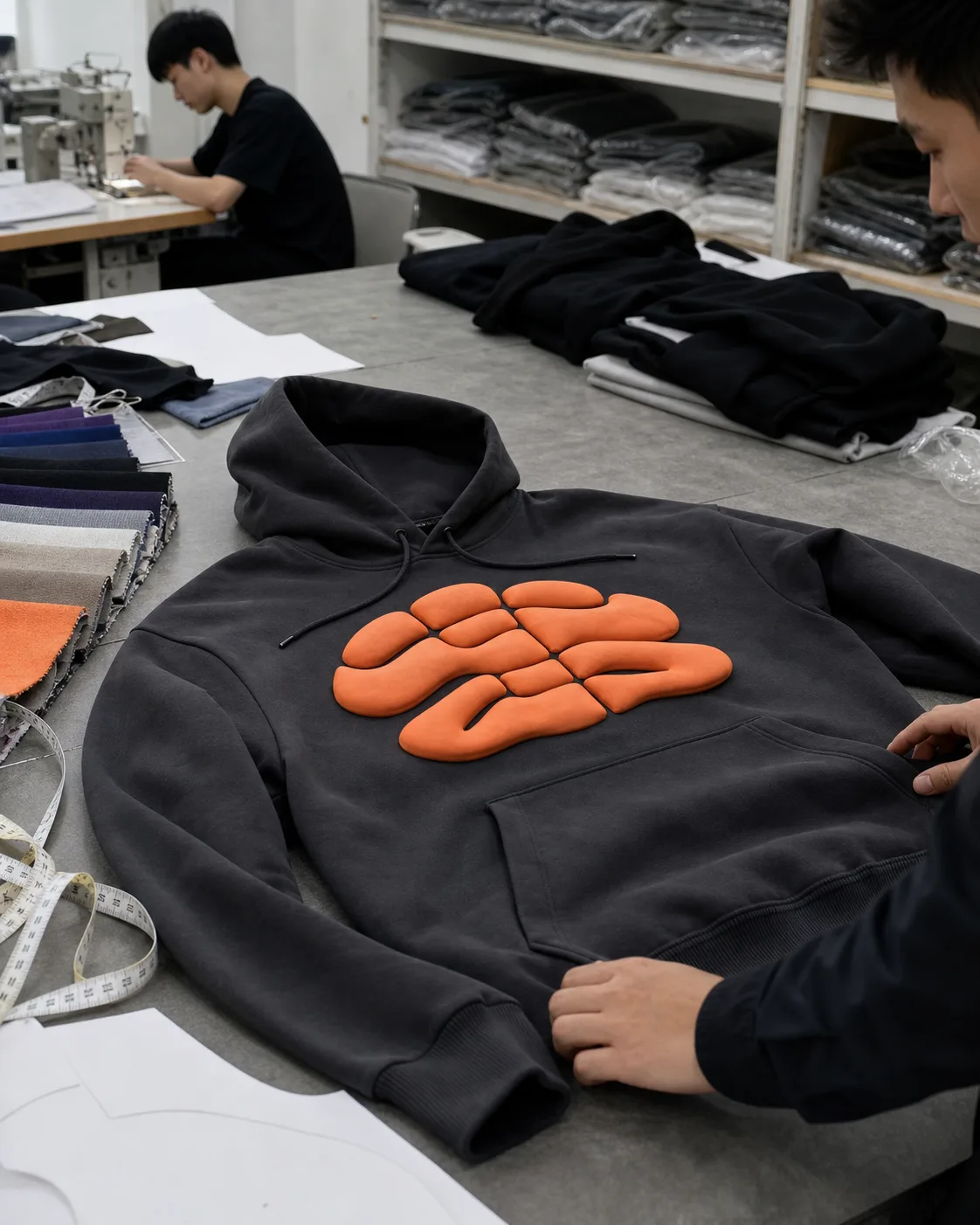
Varsity Lettering
Medium-rise chest lettering on a hoodie.
Tonal Logo
Same-colour raised logo on a sweatshirt.
Flat and Puff
Selected raised areas inside a flat screen print.
Small Placement
A sleeve or jogger-leg accent.
Next Review
Continue Your Review
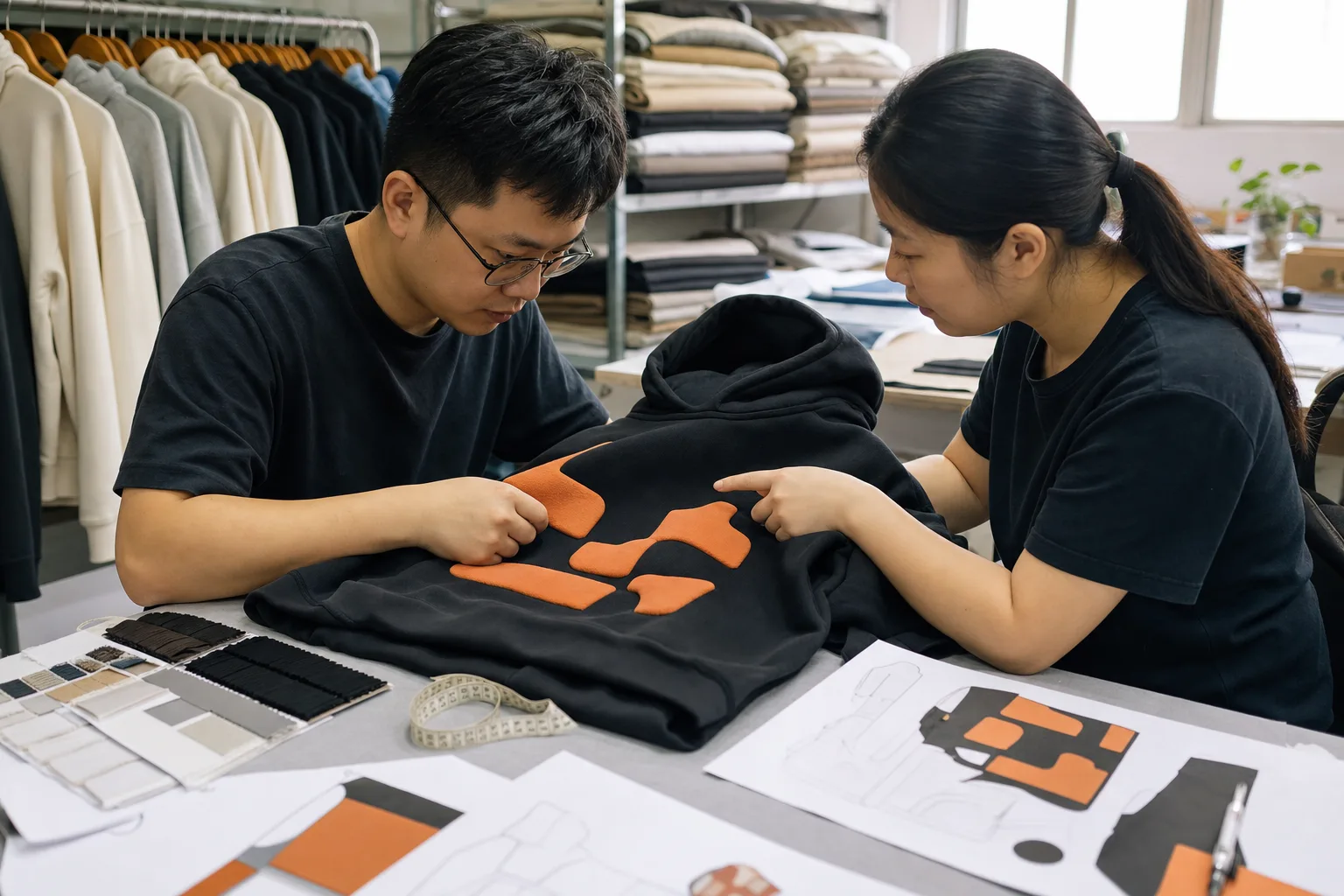
Use the garment route when the product is known, the technique route when the surface is uncertain, and sampling when the combination needs a physical test.
Products
Hoodies, T-Shirts and Joggers.
Related Techniques
Heat Transfer Printing, Screen Printing, Silicone and Rubber Printing, and Flock Printing.
Project Support
Pattern Making and Sampling, Fabric and Trims Sourcing, and All Techniques.
Buyer Questions
Puff Printing FAQ
Can it be washed?01
Approve the actual fabric and agreed wash result before bulk.
Can it hold small text?02
Narrow lines and gaps may need to be widened or simplified.
Does it work on polyester?03
Some systems do, but the exact fabric must be checked for heat and dye migration.
Can you guarantee the height?04
Approve a physical surface range after the artwork and fabric are tested.
- Puff products can have strong wash durability when correctly selected and cured, but suppliers require production testing.
- Polyester can require lower cure and dye-migration controls.
- The public MOQ baseline is 100 pieces per style and colour, subject to material and style.
Project Review
Send Your Artwork
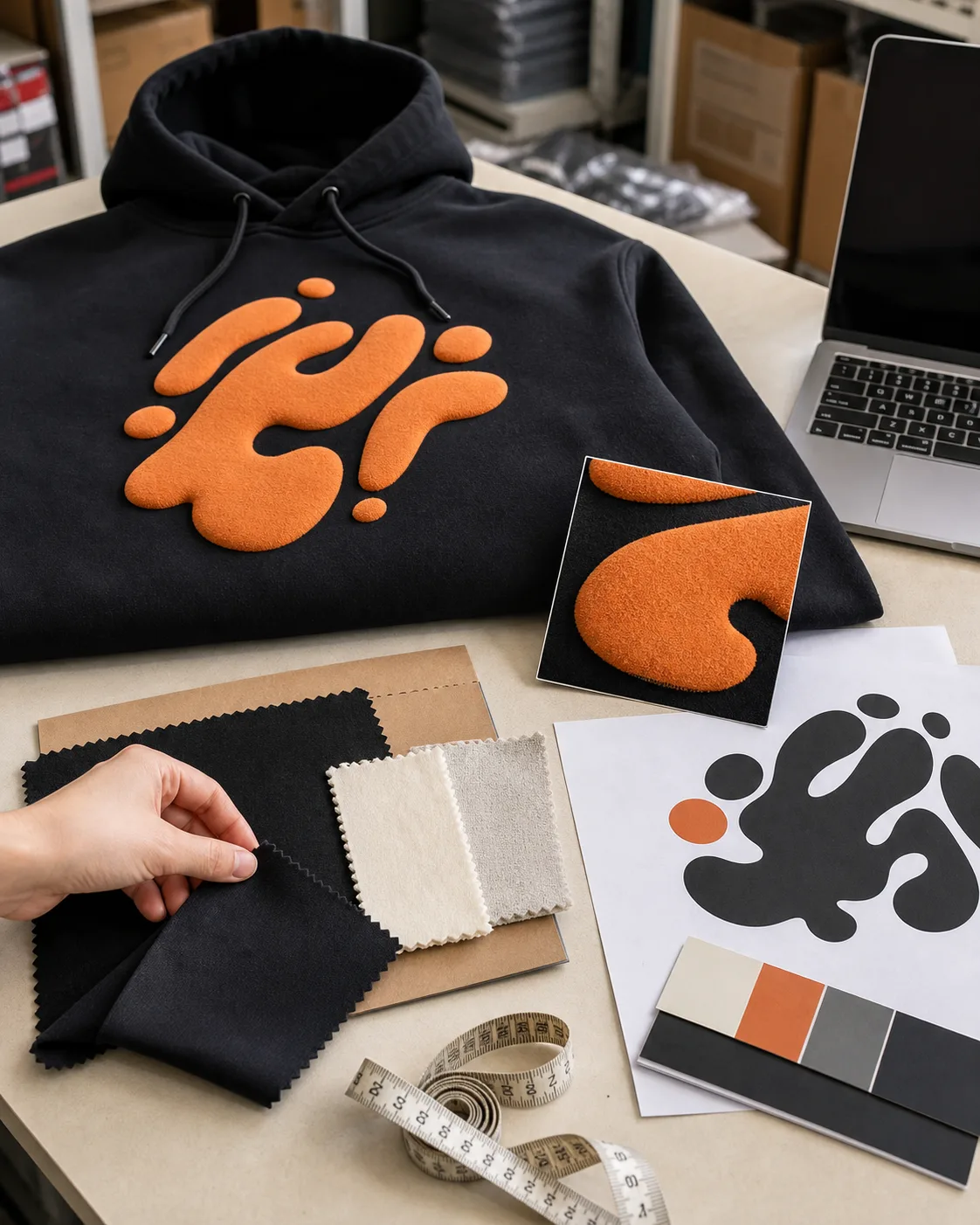
Mark the areas that should puff.
We will review the artwork, fabric, placement and quantity before confirming the sample route.
Garment and Fabric
Product type, composition, GSM, colour and quantity per style and colour.
Artwork and Surface
File upload, puff areas, dimensions, placement and reference surface.
Delivery and Contact
Target market, delivery country, target date, company and contact details.