HEAT TRANSFER PRINTING
Choose the Heat Transfer Route
HTV, printable film, DTF and the supported plastisol screen-printed transfer all use heat and pressure, but they do not share one film, one press recipe or one fabric range. Choose the transfer stack before approving artwork.
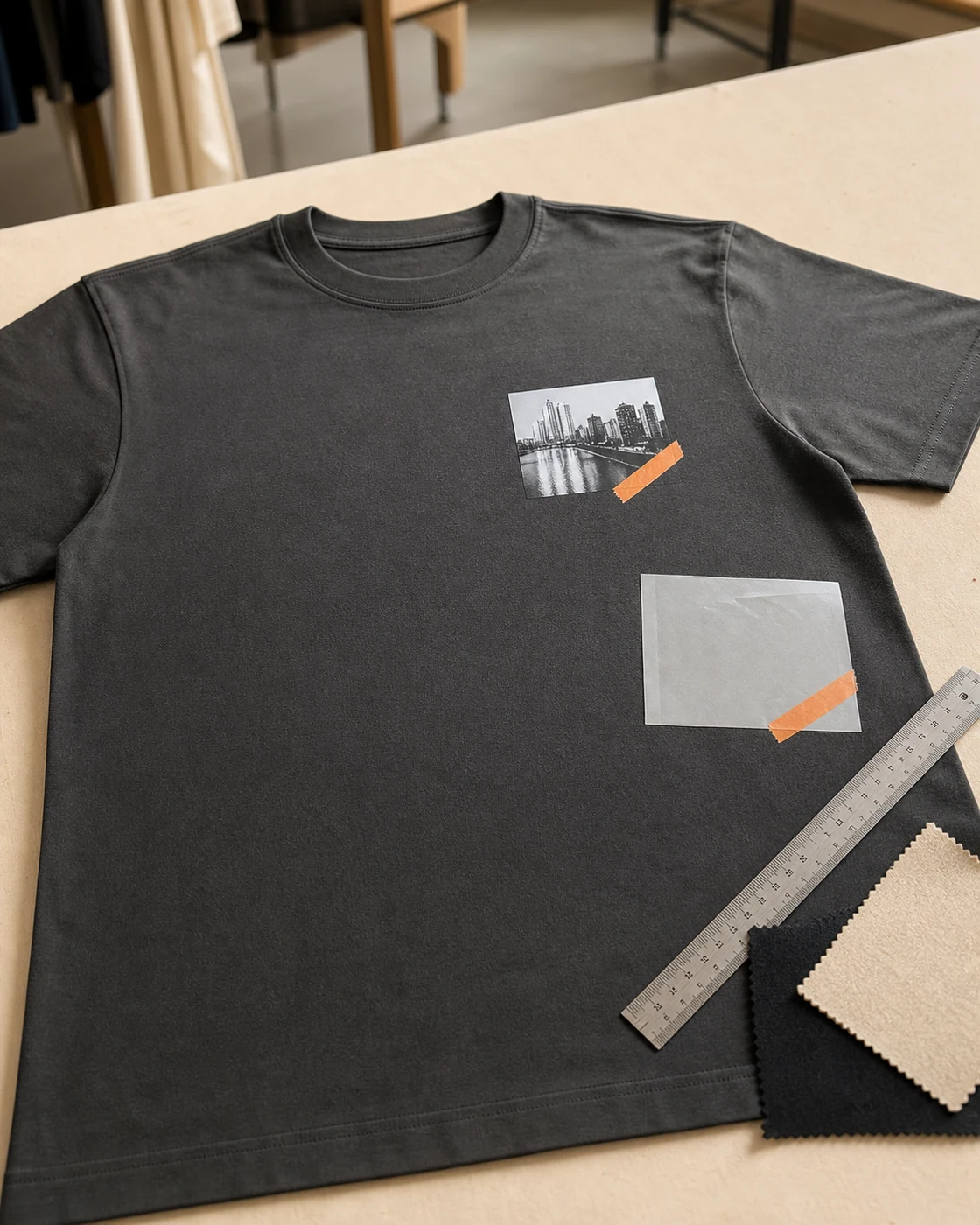
START WITH THE DECISION
Fit Before Heat
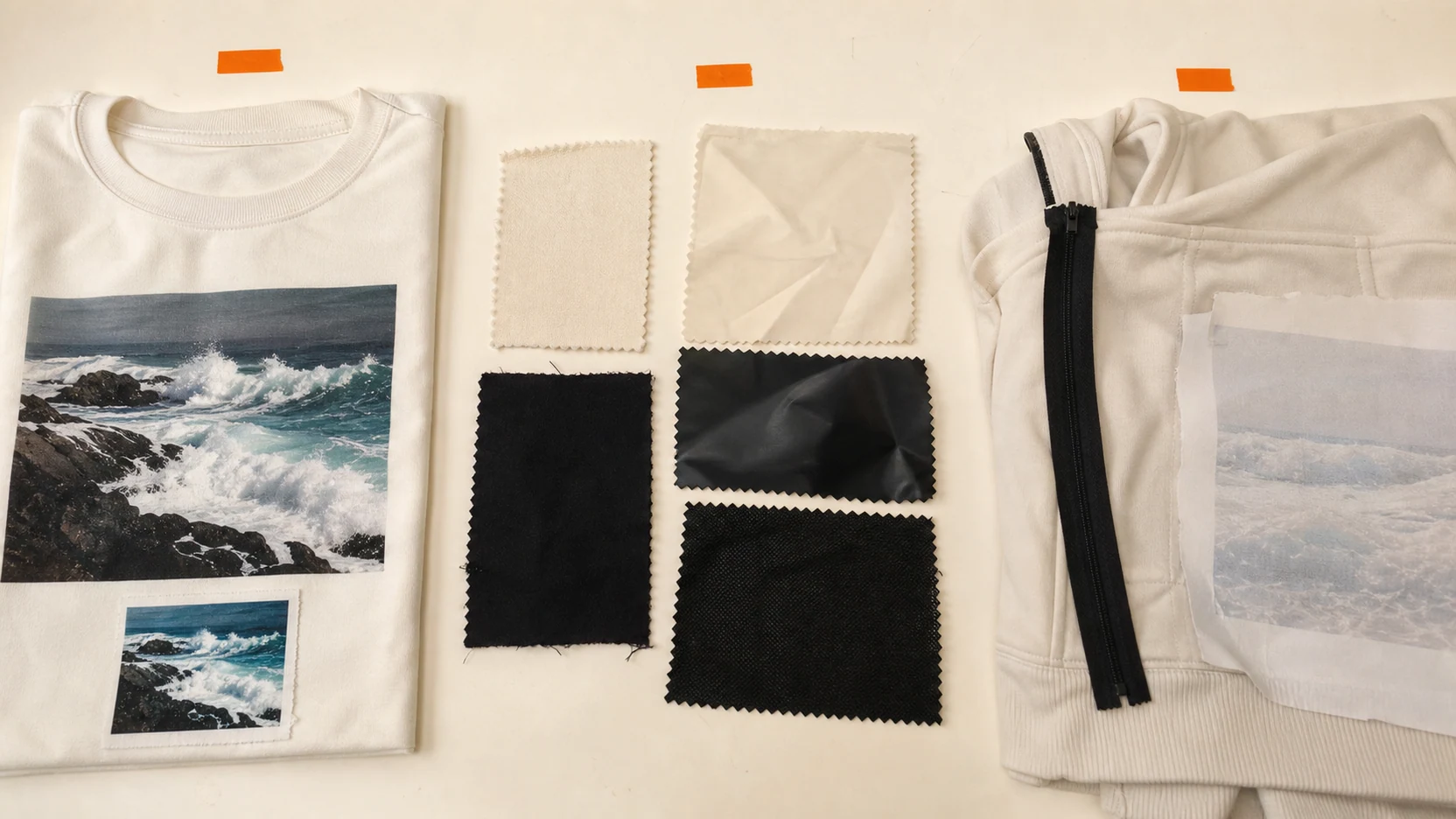
Heat alone does not select the method. Start with the artwork, the exact fabric and the garment area that must enter the press.
Approve the named transfer stack on the actual fabric, colour, finish and placement.
Good first samples
Simple names, numbers and bold vector logos for a selected cut film; detailed placed graphics for a defined DTF or printable-film system; repeated graphics for a controlled plastisol screen-printed transfer route.
Sample with caution
Stretch jersey, nylon, coated surfaces, dark or sublimated polyester and lightweight fabric with a large solid graphic.
Do not approve yet
The route, material stack, placement or expected surface hand is unknown, or approval is based only on a mock-up.
- Different HTV products have different substrate and application conditions.
- DTF post-processing follows the actual film and powder system.
- Polyester dye may migrate under heat and must be tested.
- Raised garment structures can prevent accurate heat-press contact.
DEFINE THE FAMILY
One Name. Four Routes.
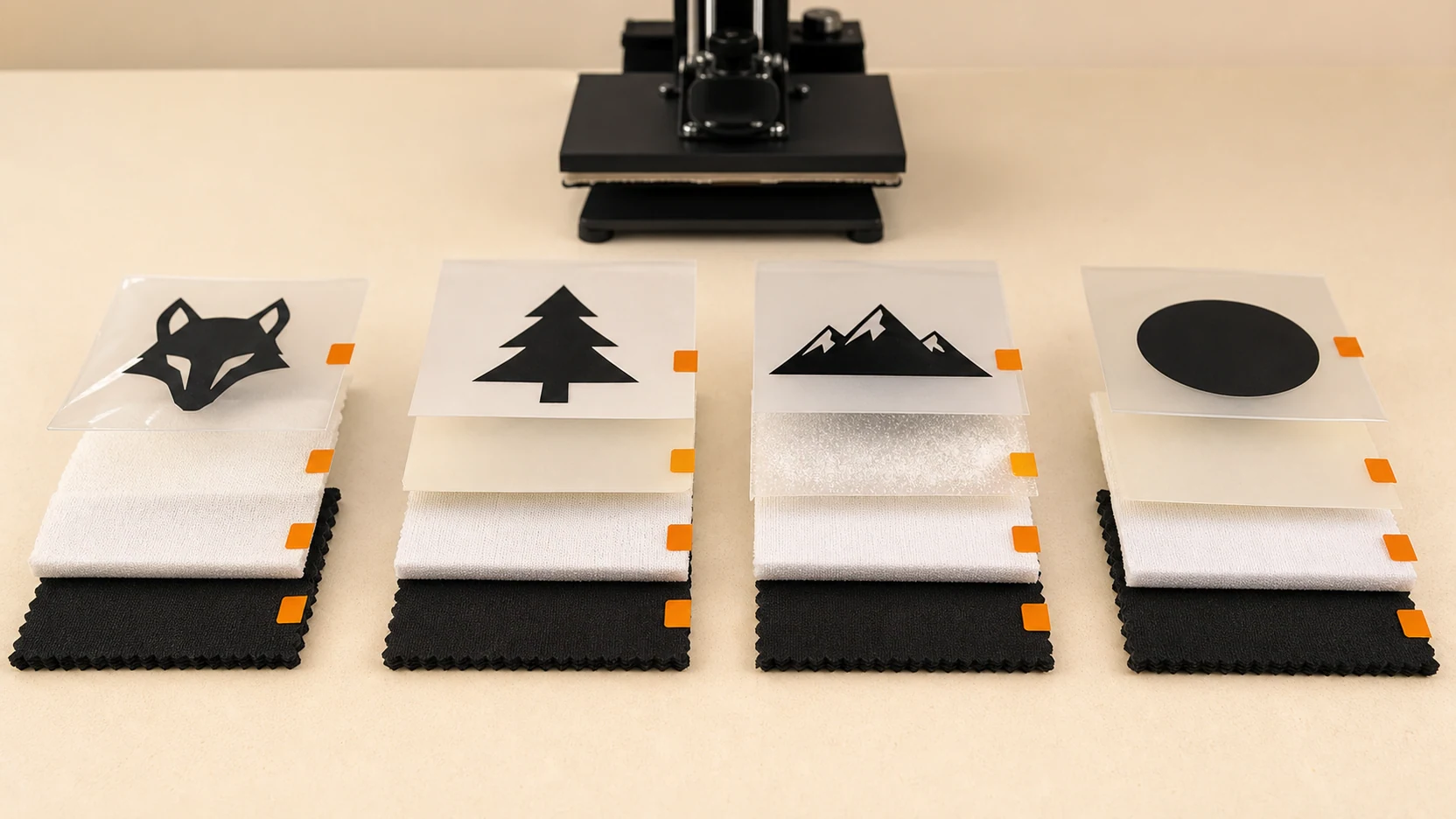
These routes meet at the heat press. They do not start with the same material, artwork preparation or bonding layer.
Sublimation also uses heat, but the dye enters suitable polyester instead of leaving the same surface-bonded transfer structure.
Cut HTV
Pre-coloured film: vector cut, weed, position and press.
Printable Film
Printable sheet with a cut contour: print, contour cut, weed, mask and press.
DTF
Printed ink layer plus hot-melt powder: print, powder, heat or dry and press.
Plastisol Screen-Printed Transfer
Plastisol image prepared on release paper or film: reverse print, gel by the selected system, apply its specified adhesive and press.
- Heat transfer is a carrier-to-fabric decoration family, not one fixed material.
- Printable film, DTF and plastisol screen-printed transfer use different preparation systems.
- The supported screen-printed transfer lane is plastisol-specific.
- Sublimation is a separate material route.
ROUTE THE FILE
Route the Artwork
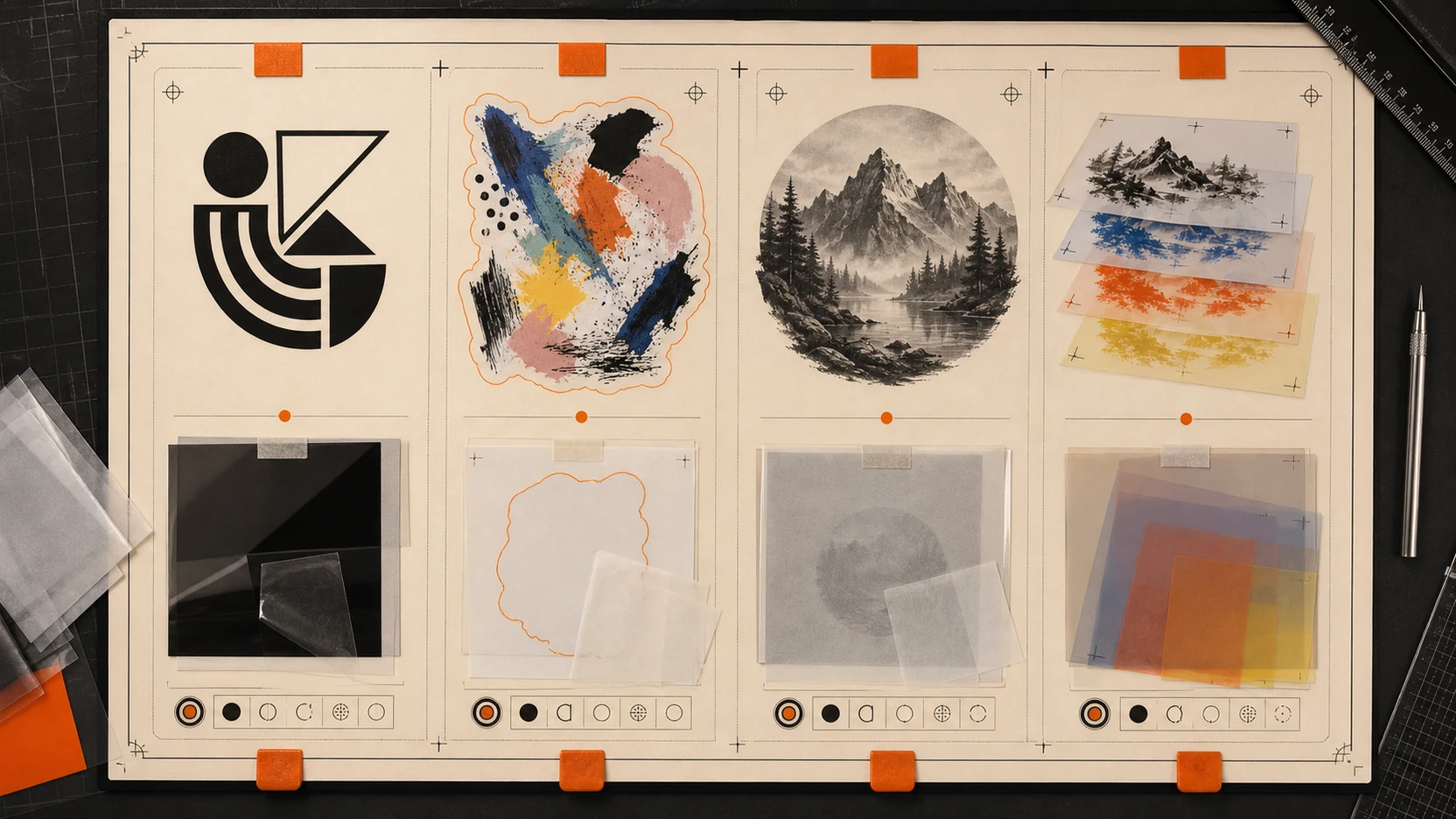
Artwork does not select the method alone, but it can remove the routes that do not fit the file structure.
A screen colour is not an approved transfer colour. A mock-up is not an approved surface sample.
Simple vector shapes
Evaluate cut HTV after checking smallest line, cavity, colour count, mirrored cutting and weeding time.
Full colour with contour
Evaluate printable film after checking raster quality, contour path, transparent zones and film compatibility.
Detailed or tonal image
Evaluate DTF after checking final size, white underbase behaviour, powder edge and intended hand.
Repeat graphic for plastisol
Evaluate a plastisol screen-printed transfer after checking separations, reverse order, carrier shrink, gel state, ink, adhesive and peel route.
- Cut HTV depends on vector outlines and material-specific line and cavity limits.
- Printable film requires print, contour cut, weed and mask steps.
- DTF uses film, white ink, powder and heat preparation.
- Plastisol screen-printed transfers use mirror image, reverse order and carrier registration.
LOCK FIVE VARIABLES
Control the Press Window
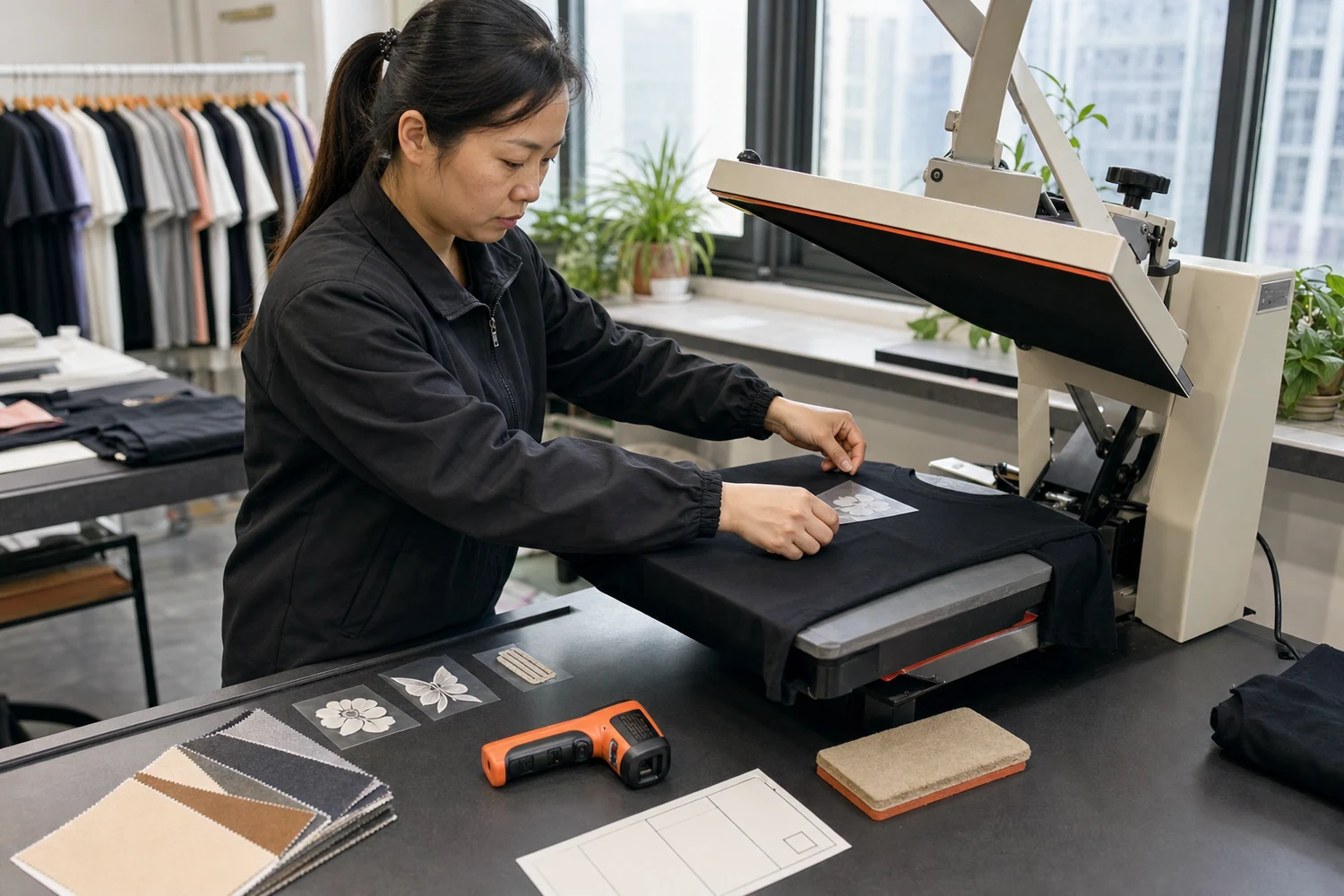
Temperature is only one control. The same reading can fail when pressure, time, peel or the substrate changes.
There is no universal heat-transfer setting. Record the recipe attached to the approved transfer stack.
Temperature
Use the selected transfer system TDS; a set value is not proof that every platen area is accurate.
Time
Separate pre-press, main press and post-press instead of reusing one second count.
Pressure
Record a reproducible pressure setting and check seams, pockets and zips.
Peel
Hot, warm or cold peel belongs to the carrier and must be reapproved when the carrier changes.
Substrate
Lock fibre, weight, colour, stretch, finish and garment placement.
- HTV products differ by temperature, time, pressure and peel.
- DTF post-treatment varies with film, powder and release sheet.
- Plastisol screen-printed transfer gel and application conditions must be verified by that system.
- Obstructions and cold spots affect pressure contact.
FOLLOW THE MATERIAL
Follow the Right Workflow
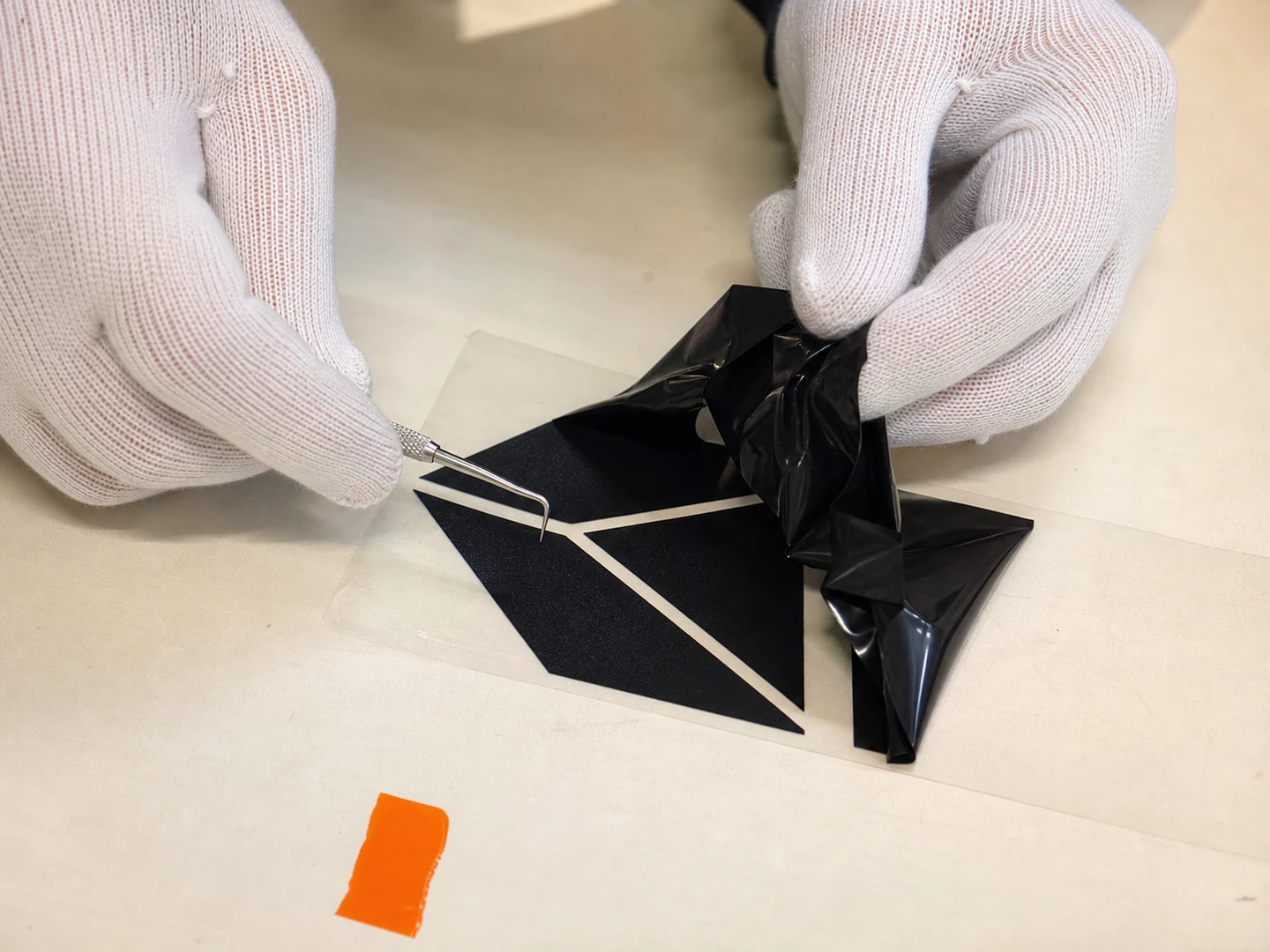
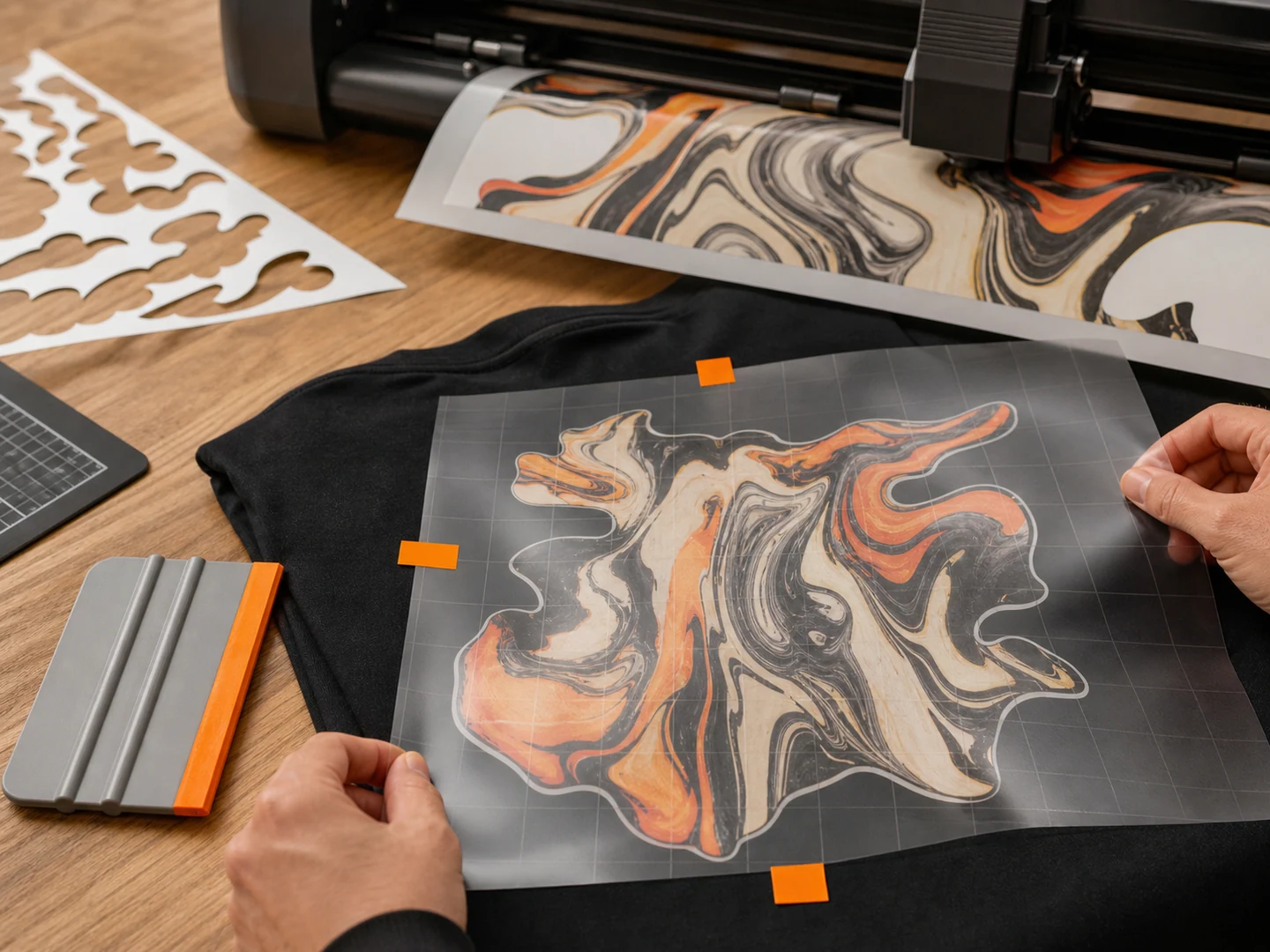
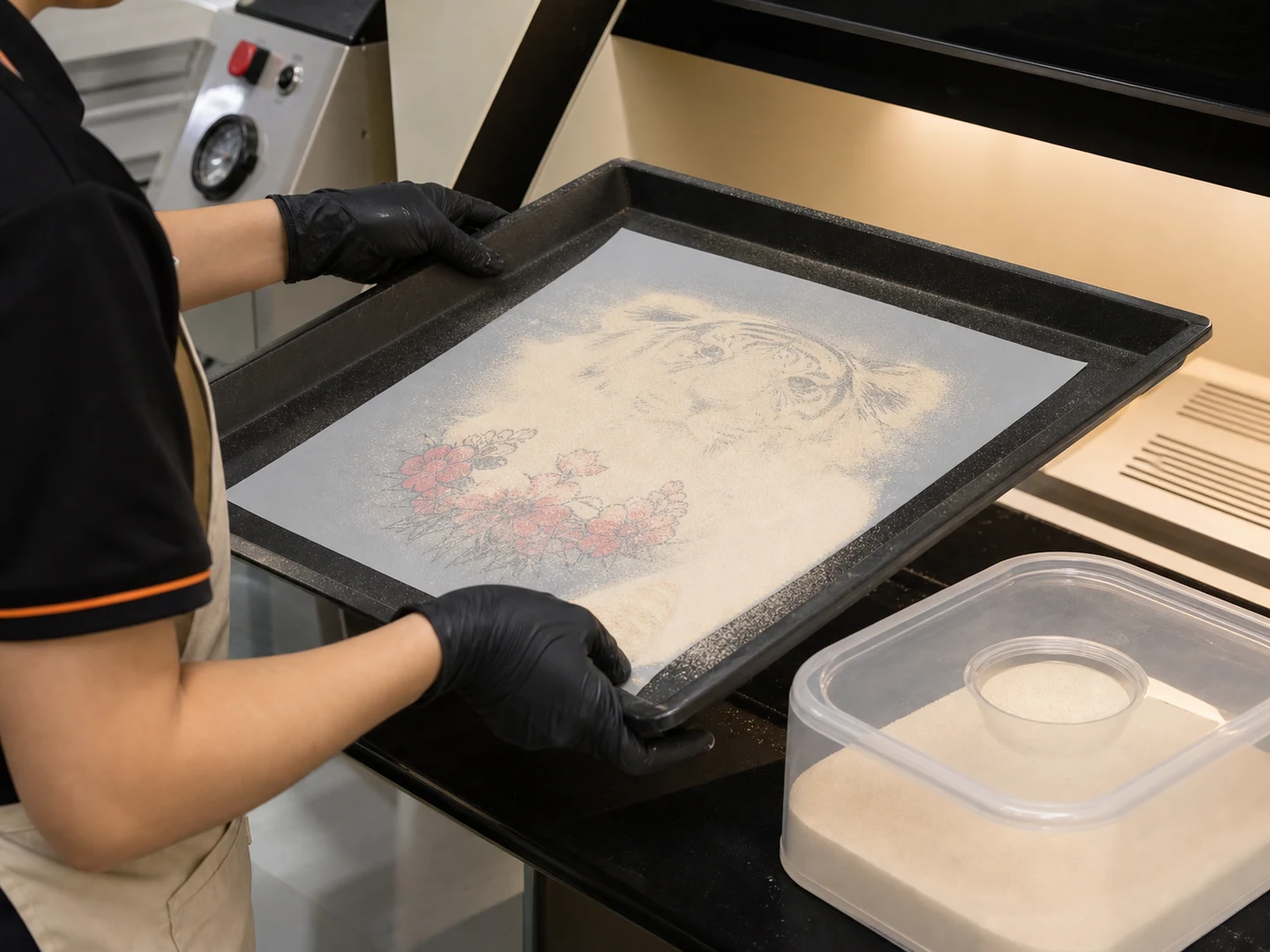
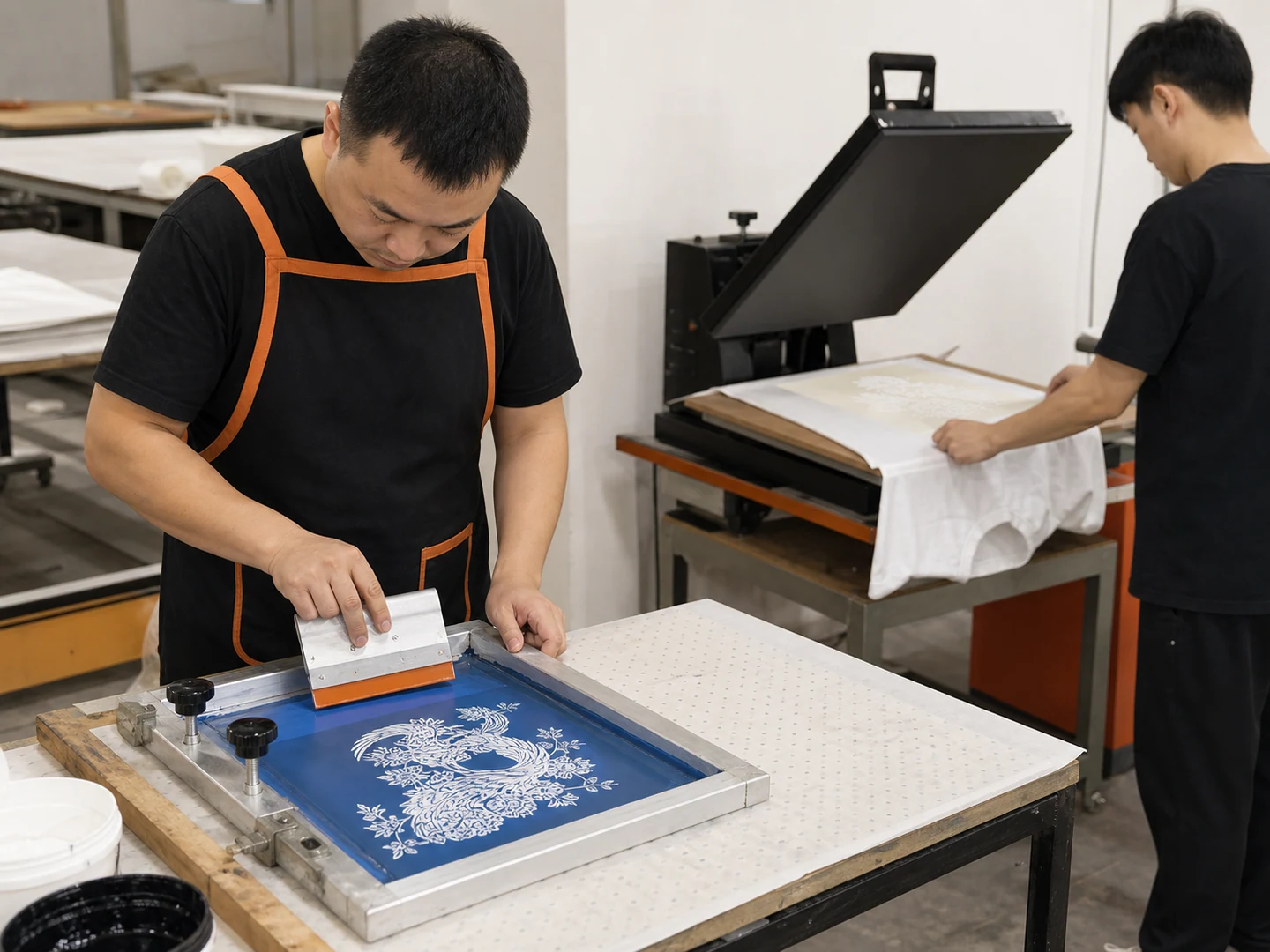
The workflow graphic explains the route. It does not certify Canton Fashion equipment, materials or production capacity.
The plastisol screen-printed transfer workflow does not define water-based, silicone or other screen-prepared transfer systems.
Cut HTV
Outline fonts, test cut, mirror cut, weed, position, press and peel by product.
Printable Film
Print, contour cut, remove excess, apply mask, position and press.
DTF
Print on DTF film, apply powder, heat or dry, position, press, peel by system and post-press if required.
Plastisol Screen-Printed Transfer
Separate colours, reverse print plastisol on carrier, gel by the selected plastisol system, add its specified adhesive, final press and peel by carrier.
- Cut HTV uses product-specific cutting, weeding, pressing and peel conditions.
- Printable film is print-and-cut media with masking and heat application.
- DTF prints on film and uses powder, heat/dry and heat press.
- Plastisol screen-printed transfer is prepared on a carrier and applied in a separate press step.
TEST THE SUBSTRATE
Test the Actual Fabric
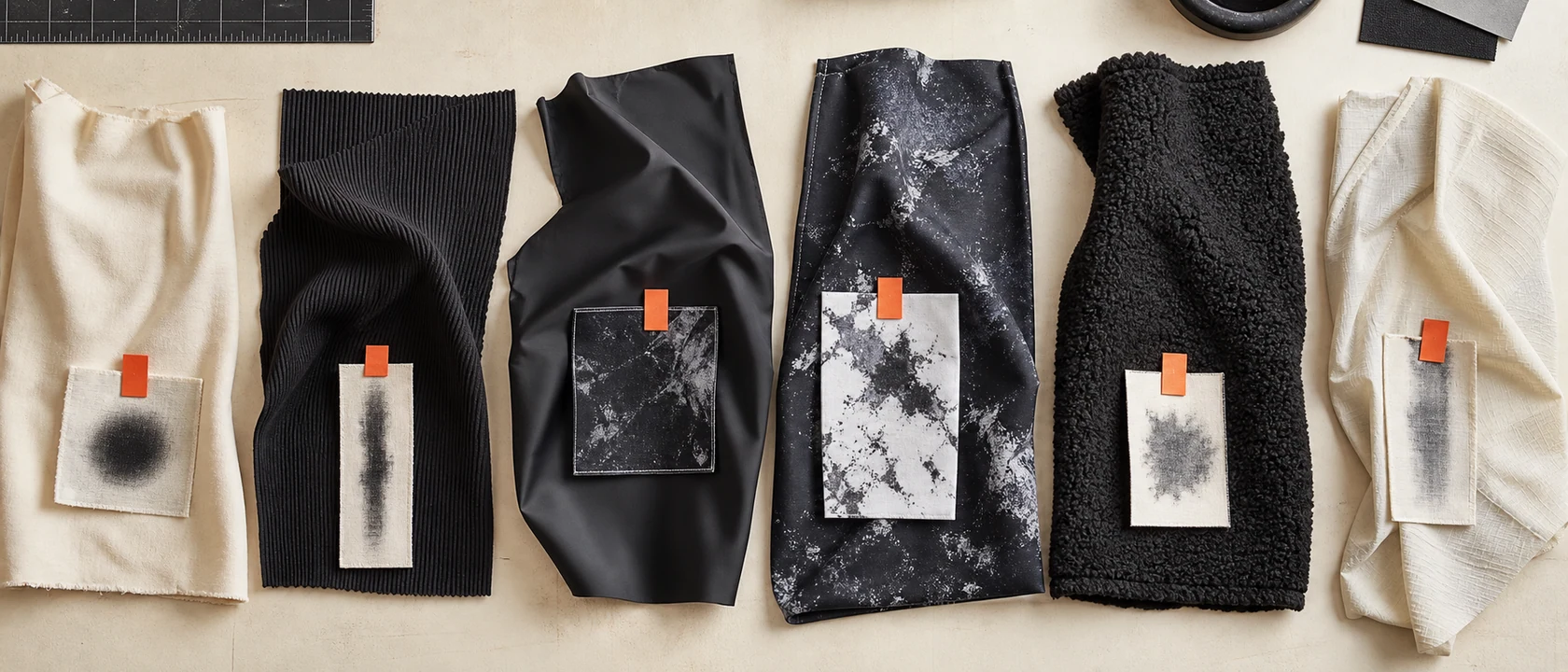
Fibre name is only the first line of the brief. Colour, finish, stretch, surface and garment construction can change the result.
Opacity is not the same as dye blocking, and polyester compatible does not prove every polyester colour or lot.
Cotton or cotton-rich jersey/fleece
Check hand, edge bond, shrink interaction and press marks on exact-fabric strike-off.
Stretch jersey or rib
Check cracking, edge lift, distortion and recovery under expected extension.
Nylon or coated fabric
Use a supplier-backed system plus exact-fabric test for coating and adhesion risk.
Dark or sublimated polyester
Check immediate and delayed dye migration on the same colour and dye lot where practical.
Lightweight or heat-sensitive fabric
Preflight heat response before decoration.
Brushed, ribbed or textured surface
Check whether the transfer can make continuous contact.
- Specific products define substrate compatibility and application windows.
- Dye migration can appear immediately or later and differs by fabric or dye lot.
- Dedicated dye-blocking film exists, so ordinary film cannot be assumed to block migration.
- Hot pressing can be used to evaluate colour change and transfer.
MAP THE GARMENT
Choose a Pressable Zone
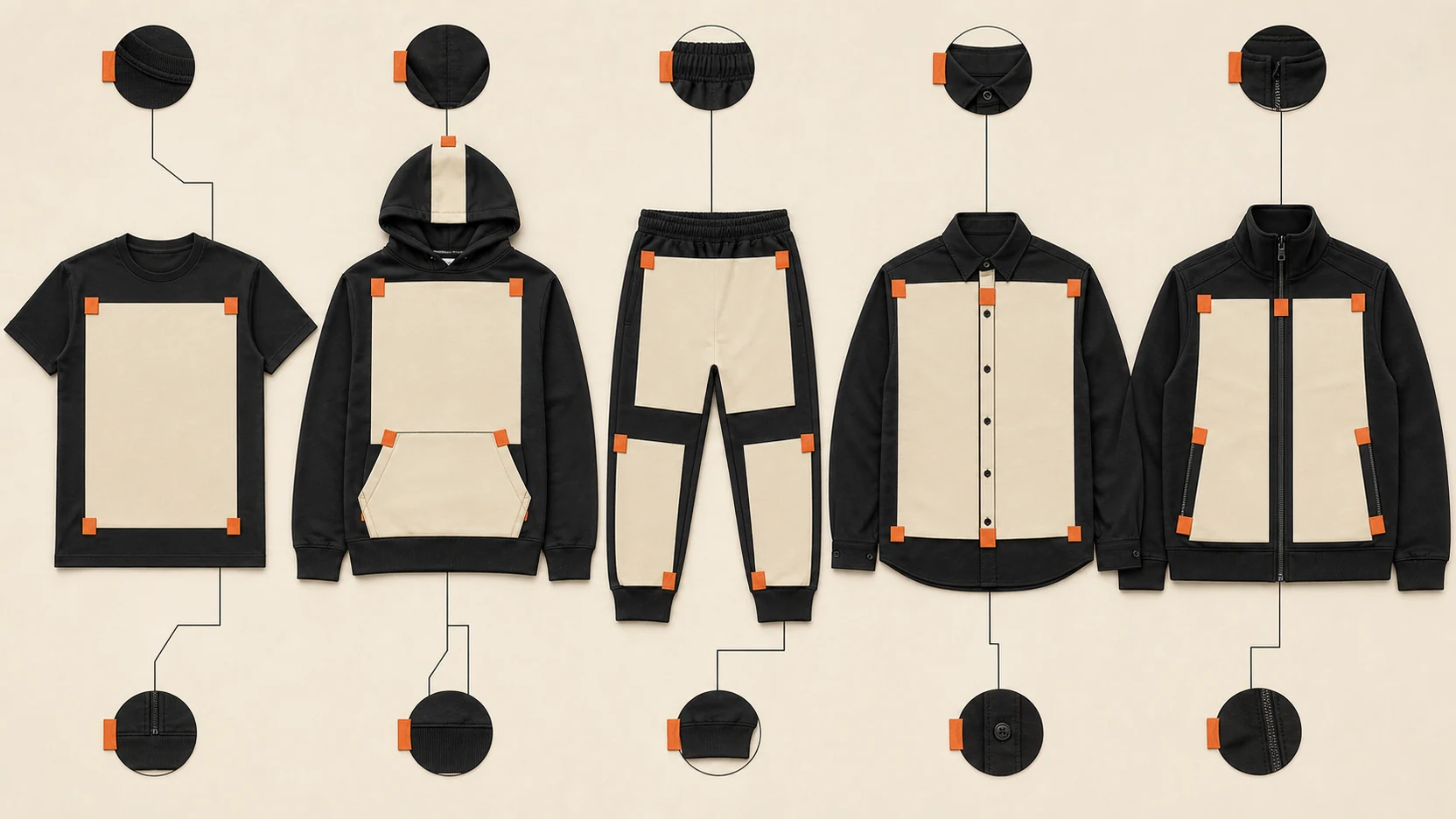
The same fabric can behave differently when a placement sits on a seam, pocket edge, zip, rib panel or built-up garment area.
Product names are routing examples, not a blanket statement that every style accepts every transfer method.
Practical flat-area starters
T-shirts, hoodies, joggers and shorts can start with flat placement checks on the exact fabric.
Structure-dependent
Shirts, pants and jackets require review of plackets, seams, coating, insulation, zips and panel build-up.
Drape and heat sensitive
Dresses and abaya require sample-first review for hand, drape, colour migration and press marks.
- Collars, seams, buttons and zippers can create inaccurate pressure contact.
- The selected transfer must be tested on the actual substrate and placement.
SEE THE STACK
See the Transfer Stack
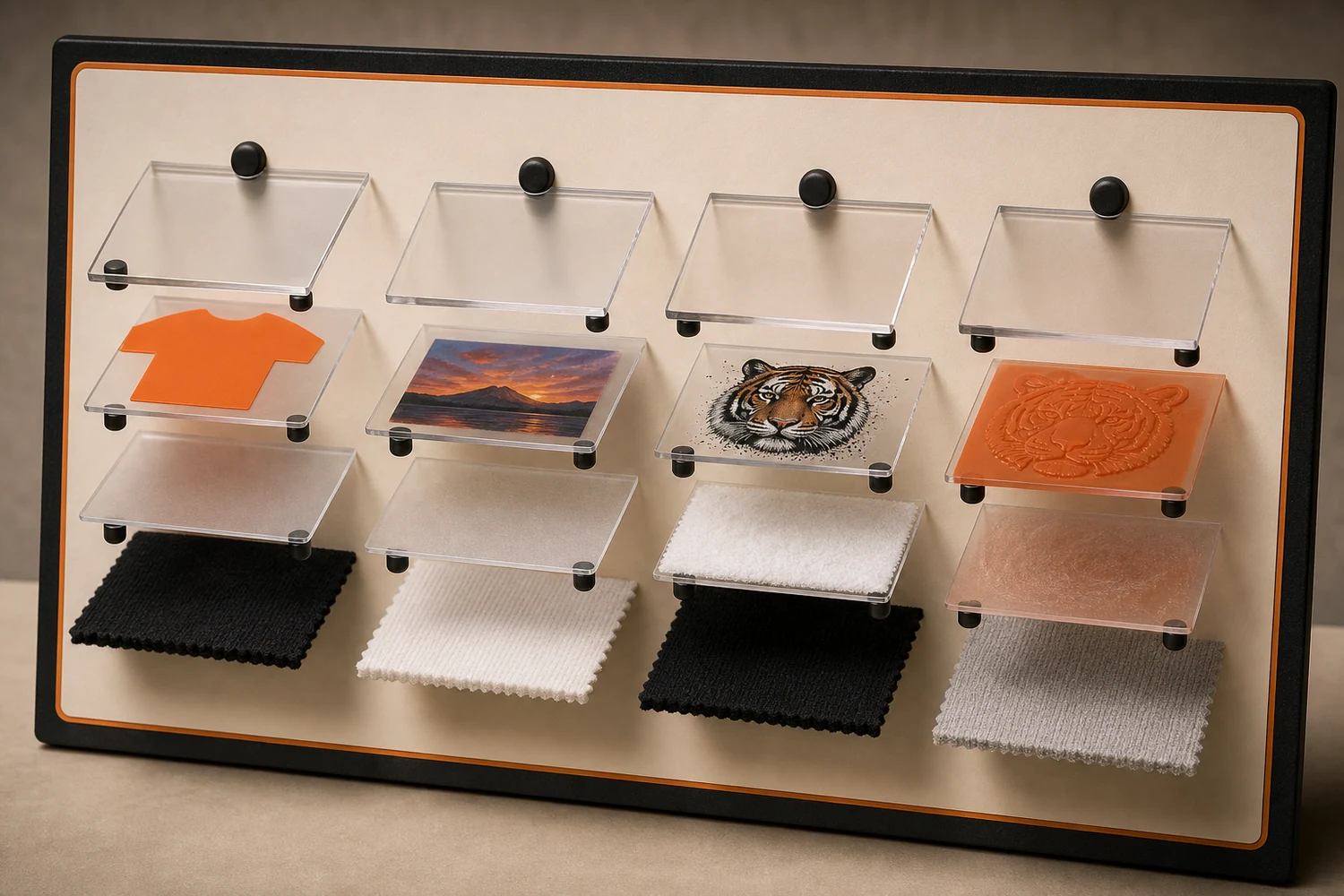
The visible colour is only one layer. Carrier, image, adhesive and textile must separate and bond in the right sequence.
A white or opaque layer can cover the fabric colour, but it does not automatically block migrating disperse dye.
Cut HTV
Carrier, pre-coloured film, built-in bonding layer and textile.
Printable Film
Application mask or carrier, printed film surface, bonding layer and textile.
DTF
Release film, colour and white ink, hot-melt powder layer and textile.
Plastisol Screen-Printed Transfer
Release paper or film, reversed plastisol image layers, specified adhesive layer and textile.
- DTF uses film, colour and white ink structure and hot-melt powder.
- Plastisol screen-printed transfer uses a carrier, plastisol image layers and a specified adhesive route.
- Specific HTV can be PU rather than automatically PVC.
- Opacity and dye migration control are different questions.
FLATTEN THE CONTACT AREA
Remove Pressure Obstacles
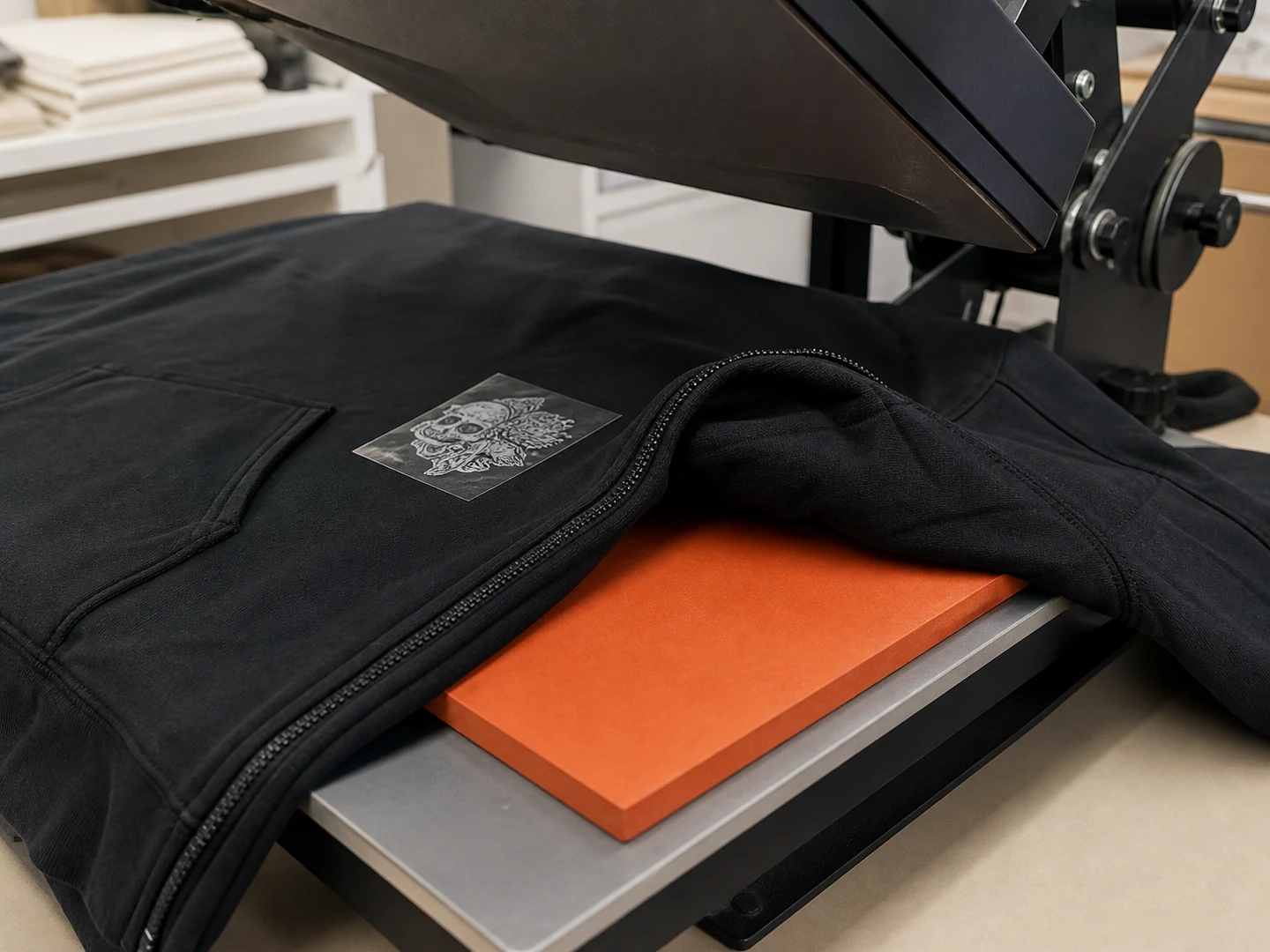
A press can close while part of the graphic still receives less contact.
Padding is not a universal repair. It changes the contact geometry and must be validated with the selected transfer.
Move the graphic
Place the artwork where the whole transfer can contact the platen.
Use the right platen or support
Use a verified platen or pad and keep thick structures outside the pressure zone.
Validate contact
Recheck heat and pressure across the entire graphic area.
Change route when needed
If even contact cannot be built, change the placement or decoration route.
- Garment obstacles and platen cold spots can create inaccurate heat-press pressure.
- Pressure, time and temperature are product-specific variables.
BALANCE THE RESULT
Balance Detail and Hand
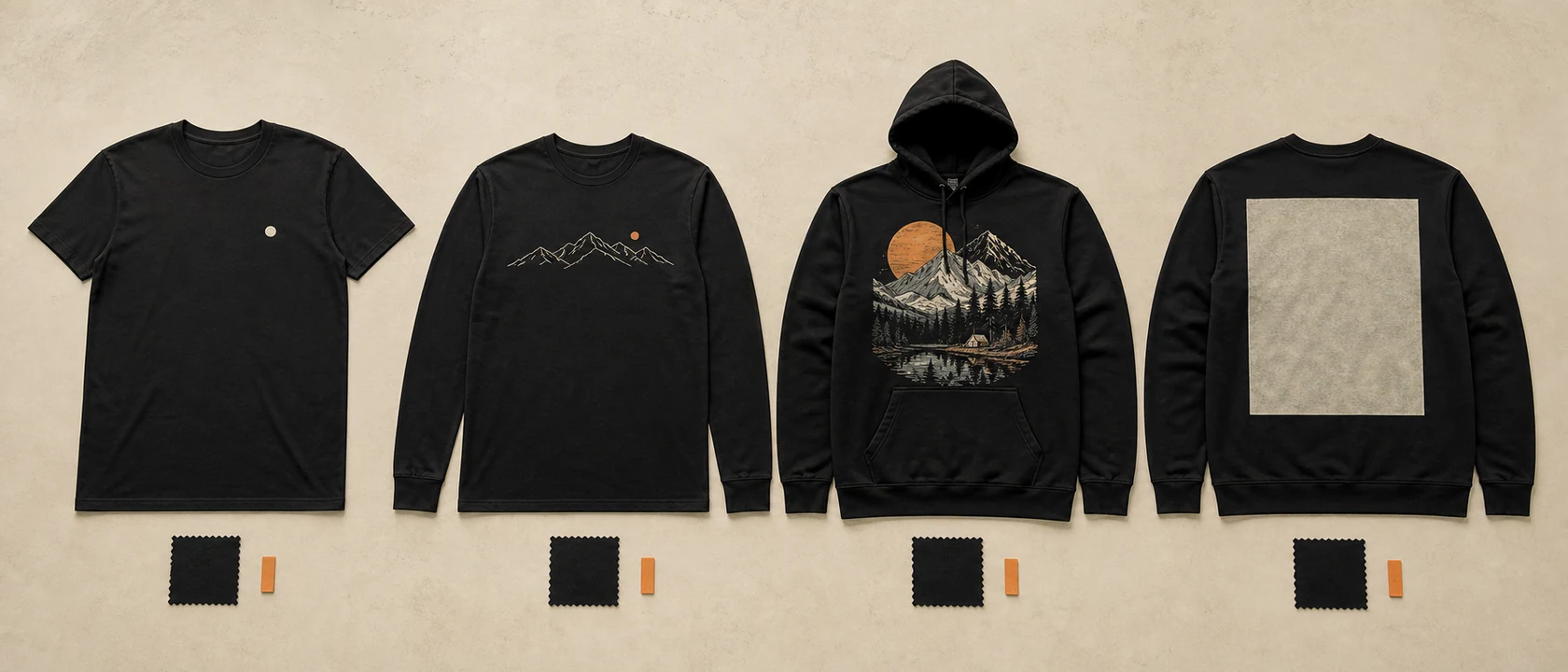
Different heat-transfer routes can simplify some artwork and application steps, but each adds its own surface, hand and test burden.
Heat sensitivity, dye migration, coating, stretch and garment structure risks do not disappear because the name says heat transfer.
Simple names or one-colour marks
Cut HTV can avoid colour separation printing but still needs weedability, film colour, edge, hand and substrate approval.
Full colour with a defined outer shape
Printable film carries multiple colours in one printed film but still needs contour, mask and surface coverage approval.
Fine or multicolour placed graphics
DTF can avoid one cut-and-weed operation per colour but still needs white/powder edge, hand, migration, stretch and wash response checks.
Repeat graphics prepared in advance
Plastisol screen-printed transfer can separate transfer preparation from garment application but needs separations, carrier shrink, gel, specified adhesive, peel and final press approval.
- The four routes use different preparation steps and material stacks.
- Polyester migration and material risk still require testing.
READ THE FAILURE
Read the Failure

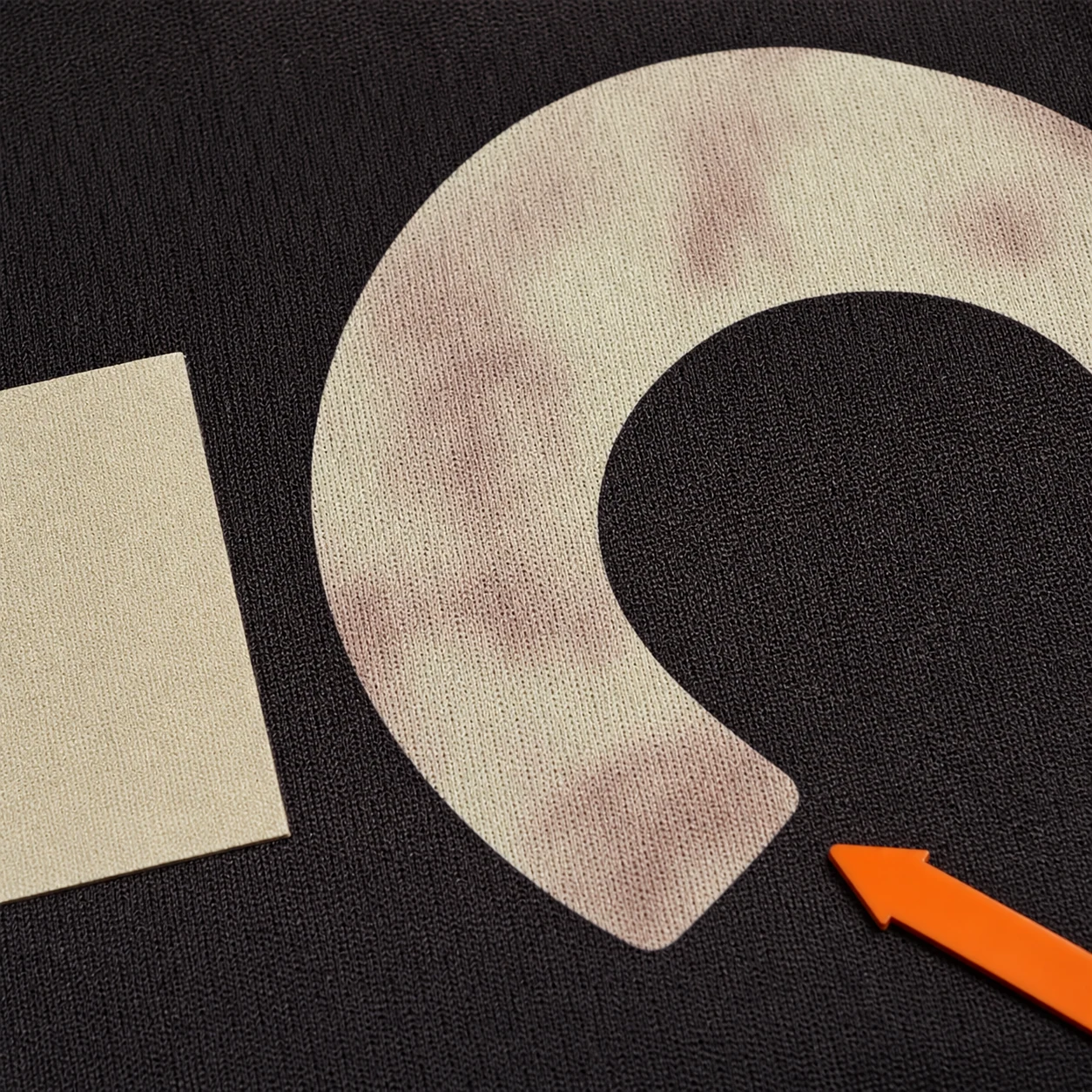
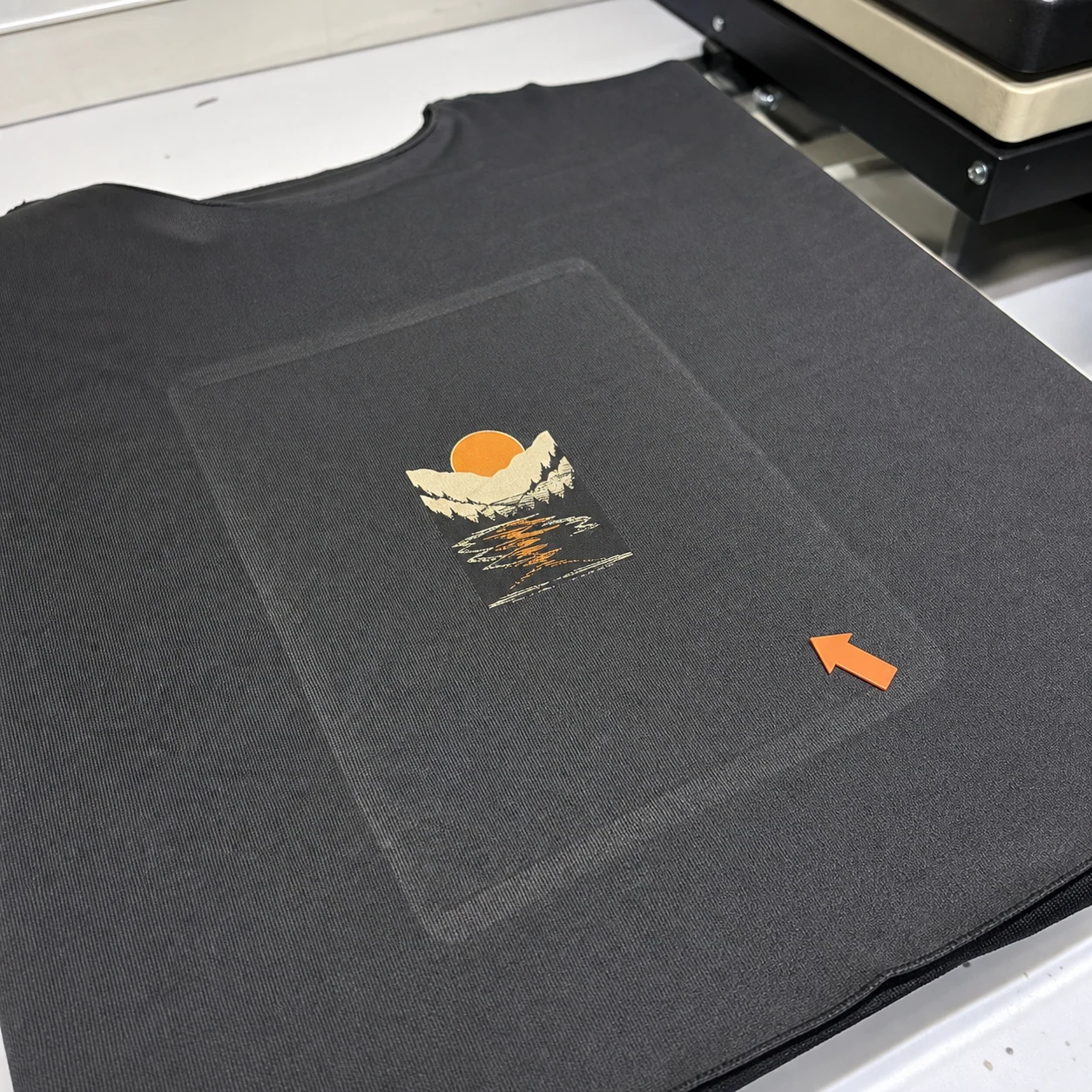
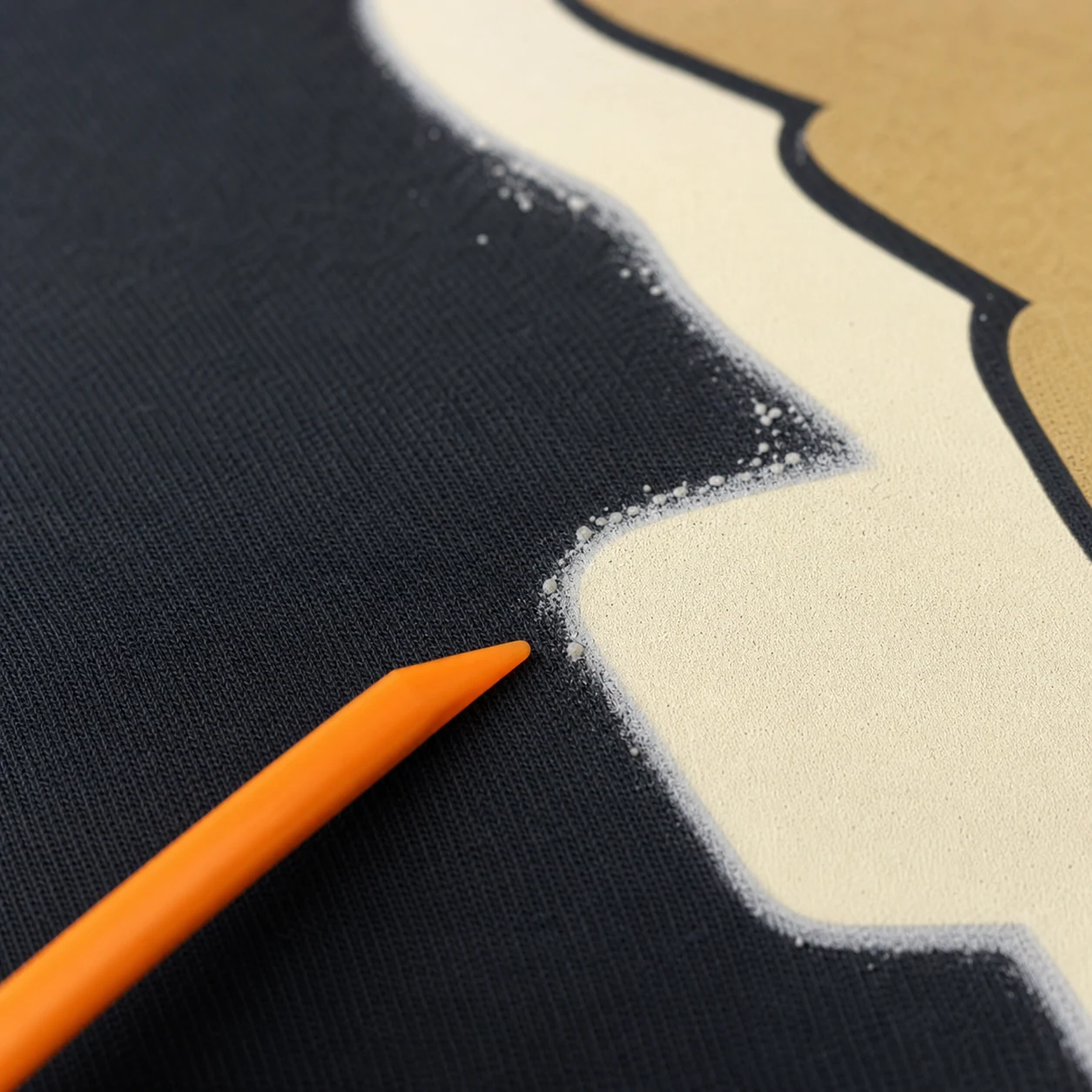
A defect is evidence about the stack. Do not change heat, time or pressure until the route, substrate and failure pattern are identified.
Plastisol registration, gel, release and adhesive diagnoses belong only to the supported plastisol screen-printed transfer lane.
Edge lift or local non-bond
Inspect obstruction, pressure contact, application window, adhesive/substrate match and contamination.
Incomplete release
Inspect peel temperature, carrier and pressure; for the supported plastisol lane also inspect gel state.
Cracking after stretch
Inspect transfer selection, coverage, extension, cure or bond and recovery.
Dark colour bleeding through
Inspect polyester dye, heat exposure, blocking stack, fabric colour or lot and observation time.
DTF powder edge or lumps
Inspect powder distribution, excess removal, ink or white structure and heat/dry stage.
Plastisol registration or release
Inspect carrier shrink, reverse print order, screen registration, gel, specified adhesive and final application window.
- Product-specific press and peel conditions affect bonding and release.
- DTF powder, release sheet and post-processing affect surface defects.
- Plastisol carrier registration, gel and peel facts are plastisol-specific.
- Dye migration and pressure obstructions create distinct visible failures.
LOCK THE REFERENCE
Approve the Exact Stack
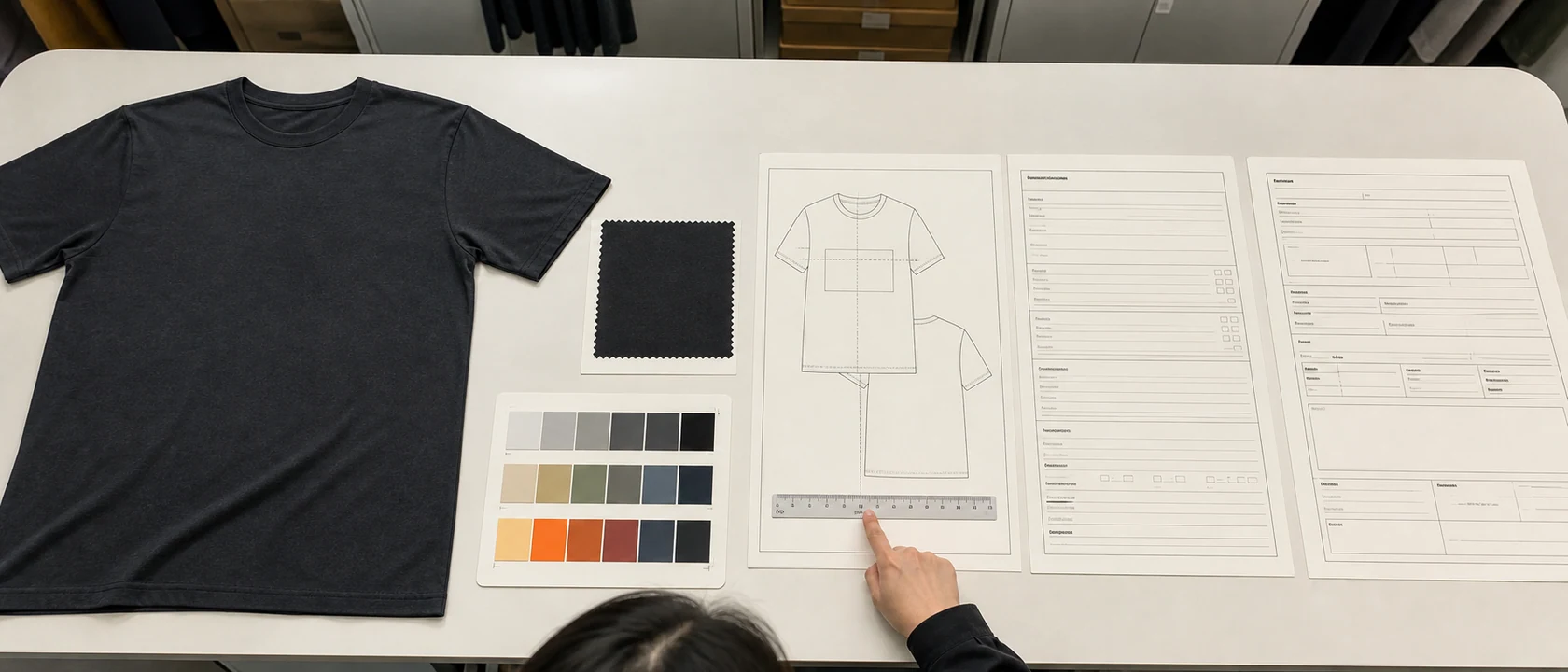
A digital mock-up approves position intent. A physical sample approves the transfer surface and its interaction with the garment.
Recognised test methods are planning references, not claims of a pass grade or laboratory result.
File and route
Name the transfer route, final dimensions, placement and artwork limits.
Material and press card
Lock fabric, garment style, film or ink system, carrier, time, temperature, pressure, peel and post-press.
Physical sample
Approve size, position, colour, surface, edge, hand, stretch, press mark and migration after cooling.
Agreed care checks
Choose wash, dry, crocking, hot-press or internal visual checks by project need.
- Exact-system testing and application records are required.
- AATCC and ISO methods define wash, crocking and heat-response test scopes.
COMPARE THE STRUCTURE
Compare the Decoration Route
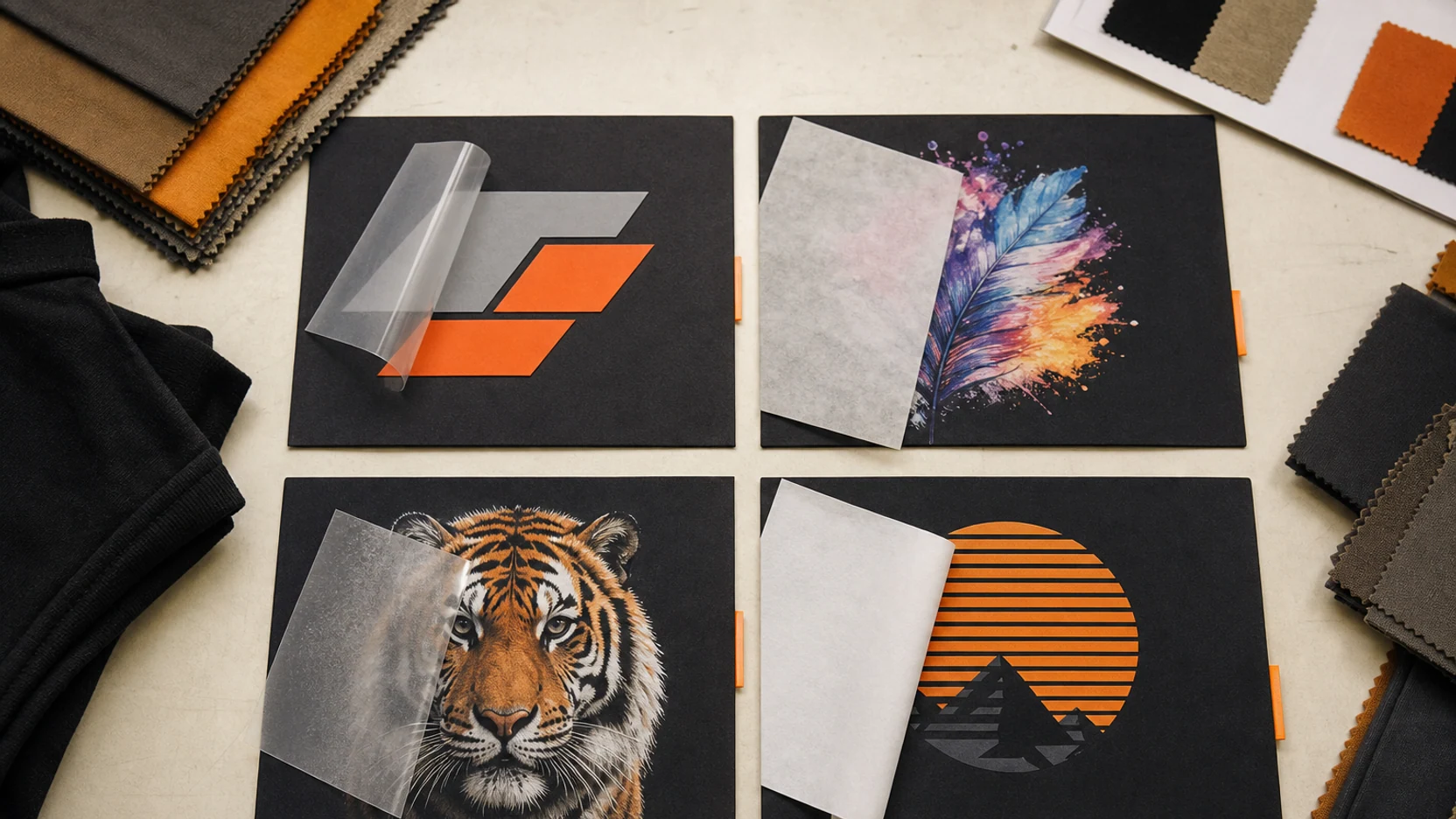
Sharing a heat press does not make two methods the same.
DTF is one heat-transfer route, not a synonym for heat transfer, and plastisol screen-printed transfer is not direct screen printing.
Surface-bonded heat transfer
Image begins on film, paper or another carrier and reaches the garment as film or ink plus a selected bonding system.
Sublimation
Dye diffuses into suitable polyester and normally has no comparable adhesive film layer.
Direct screen printing
Ink is deposited directly on the textile with no intermediate transfer carrier.
DTG or direct digital printing
Ink is printed directly on the garment through a separate direct-print route.
- Heat transfer is a carrier-based family.
- Sublimation is a fibre-level dye route.
- The supported plastisol screen-printed transfer is prepared on a carrier.
- DTF is a film, powder and heat-press route.
BUYER QUESTIONS
Heat Transfer FAQ
Use the FAQ to resolve terminology before the buyer submits a project brief.
The MOQ answer is Canton Fashion project policy, not an industry rule for heat transfer.
Is heat transfer the same as DTF?01
No. DTF is one heat-transfer route; cut HTV, printable film and plastisol screen-printed transfers use different preparation steps.
Is sublimation a heat transfer?02
It uses heat and a transfer route, but the dye enters suitable polyester; this site reviews sublimation on its own page.
Can one setting work for every transfer?03
No. Temperature, time, pressure and peel differ by product and system.
Why do edges lift?04
Possible causes include pressure obstruction, application window, contamination or adhesive/substrate mismatch.
What is your usual minimum order quantity?05
Our usual starting point is 100 pieces per style per colour. Material or style may require a different minimum.
- DTF is one heat-transfer route with film, powder and heat-press steps.
- HTV is a film route and not one universal chemistry.
- Sublimation belongs on its own polyester dye route.
- Application settings and substrate compatibility are product-specific.
CONTINUE THE REVIEW
Continue With Conditions
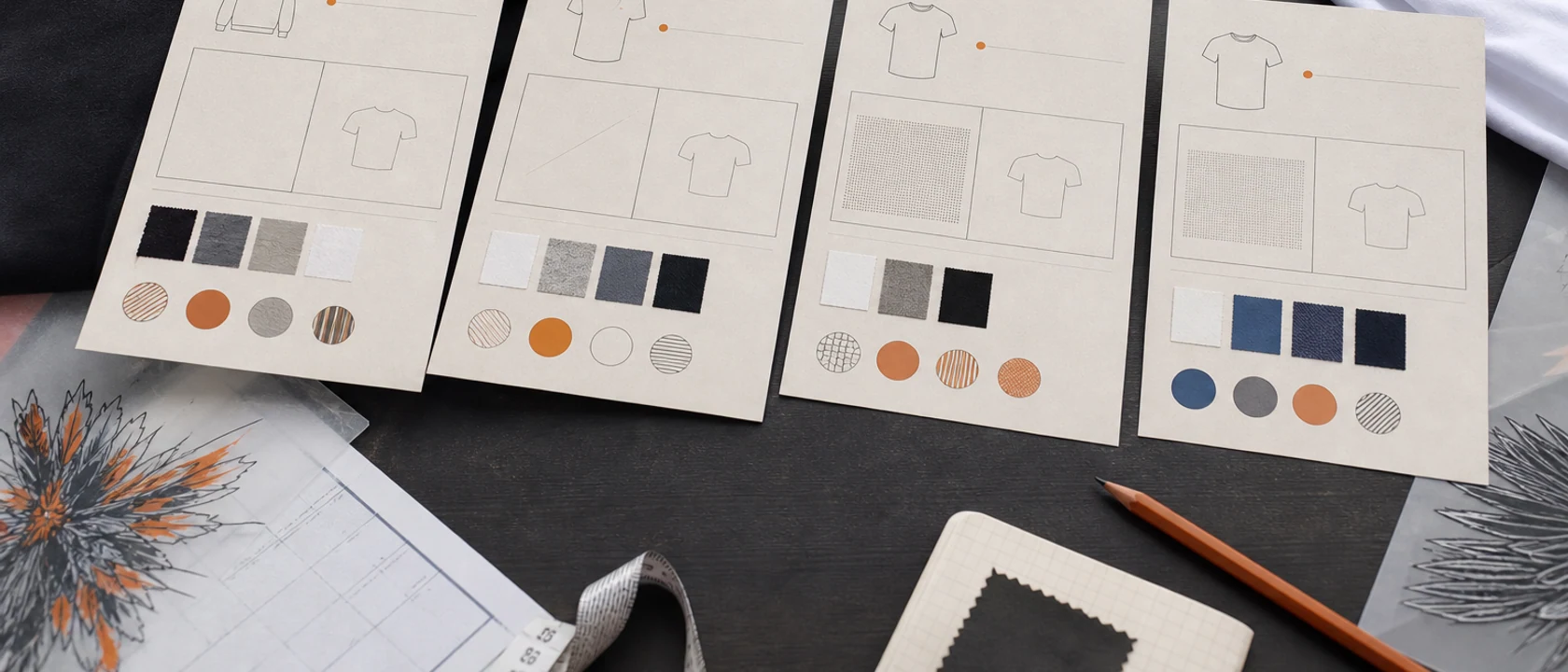
Use product routes when the garment is known, service routes when material or sample approval is missing, and technique routes when the decoration structure should change.
Compatibility depends on the exact fabric, colour, finish, placement, transfer system and approved sample.
Practical flat-area starters
T-shirts, hoodies, joggers and shorts after exact fabric and placement checks.
Structure-dependent garments
Shirts, pants and jackets when plackets, seams, coatings, insulation or zips control the pressable area.
Drape and heat sensitive garments
Dresses and abaya when hand, colour, press mark and drape must be sampled first.
Services
Apparel sampling and fabric sourcing when the physical sample or substrate details are not yet locked.
Alternative techniques
All Techniques, Sublimation, Screen Printing, Digital Printing and Puff Printing when another decoration route better fits the project.
PROJECT INPUTS
Send the Transfer Brief
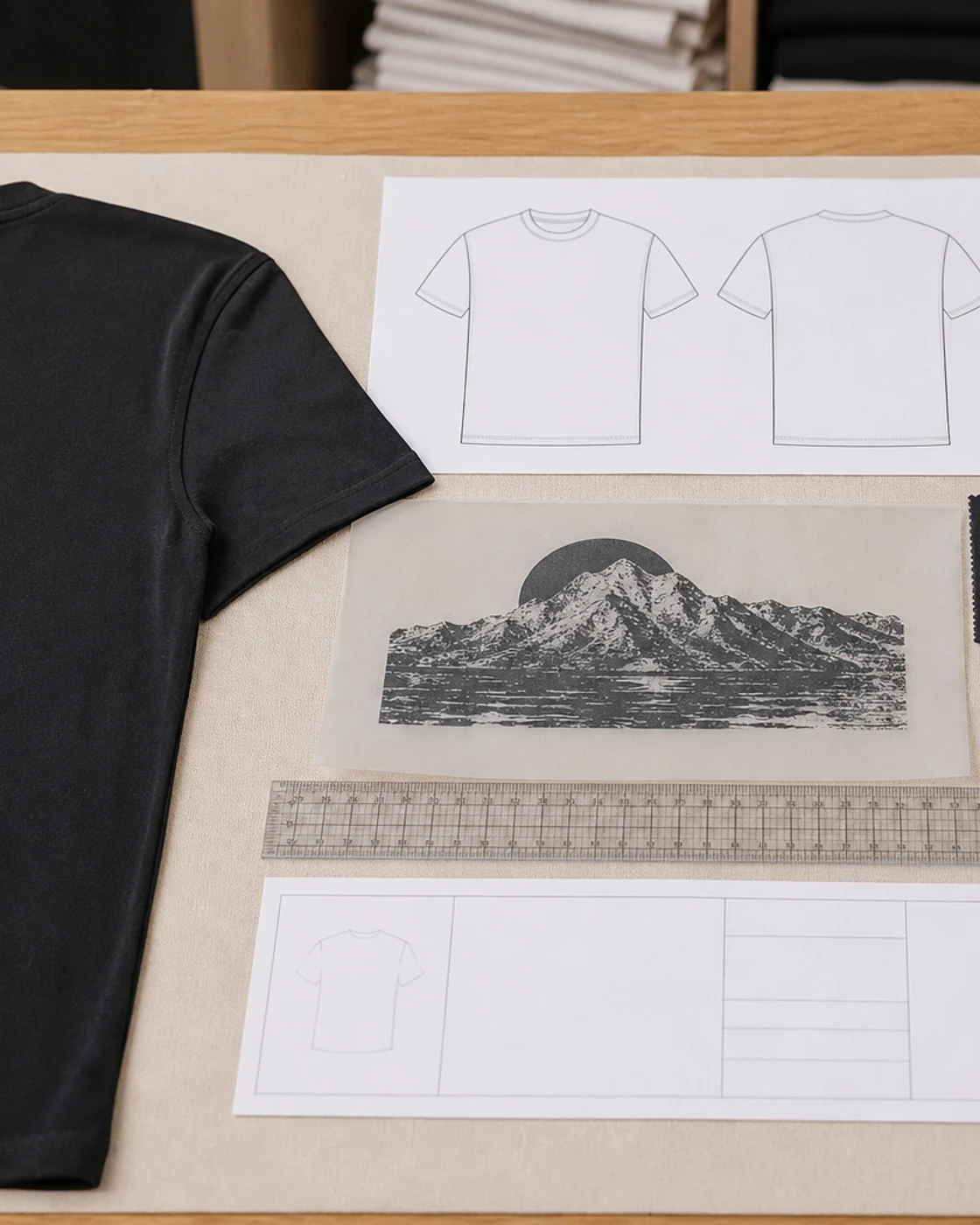
Send the artwork, exact material and placement first. The transfer route and sample plan can then be reviewed against the same inputs.
Our usual starting point is 100 pieces per style per colour. Material or style may require a different minimum.
Contact
Name, company, work email, country and target market.
Garment
Product type, style, tech pack, quantity by style and colour, size range and care-label expectation.
Material
Fibre, construction, weight, colour, stretch, finish, coating, sublimated-polyester status and swatch/spec upload.
Artwork
Artwork upload, file type, size, colour reference, placement, mock-up and detail notes.
Transfer route
Not selected, cut HTV, printable film, DTF, plastisol screen-printed transfer, considering sublimation or other/not sure.
- The usual Canton Fashion starting MOQ is 100 pieces per style per colour, with material or style exceptions.