Decoration route · Fibre pile
Flock Printing for Custom Apparel
Choose flock for a velvet-like pile, not as a generic name for fuzzy transfer vinyl. Compare the route, fibre, adhesive, fabric and care test before bulk.
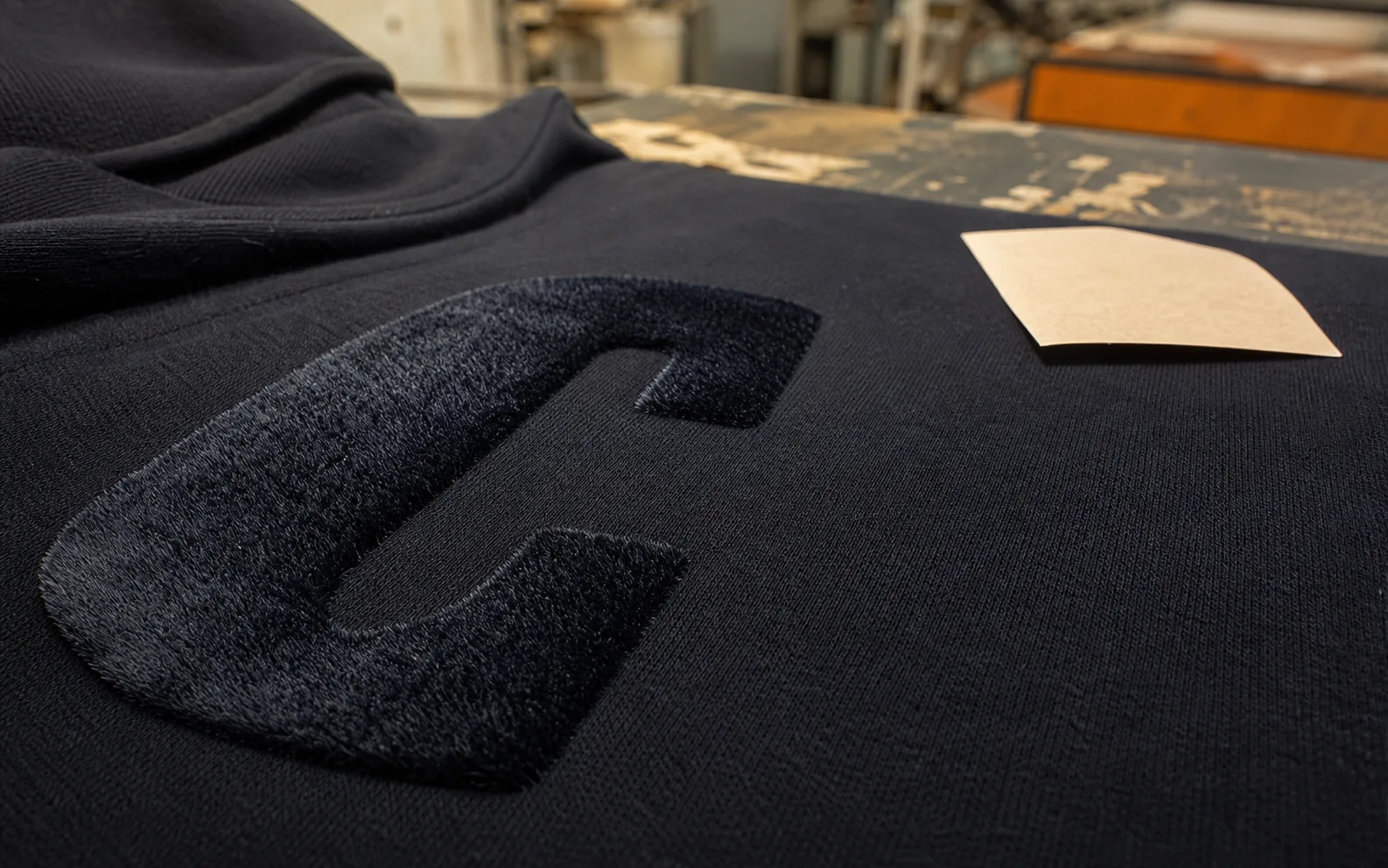
Start with the surface
Do you need fibre pile—or just a raised logo?
Flock is made from short fibres fixed by an adhesive system. Choose it when the pile itself is part of the design.
If the brief is only raised height, rubber feel, flat colour or stitched thread, compare another technique before sampling flock.
Choose flock
The fibre pile, matte look and touch are part of the brief.
Compare another method
The brief is really flat colour, expanding foam, rubber build or stitched thread.
Approve physically
A render cannot show fibre direction, shedding, drape, abrasion or wash change.
- Flock printing fixes cut fibres in a patterned adhesive to create a three-dimensional pile surface.
- Electrostatic flocking aligns and embeds fibres into an adhesive-coated surface.
Route language
Direct, transfer and printable are not the same kind of label
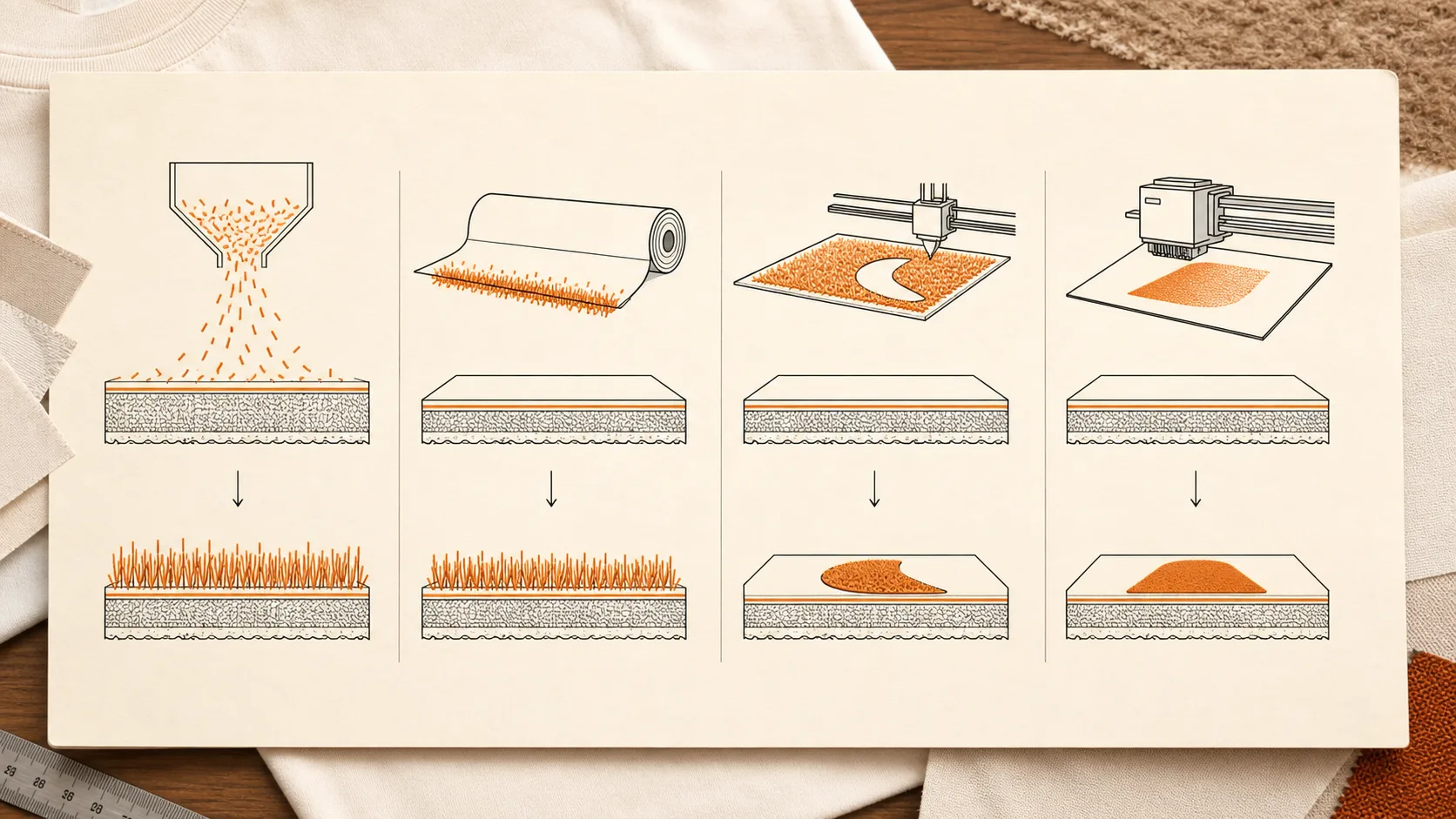
One question is where the fibre sits before final application: loose fibre, a flocked carrier, or a prepared media.
Another question is what creates the image: adhesive, cutting, printing or a pre-made transfer system.
A product sheet describes one material system. It does not define every flock process.
Direct electrostatic
Loose fibres are deposited into a wet adhesive image.
Pre-flocked transfer
The flock starts on a carrier and is transferred by heat and pressure.
Plotter flock
Prepared flock media is cut, weeded and heat-applied.
Printable flock media
A specific media system carries printed colour and still needs its own test.
- Flock transfer uses paper or film carrying flock fibres and moves the flock to the substrate with a heat-transfer press.
- Adhesive may be applied in a motif by screen or rotary printing, but that application method does not by itself define the carrier route.
Specify the pile
Turn “soft and fuzzy” into a fibre specification
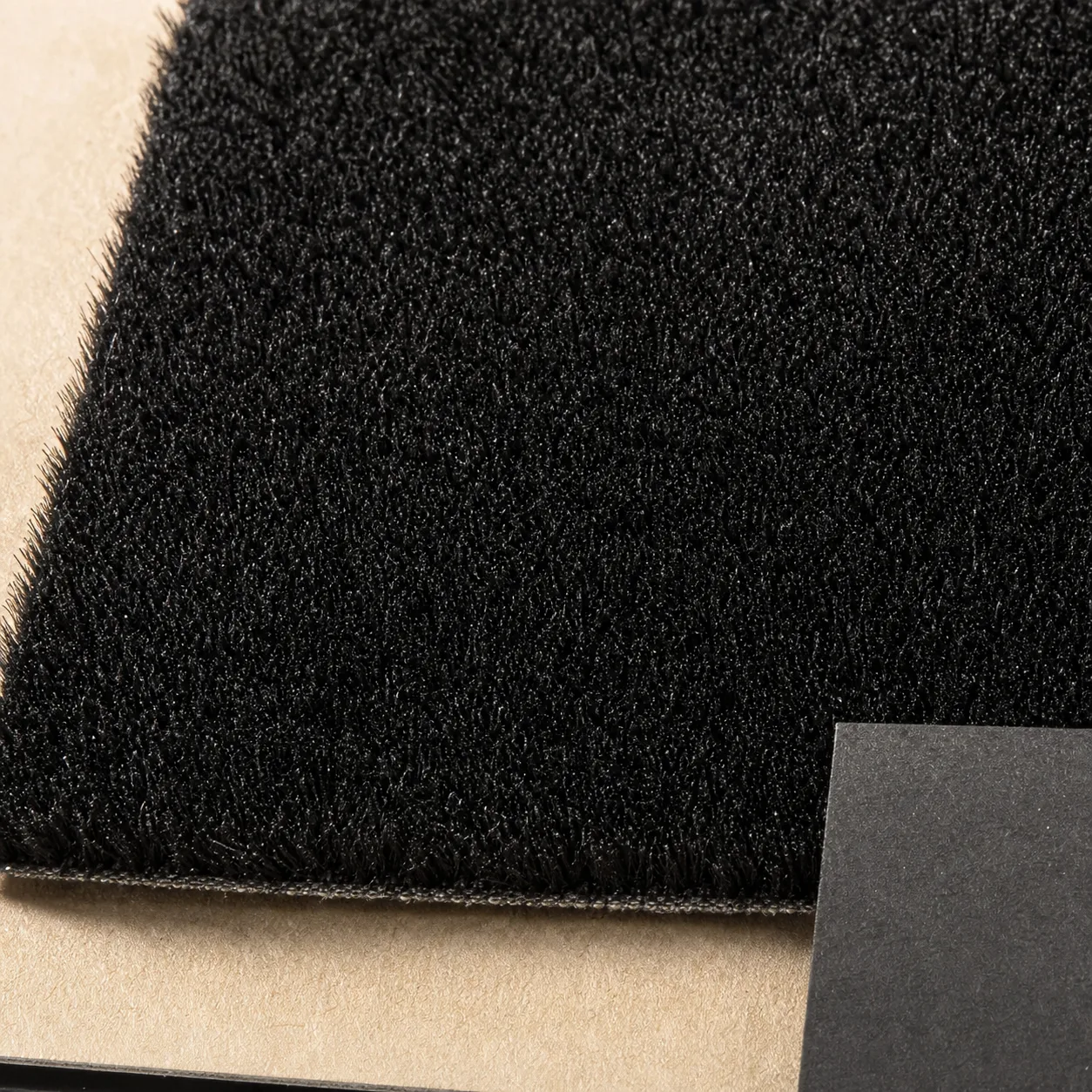
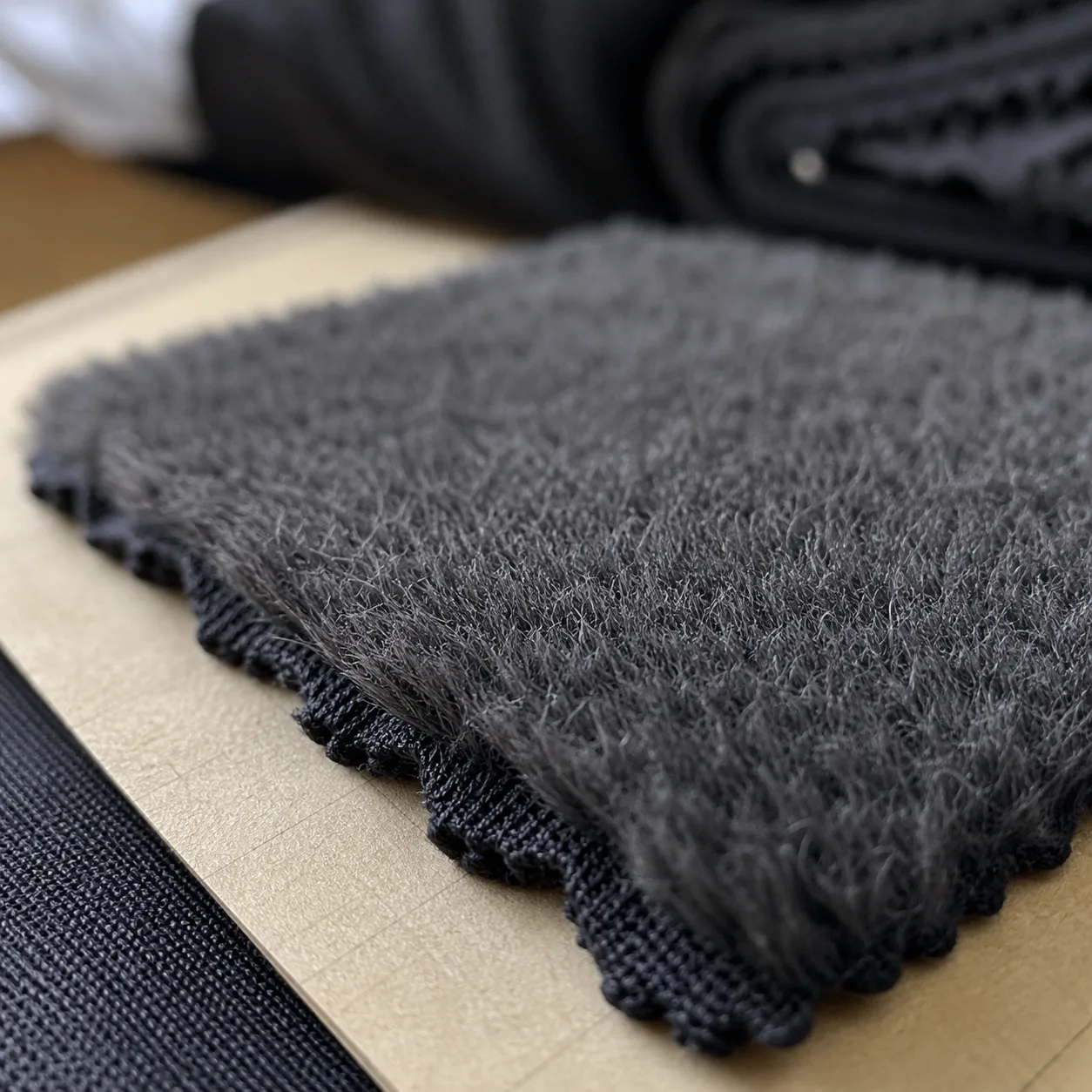
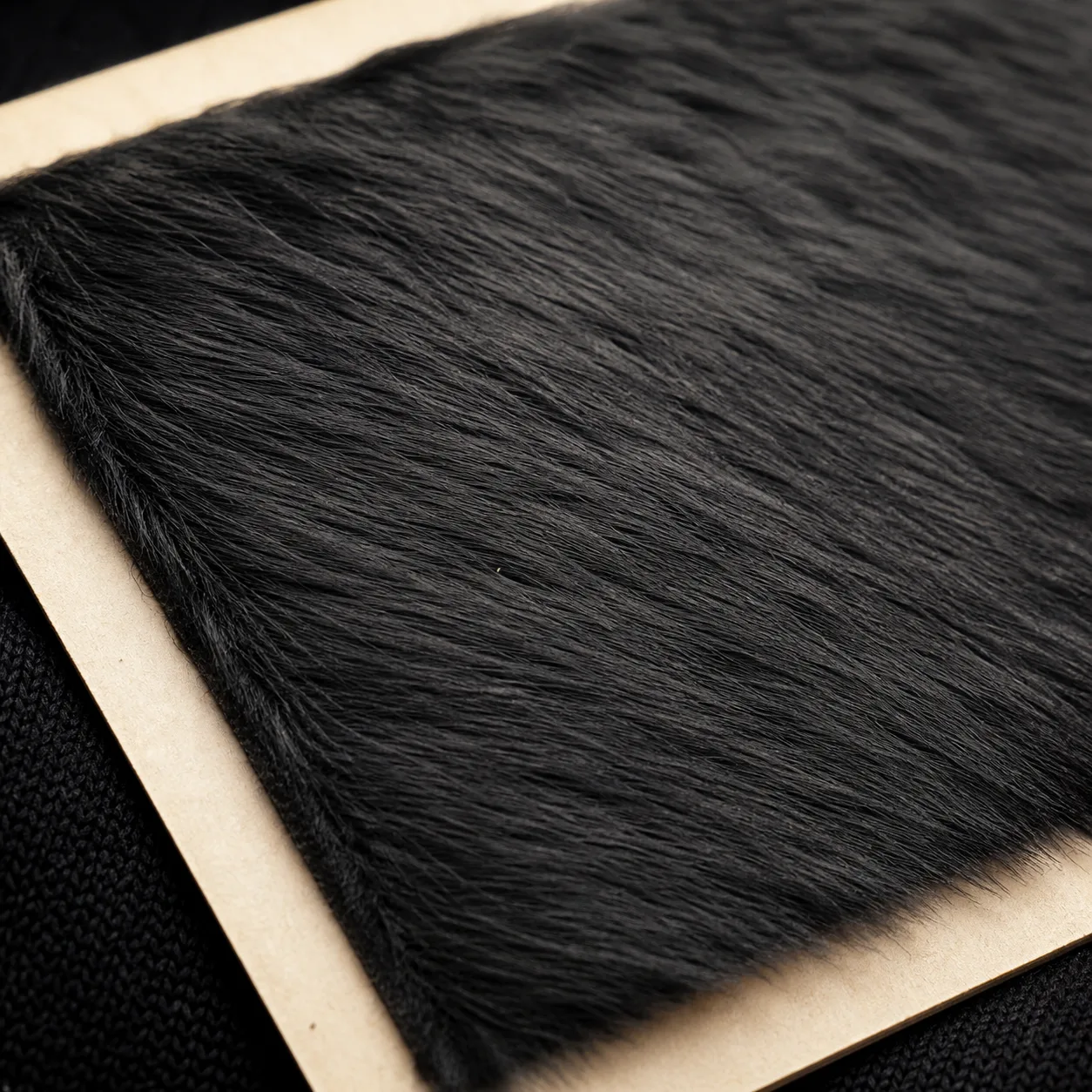
Flock feel is not a single setting. It comes from fibre material, cut length, dtex, density, colour lot and surface direction.
The web page can explain the choices. The production decision still needs a physical sample.
Fibre material
Choose after colour, touch, durability and route are discussed.
Cut length
Longer pile changes the look and may close detail.
Dtex
Finer or heavier fibres change density and surface character.
Colour and lot
Approve the actual material, not only a screen colour.
- Flock fibres may be made from polyamide, polyester, viscose or cotton.
- Flock dimensions are defined by cut length and titer in dtex.
The bond stack
The flock is only as reliable as the layer beneath it
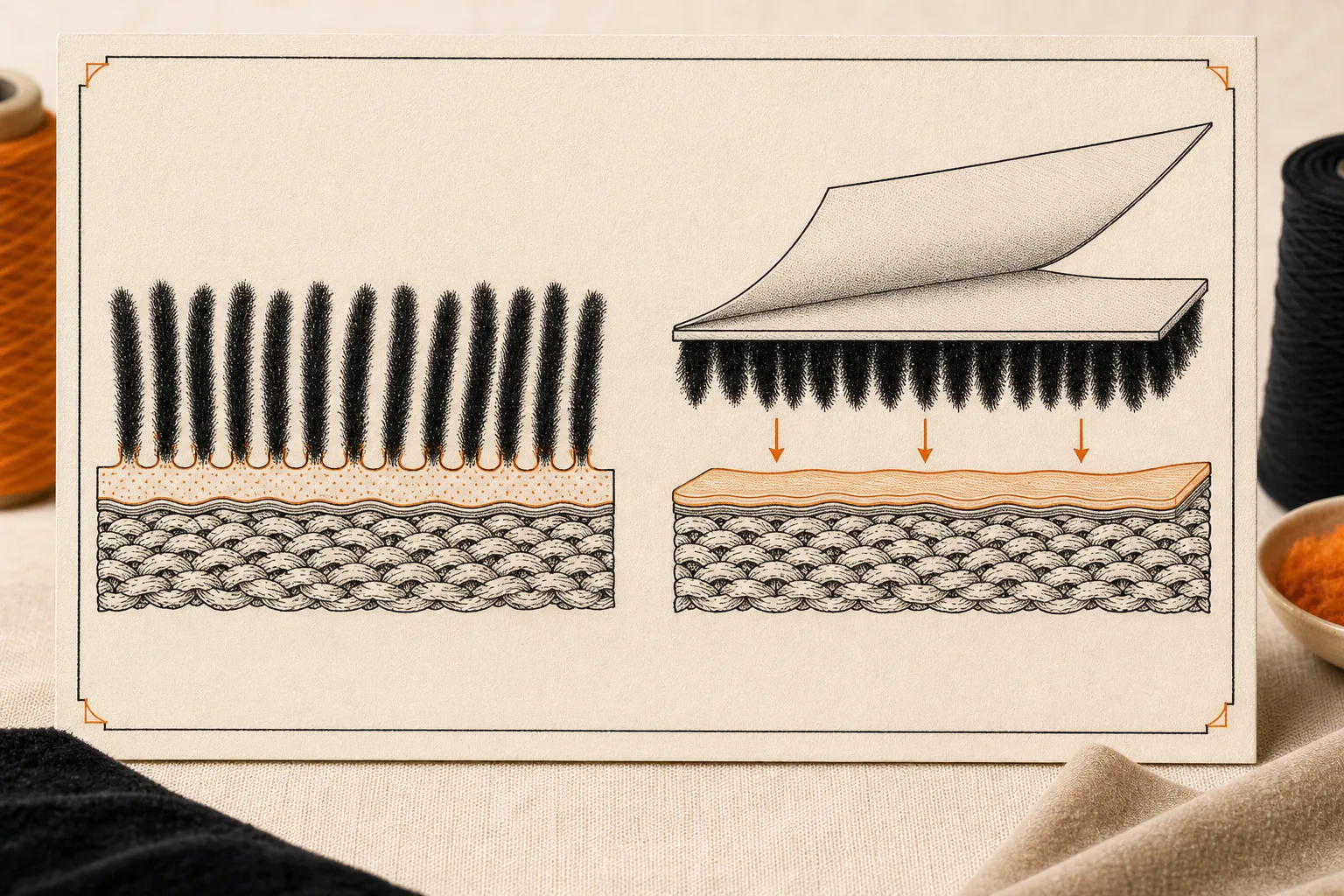
The visible pile is the last layer. The hidden work is the bond between fabric, finish, adhesive and fibre.
Direct and transfer routes create different layer stacks, so they need different process records and approval samples.
Fabric and finish
Composition alone is not enough; coating, softener, stretch and dye route matter.
Adhesive layer
The image must hold enough fibre without closing detail.
Fibre embed
The pile must be set into the adhesive, not just dusted on top.
Cure or press
Record the actual route-specific conditions.
- Textile flock adhesives must be selected for the application and substrate, with application-specific pretrials.
- Open time, grounding, conductivity, voltage and drying conditions affect flock application.
Fabric + garment + placement
A suitable garment can still have an unsuitable print zone
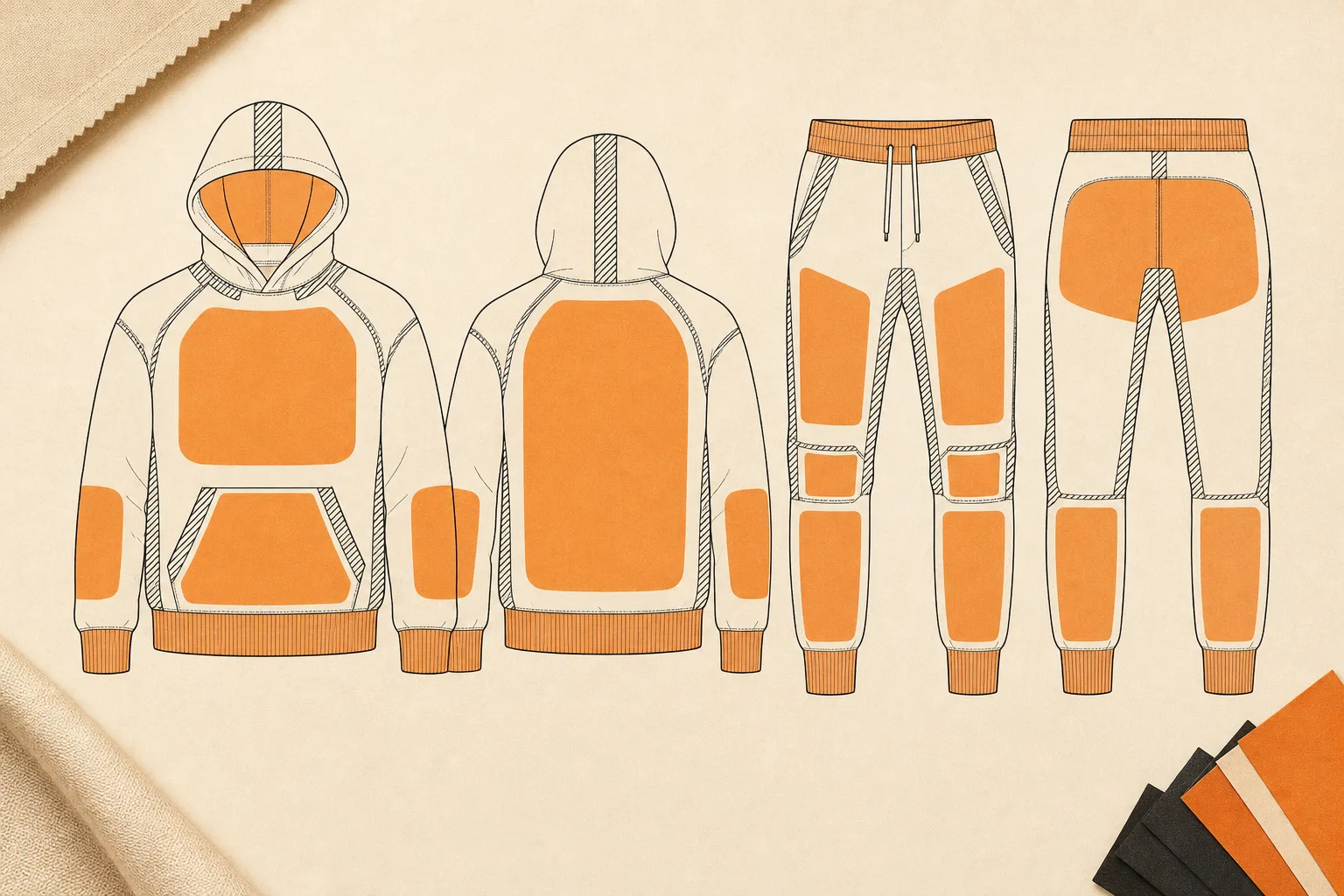
A flock route may work on one panel and fail near a seam, pocket, zip, rib or high-stretch area.
Suitability depends on the fabric, finish, stretch, placement, artwork, quantity, route and physical test.
Flat stable panels
Best starting zone for bold flock artwork.
Stretch zones
Need route-specific elastic proof before bulk.
Thick seams
Create pressure and adhesion risk.
High abrasion
Needs a real rubbing or wear-risk discussion.
- Prepared flock products and textile flock applications require testing on the selected material and finish.
- Heat-driven dye migration is a known risk on polyester and must be tested by fabric.
Artwork survives the pile—or it does not
Test the line, gap and letter at final size
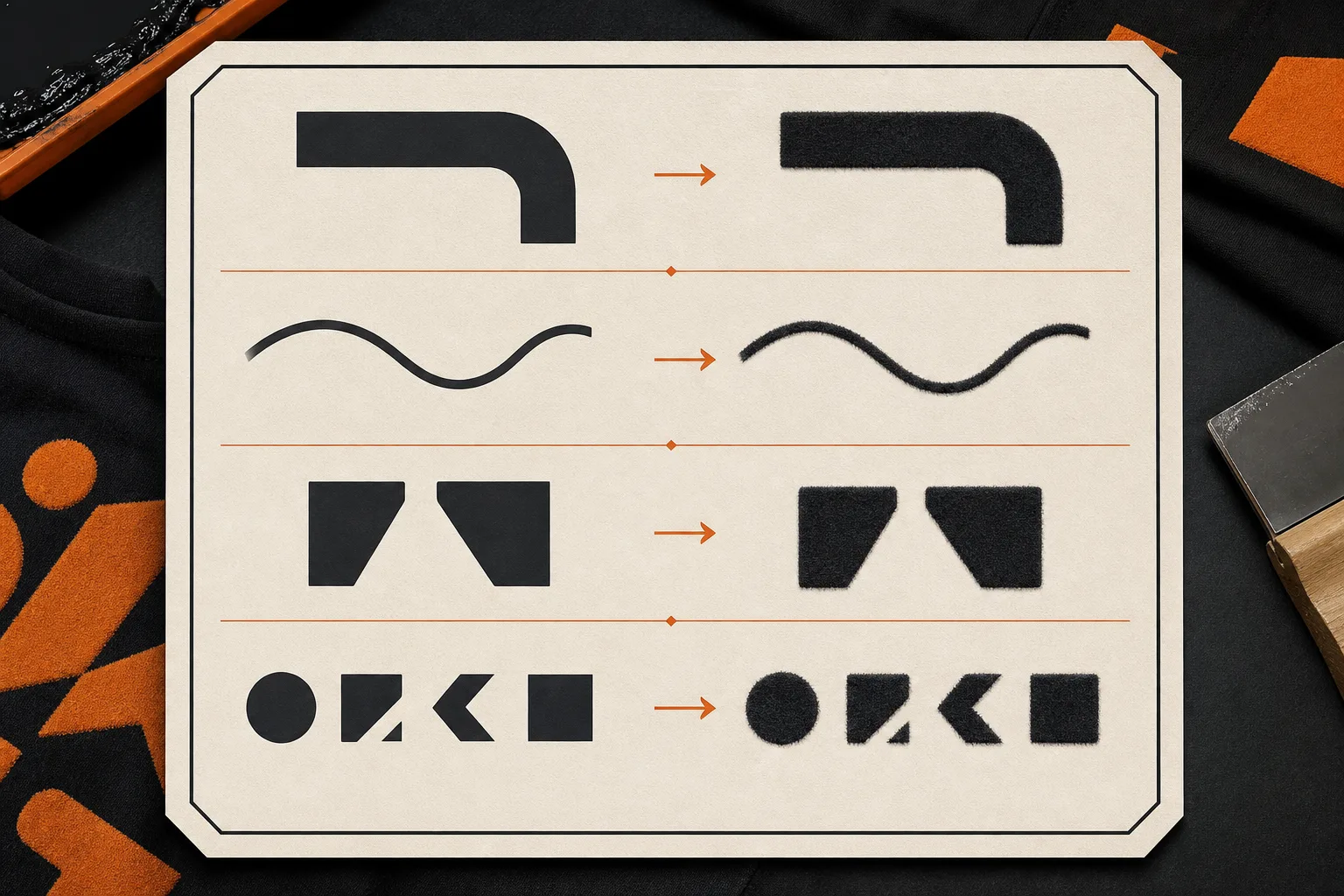
Fine lines, small negative space and tiny text may close after fibres are applied or after a transfer edge is pressed.
Approve a detail ladder on the real route instead of judging only the vector file.
Positive strokes
Check whether narrow strokes keep a clean edge.
Negative gaps
Check whether small holes and counters close.
Lettering
Approve the smallest critical text at actual size.
Colour route
Name whether colour comes from fibres, print, film or multiple passes.
- Direct garment flock is most suitable for bold artwork, while fine details need route-specific evaluation.
- Plotter and printable flock media have product-specific cut, weed, print and press limitations.
Three production benches
See where the fibre, adhesive and carrier enter the job
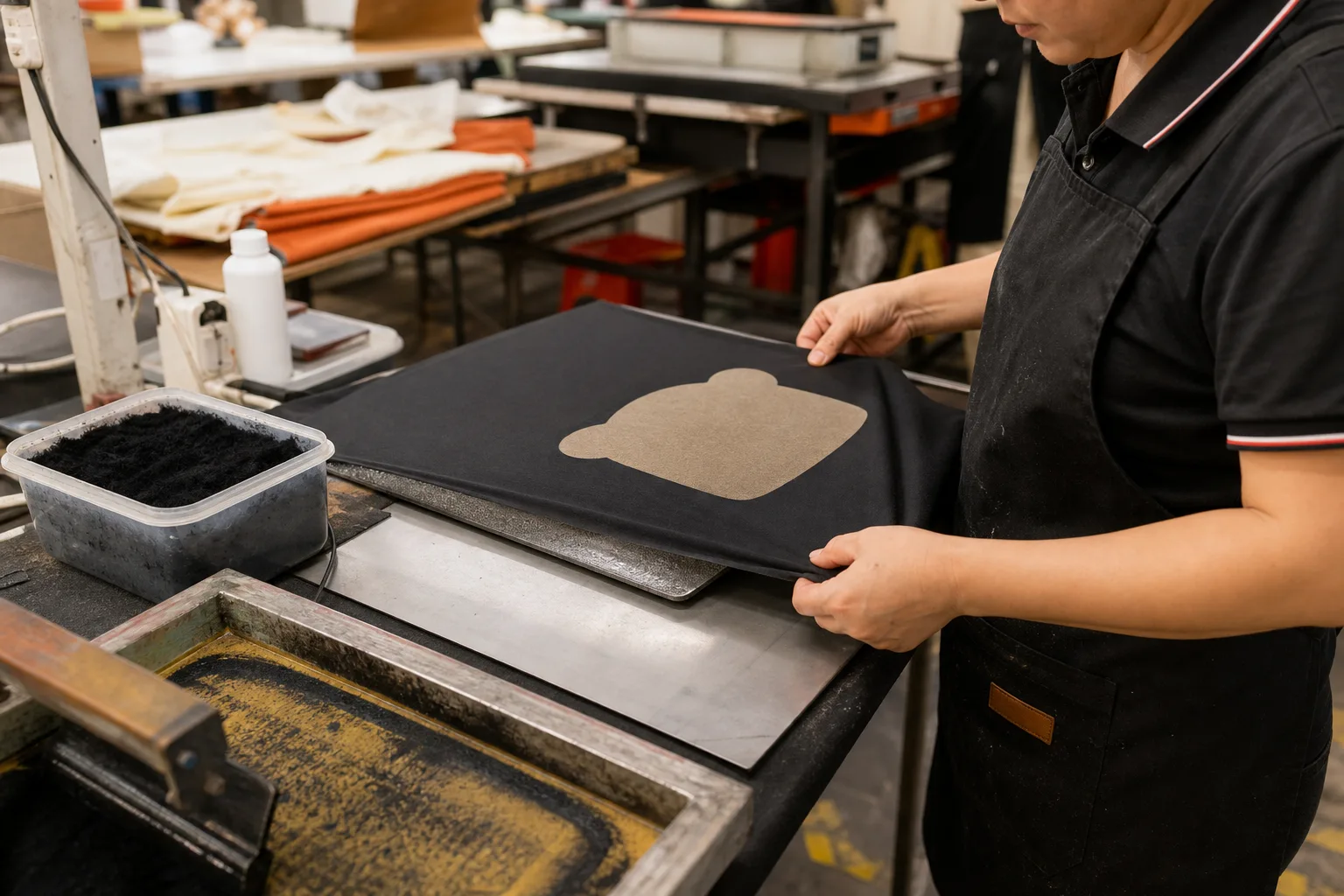
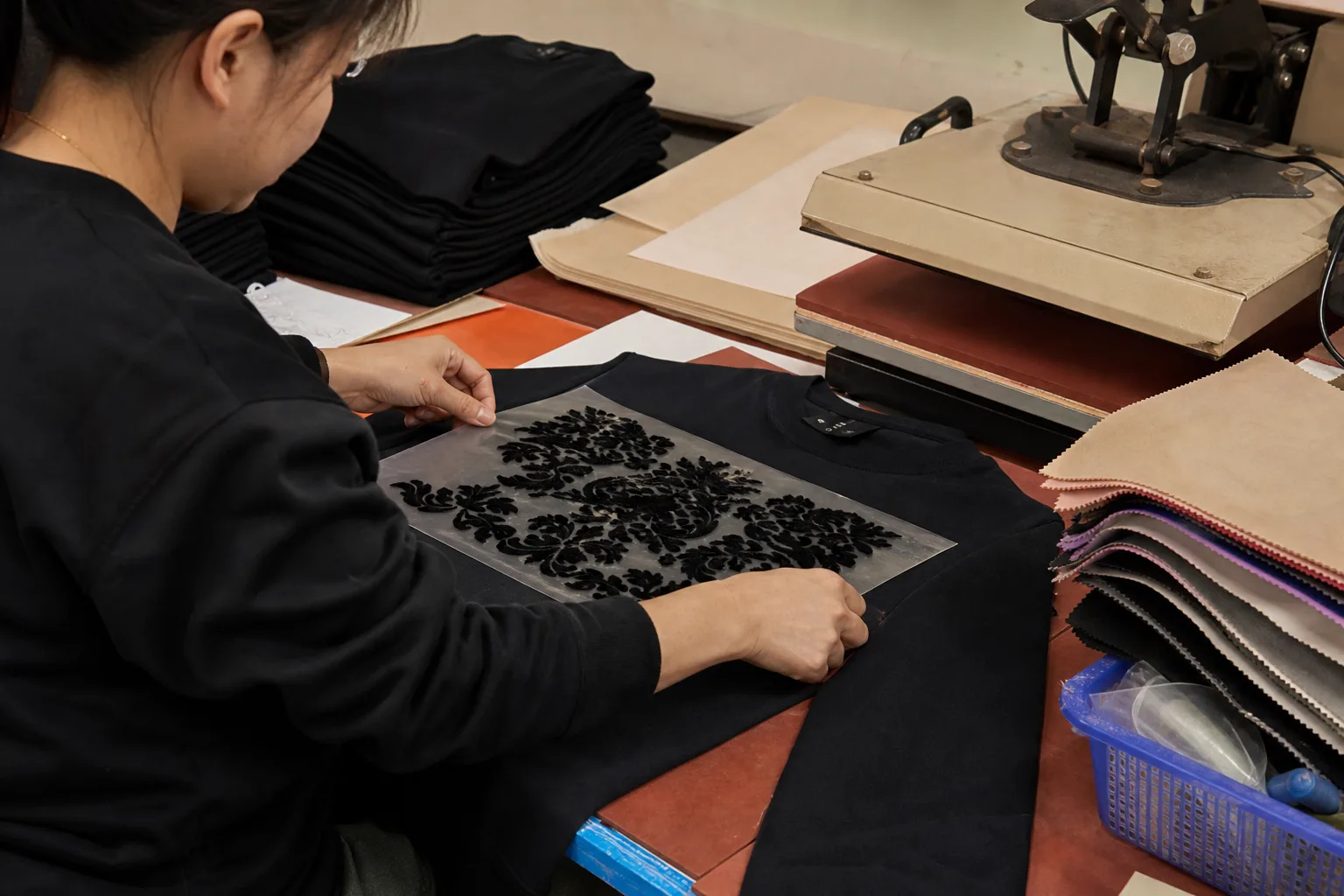
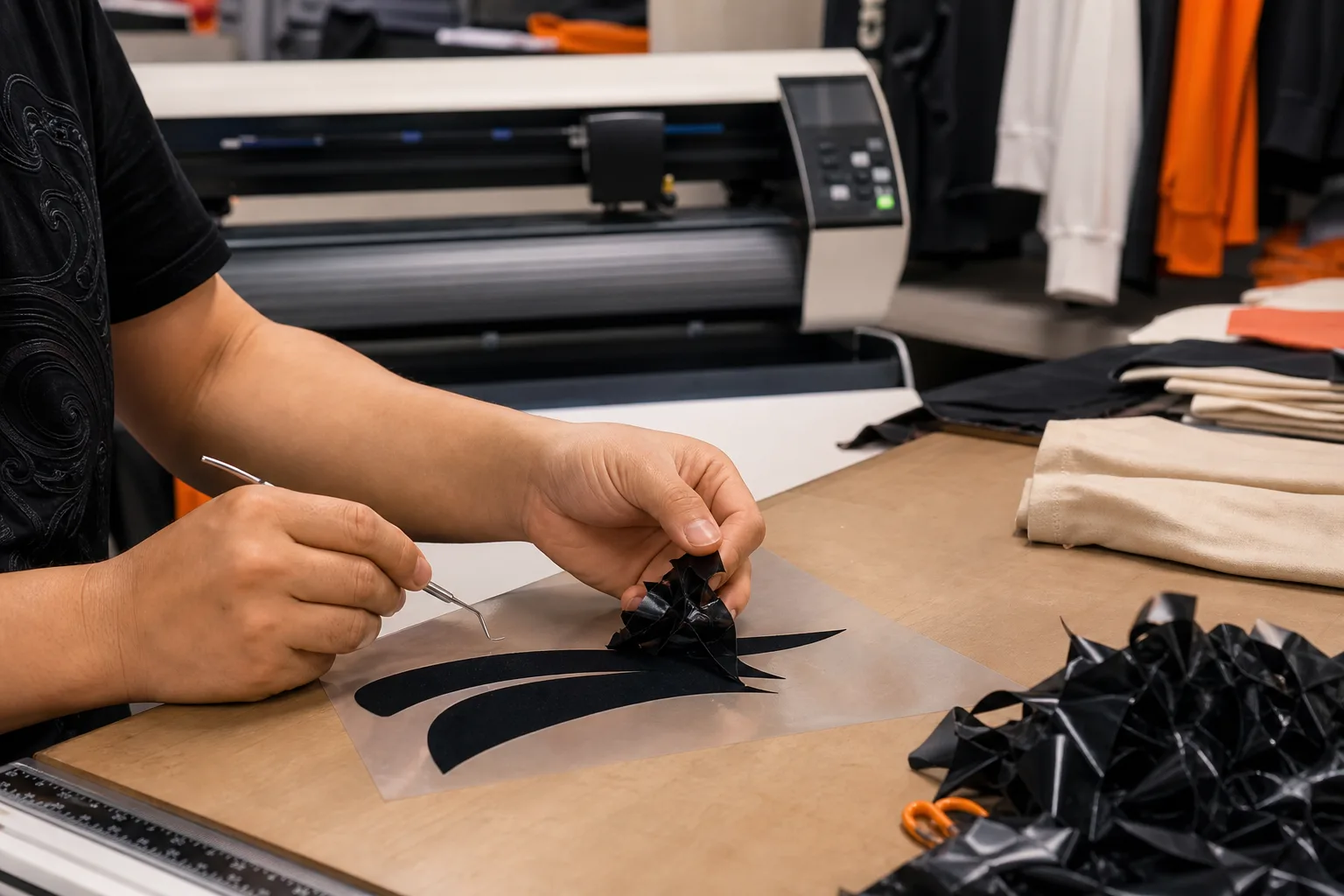
Direct electrostatic flock, screen-made transfer and prepared flock media are different workflows.
Each workflow changes who controls adhesive, fibre, carrier, cutting, pressing and final cleaning.
Direct electrostatic
Print adhesive, flock, cure and clean.
Screen-made transfer
Prepare carrier, adhesive, fibre, backing and transfer.
Prepared media
Cut or print, weed, press, peel and inspect.
- Textile flock may be produced by direct application, transfer, plotter flock or sublimation/printable route variants.
- Prepared flock media has product-specific application instructions rather than universal flock settings.
Value on one side, constraints on the other
The velvet pile is the benefit—and the control burden
Flock can make a simple mark feel more tactile and material-led.
The same pile can also create detail, abrasion, colour, cleaning and care questions that flat printing may avoid.
Texture
More surface character, but approval must be physical.
Matte colour
Useful on bold graphics, but exact shade depends on actual fibre and lot.
Depth
Visible pile can close small detail.
Soft hand
Must be checked by touch and care test, not by mock-up.
Supplier route
Direct and transfer routes create different controls.
Care
Use the care route validated for the sample.
- Flock creates a relief-like, soft velvet-touch surface that is visually different from flat decoration.
Read the failure
A bald patch and a lifted edge are different failures
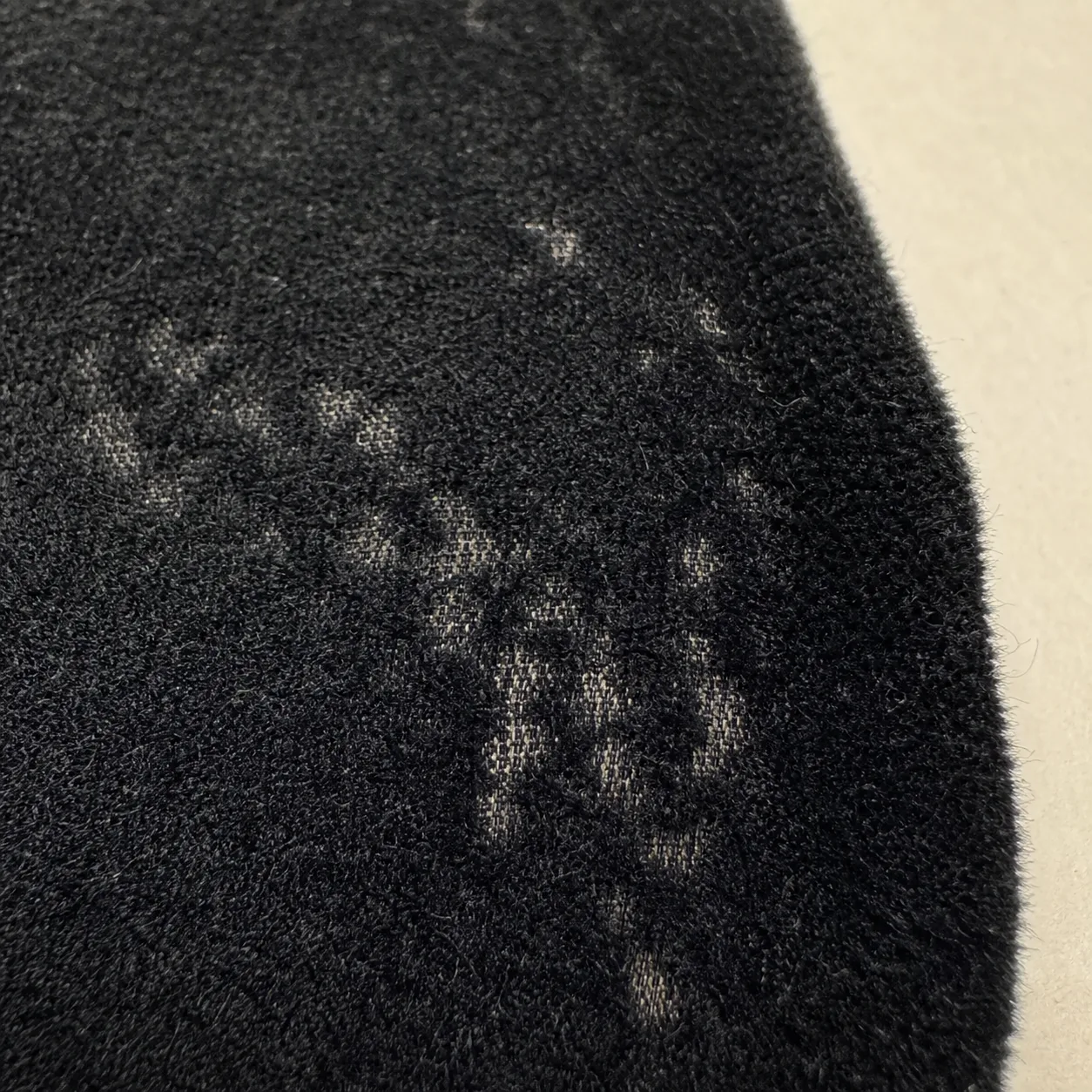
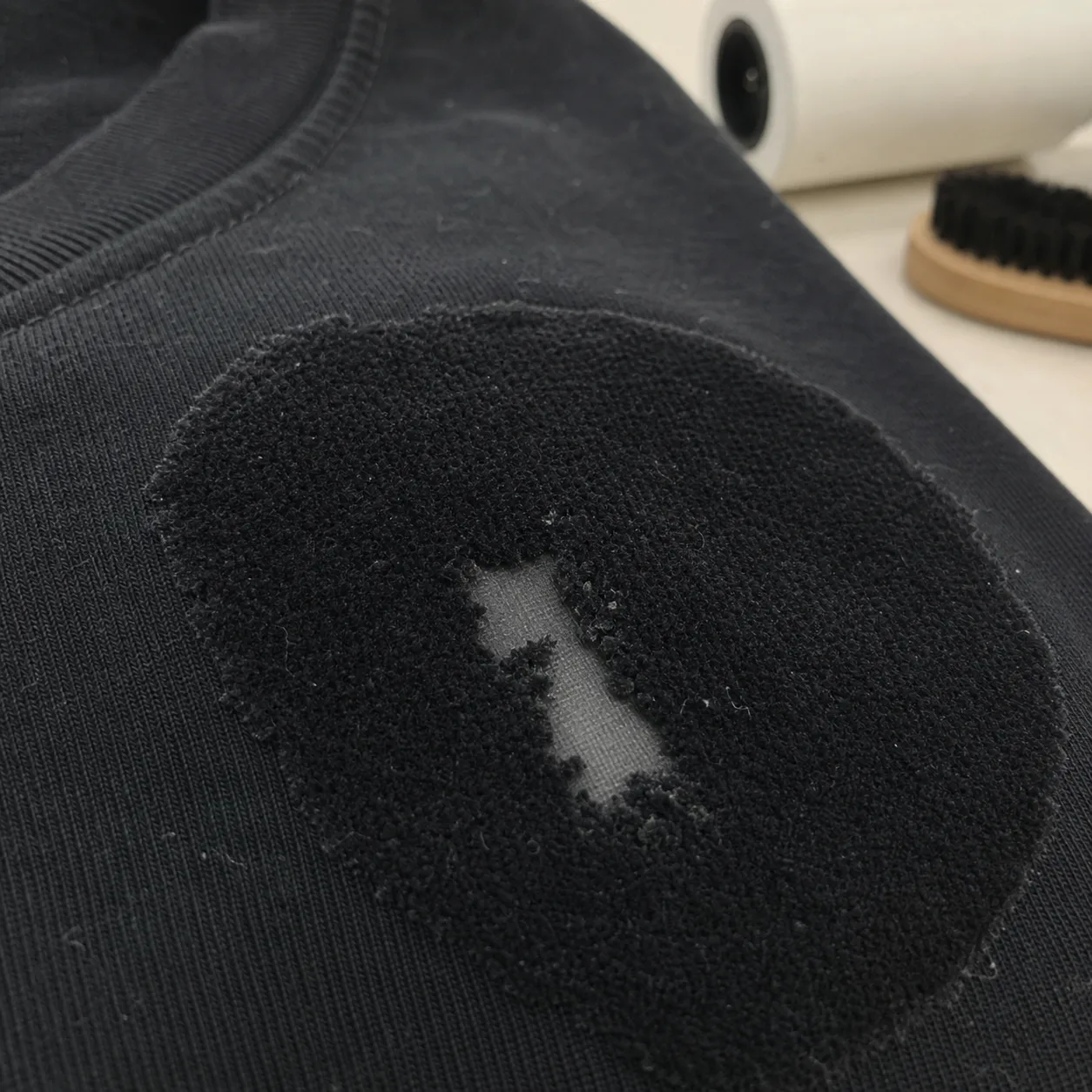
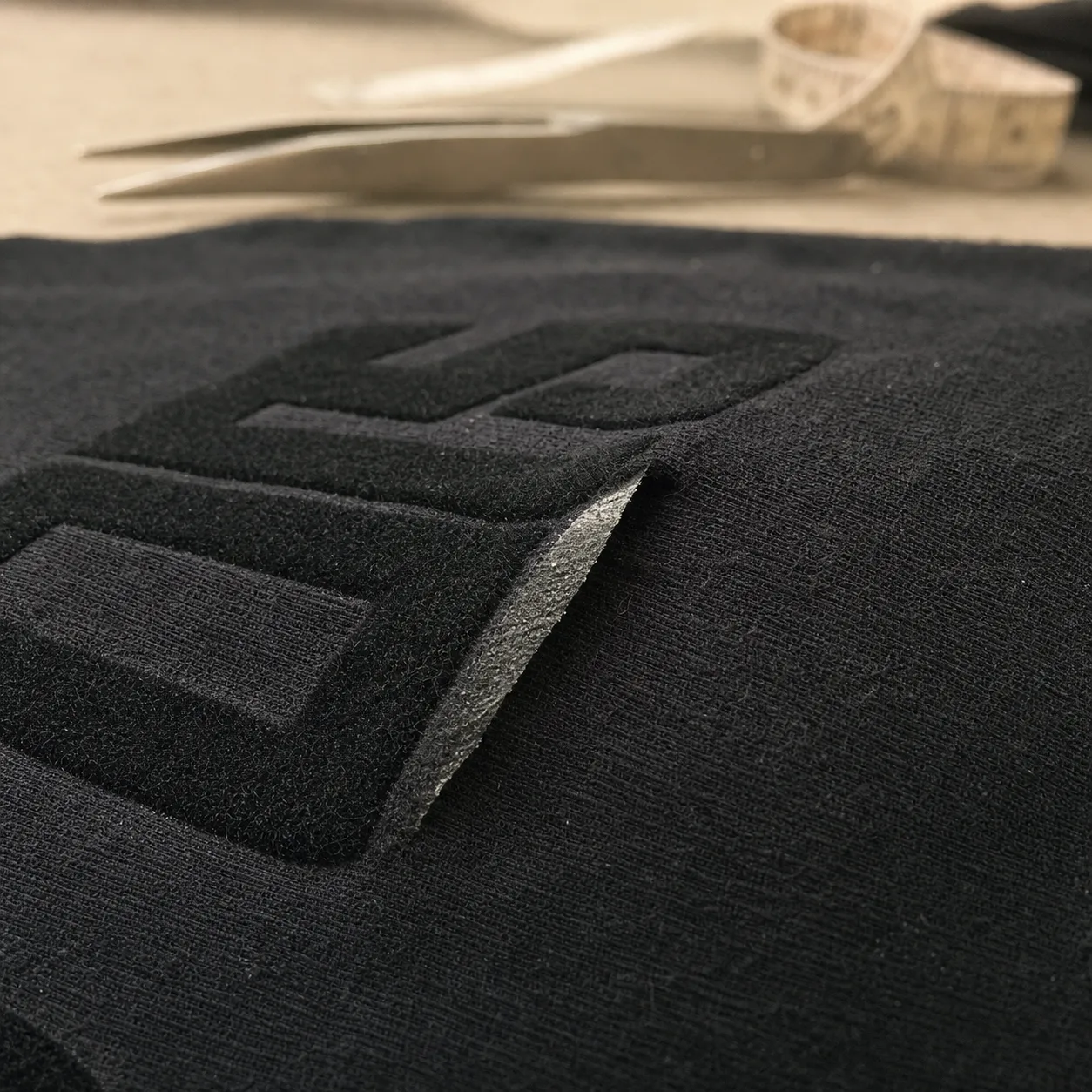
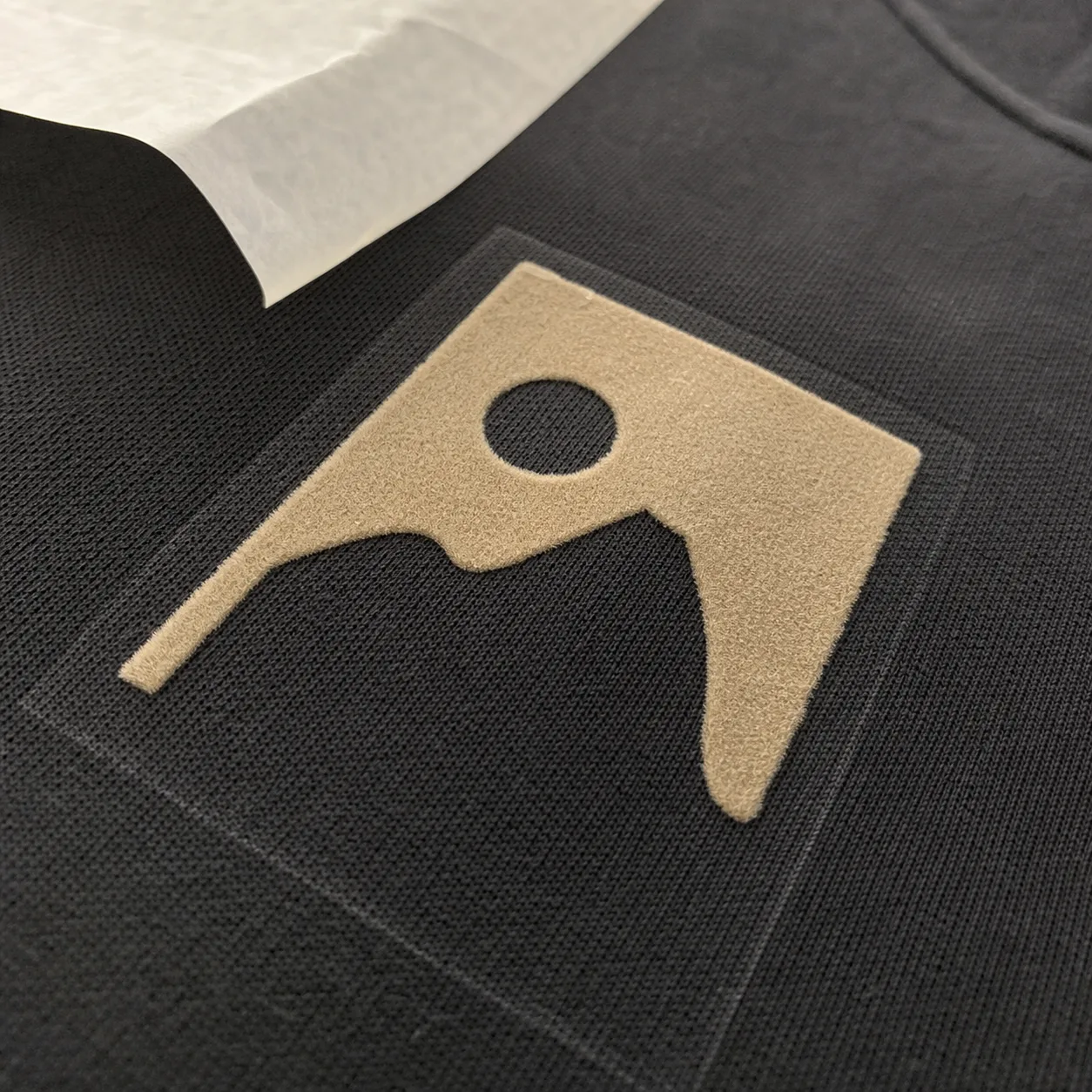
Sparse pile, fibre loss, adhesive lift and transfer-edge lift point to different causes.
A useful review records the visible fingerprint and the route-specific process context.
Sparse pile
Low or uneven fibre coverage.
Fibre loss
Loose fibres come away while adhesive may remain.
Adhesive lift
The bond fails between adhesive and fabric.
Transfer edge lift
Carrier or press conditions show at the edge.
Closed detail
Pile fills gaps the artwork expected to keep open.
Colour contamination
Wrong fibre, loose fibre or migration changes the appearance.
- Flock quality checks can include incoming fibre tests, tear-out and abrasion rather than appearance alone.
- Flock conductivity, moisture, flow, electrostatic voltage and grounding are measurable process inputs.
Approve after handling
Brush it, rub it, wash it—then approve it
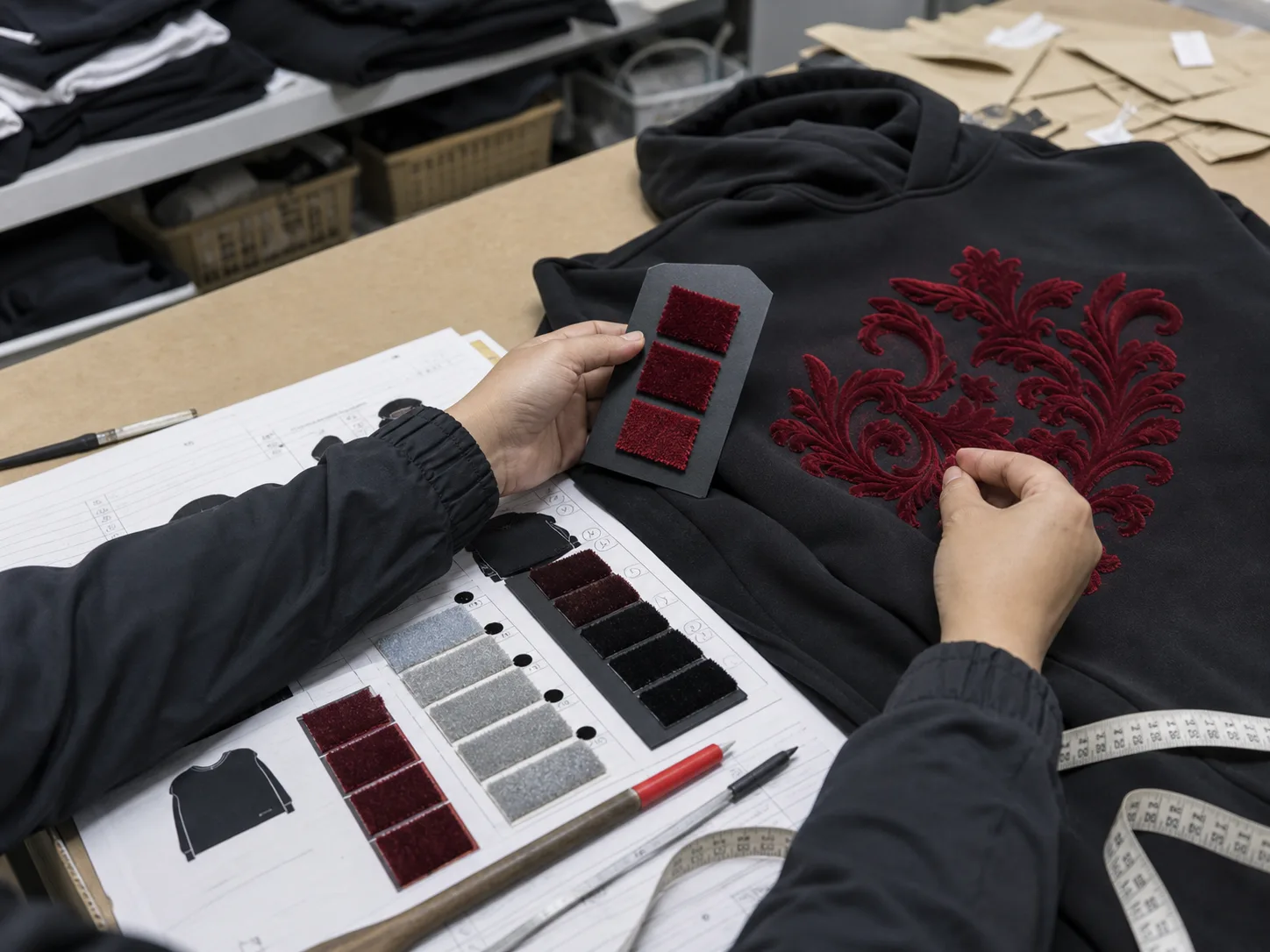
A digital mock-up can approve placement direction. Only a conditioned physical sample can approve the flock result.
The approval should name the exact route, material, fabric, artwork size and care or test expectation.
Route swatch
Choose the candidate route before garment sampling.
Detail ladder
Approve final-size strokes and gaps.
Garment sample
Use the real fabric, finish, placement and colour.
Conditioned evidence
Review after brushing, rubbing, washing or stretch if required.
Golden sample
Freeze the approved route and visible acceptance range.
- Textile flock applications require pretrials for the selected fabric and route.
- Laundering, crocking and abrasion methods are evaluation procedures, not automatic guarantees.
From approved sample to repeatable bulk
Keep a different process card for each flock route
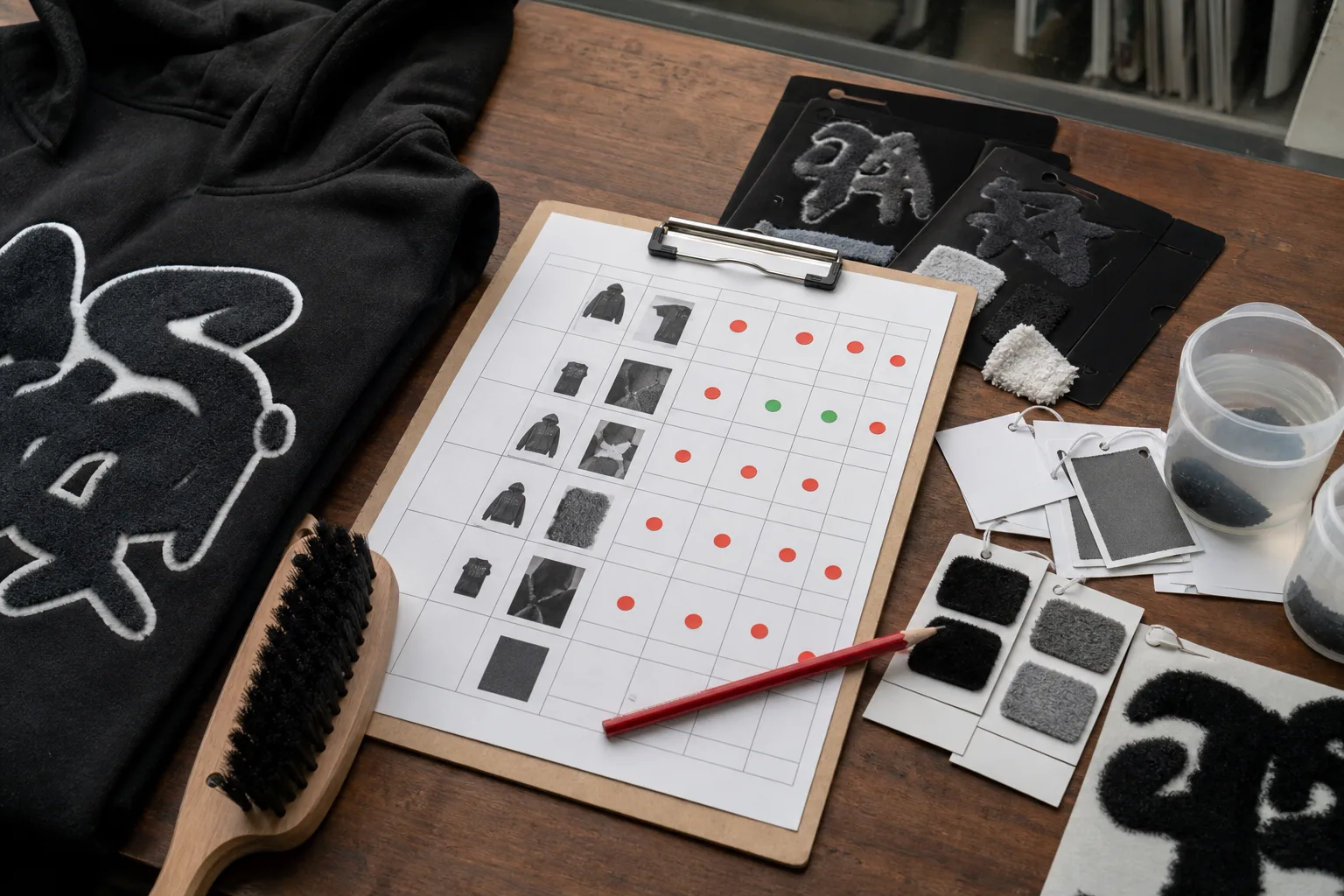
Direct flock and prepared media do not need the same process card.
Care instructions are set after the route, flock, adhesive, garment and wash test are approved.
Incoming flock
Record material, colour, length, dtex and lot when applicable.
Adhesive or media
Name the system and its approved route.
Application
Record screen, flocking, curing, press or peel controls.
Cleaning
Remove loose fibre and inspect the surface.
Release
Compare bulk to the approved physical sample.
- Route-specific care and quality controls depend on adhesive, application, cure or press and cleaning.
- ISO and AATCC laundering procedures define test conditions and need an agreed evaluation method.
Choose by surface mechanism
Compare the result you want—not the marketing name
Flock is a fibre pile. Puff is an expanding printed compound. Embroidery is stitched thread.
If the buyer wants a non-fibre raised surface, use the dedicated Silicone / Rubber page to review that material system.
Screen Printing
Flat or layered ink film rather than fibre pile.
Puff Printing
Raised foam-like expansion without short flock fibres.
Heat Transfer Printing
Prepared carrier and press route.
Embroidery
Thread, stitches and garment penetration.
Silicone / Rubber Printing
Use the dedicated page for a non-fibre raised surface.
- Flock uses cut fibres in adhesive, while puff uses a printed compound that expands when heated.
- Embroidery creates a thread and stitch structure rather than a fibre-in-adhesive surface.
Garment directions—not client cases
Four practical places to start a flock sample
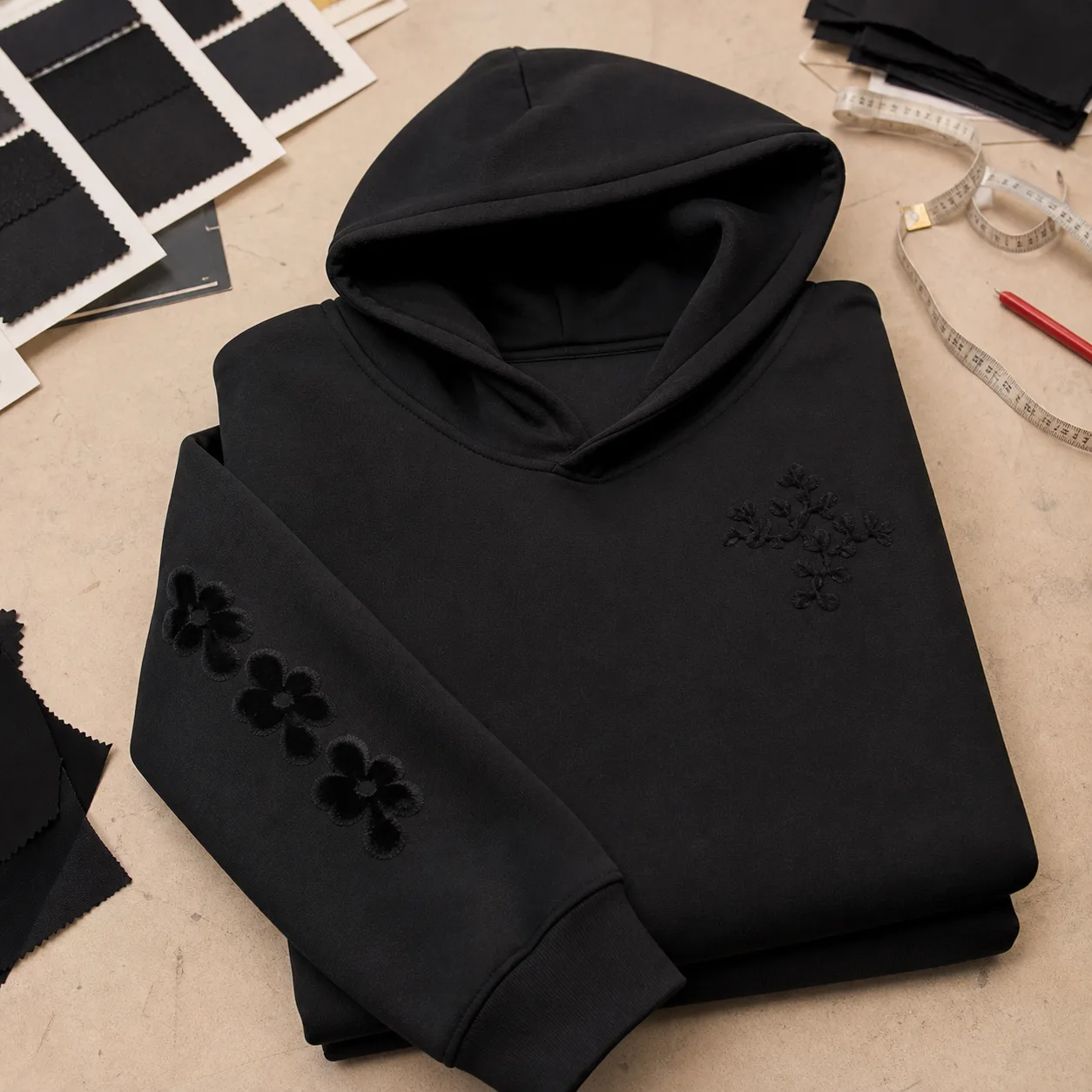
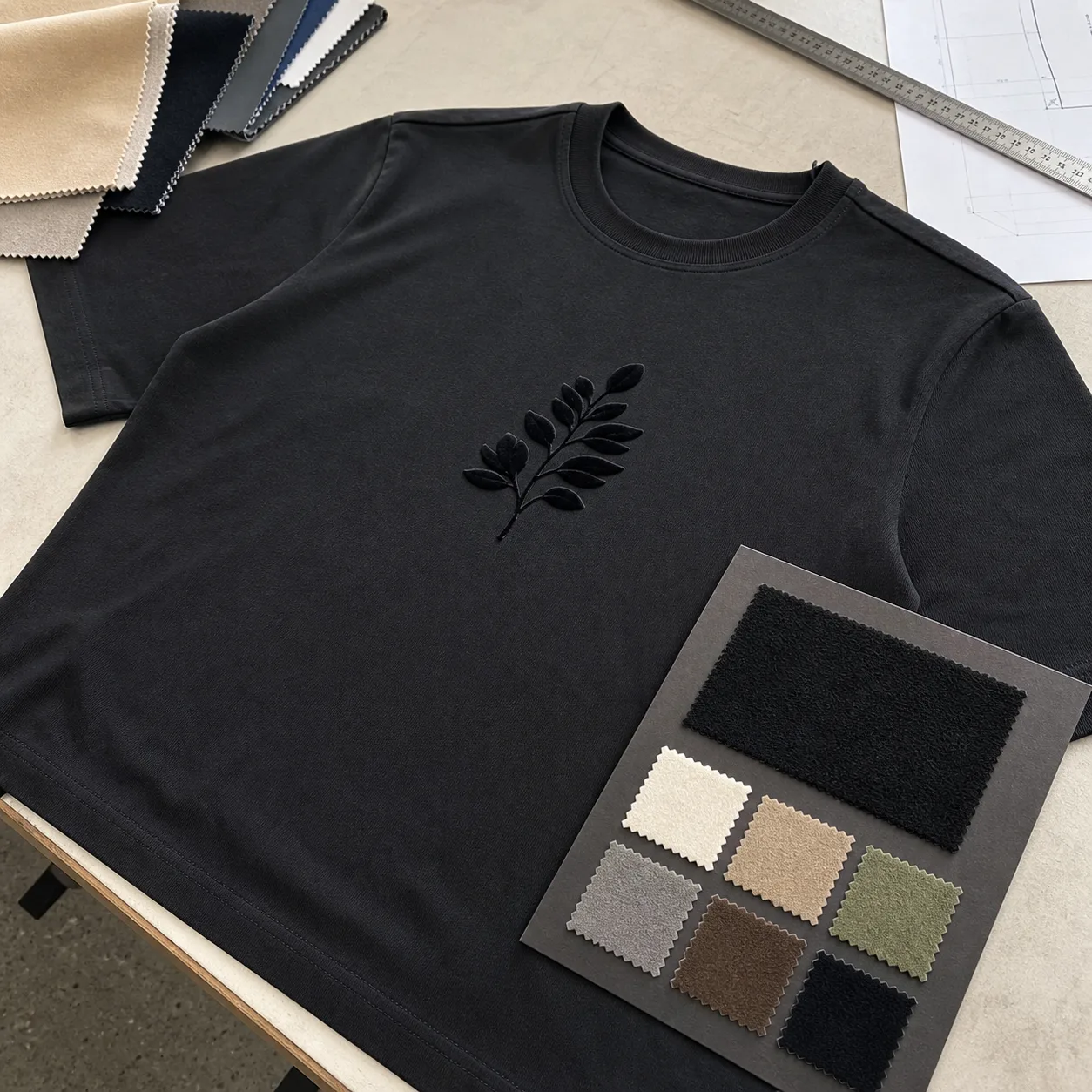
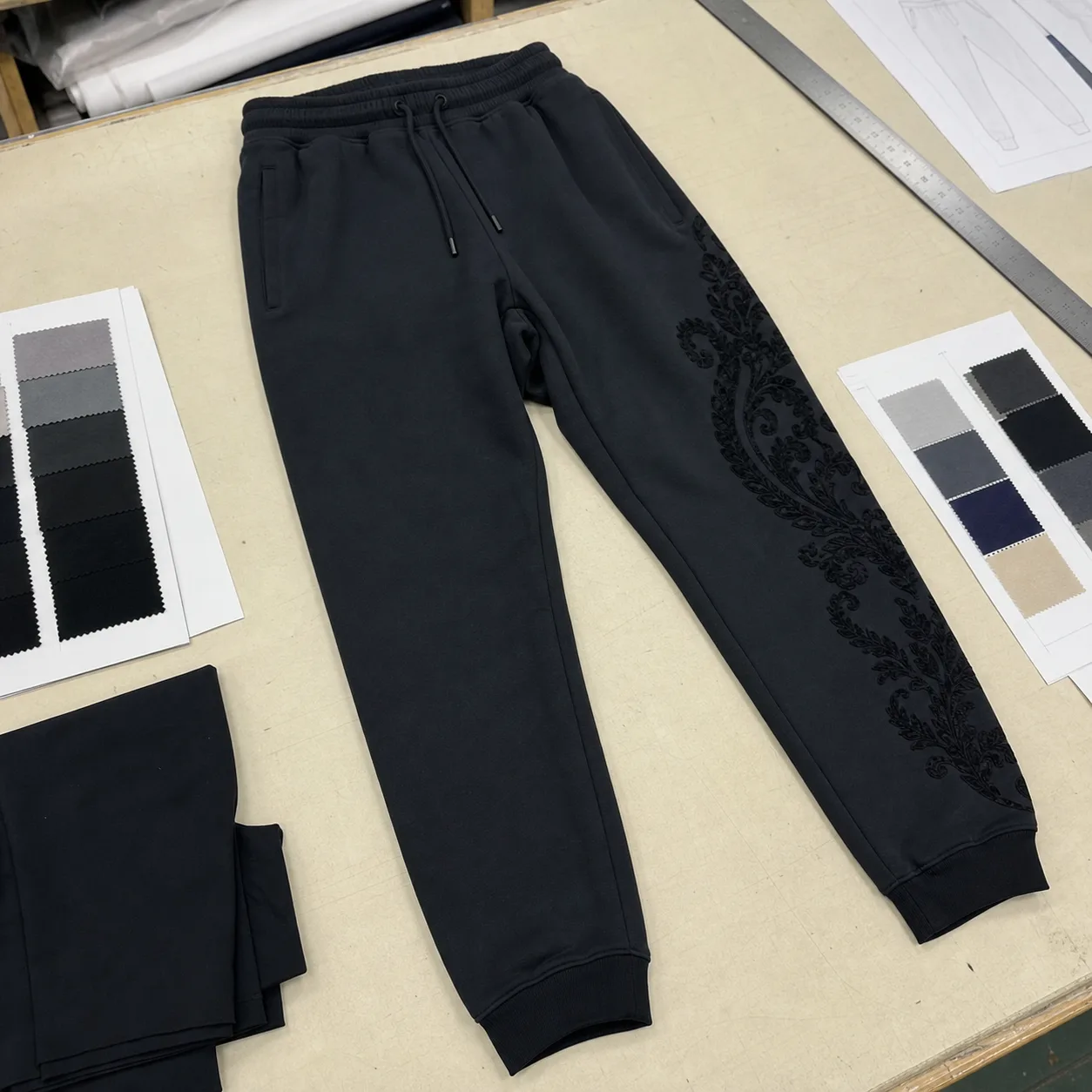
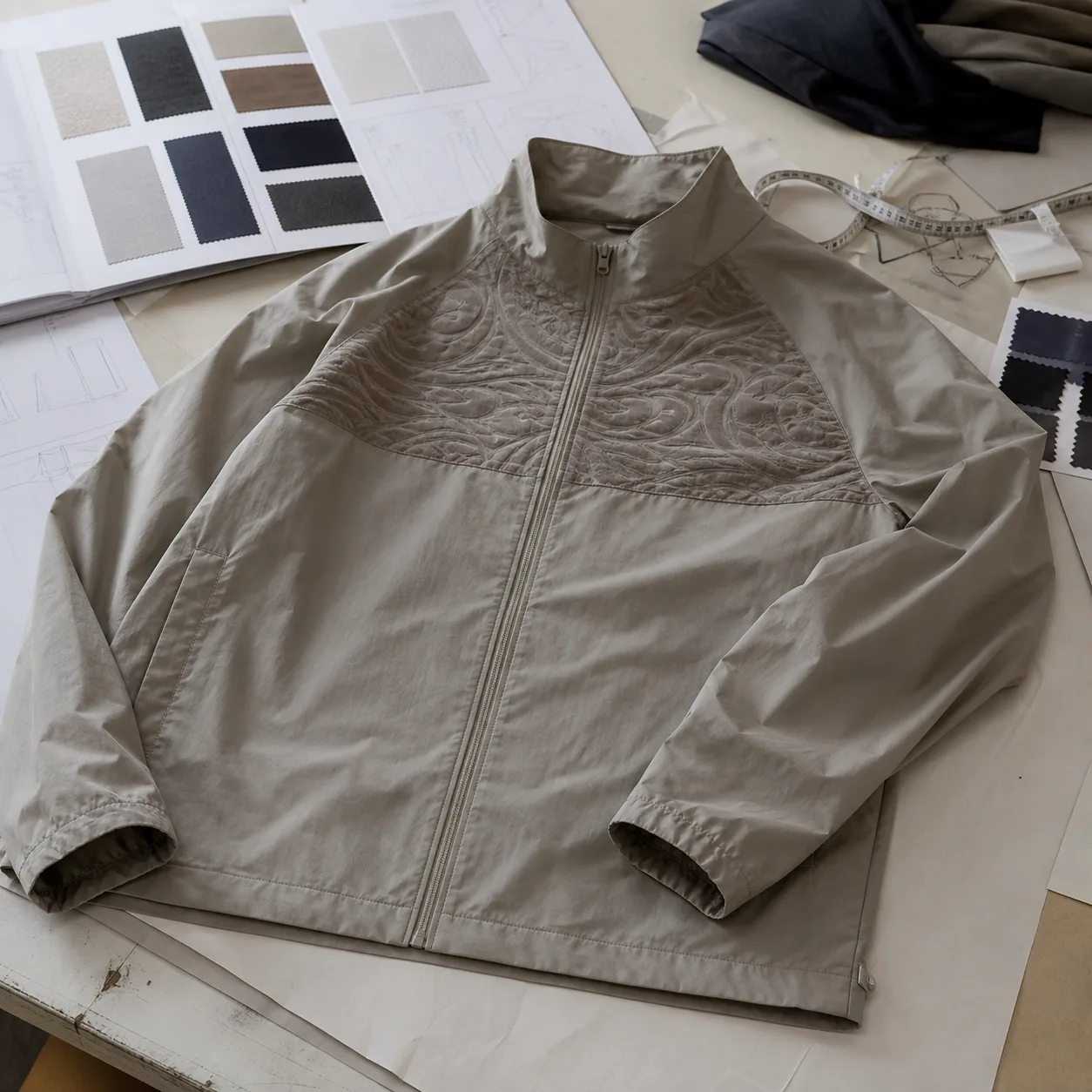
These are configuration directions, not completed Canton Fashion projects.
Suitability depends on the fabric, finish, stretch, placement, artwork, quantity, route and physical test.
Hoodie
Bold collegiate chest wordmark on a stable panel.
T-shirt
Small tonal chest mark on a flat jersey zone.
Jogger
Vertical thigh mark away from pocket and knee abrasion.
Jacket
Small badge direction on a flat panel after coating and heat checks.
- T-shirts are a common flocking substrate, but material and route still need testing.
- High-stretch and transfer routes require separate material decisions rather than a universal apparel claim.
Before sampling
Flock printing questions buyers should settle early
Most flock questions are really route questions. The safe answer depends on the selected flock, adhesive or media, fabric and physical test.
If the route is unclear, send the target surface and the garment information first.
Is flock HTV the same as flock printing?01
No. It is one prepared transfer route. Direct flock places fibres into adhesive on the garment or panel.
Can flock show fine detail?02
Sometimes, but final-size lines, gaps and small letters should be tested before bulk.
Can you match Pantone exactly?03
Use the actual fibre or media sample as the approval reference, not only a screen colour.
What is your MOQ?04
Our usual MOQ is 100 pieces per style per colour. Material or a specific style may require a different minimum.
How should I prepare artwork?05
Send editable artwork, final size, placement, colour route and the smallest detail that matters.
How do we approve durability?06
Agree the care or test route first, then approve the conditioned physical sample.
- Canton Fashion’s usual MOQ is 100 pieces per style per colour, while material or a specific style may require a different minimum.
- Flock HTV is one prepared transfer route and does not define every flock process.
Route unknown is an acceptable answer
Send the garment, pile target and real constraints
Share what you know. If the flock route is unclear, select route unknown and include a texture reference.
We will first identify the fabric, artwork and test questions that must be resolved before a production claim or quote.
Project
Garment, quantity, colourways, size split, destination and target date.
Fabric
Composition, GSM, knit or woven structure, finish, stretch, colour and dye route.
Flock
Route preference, desired touch, colour, physical reference and whether artwork can be simplified.
Artwork
Vector or raster file, final size, placement, colours and smallest critical detail.
Care and evidence
Wash, rubbing, abrasion, stretch or restricted-chemistry requirement.
Contact and files
Name, company, email, WhatsApp, message and reference files.
- Suitability cannot be decided from fibre name alone; the adhesive, substrate and process conditions require an application trial.
- Artwork detail, flock specification, route and conditioned physical evidence should be approved before bulk.
- Canton Fashion’s usual MOQ is 100 pieces per style per colour, while material or a specific style may require a different minimum.