POLYESTER · BASE COLOUR · COVERAGE
Sublimation Printing for Apparel
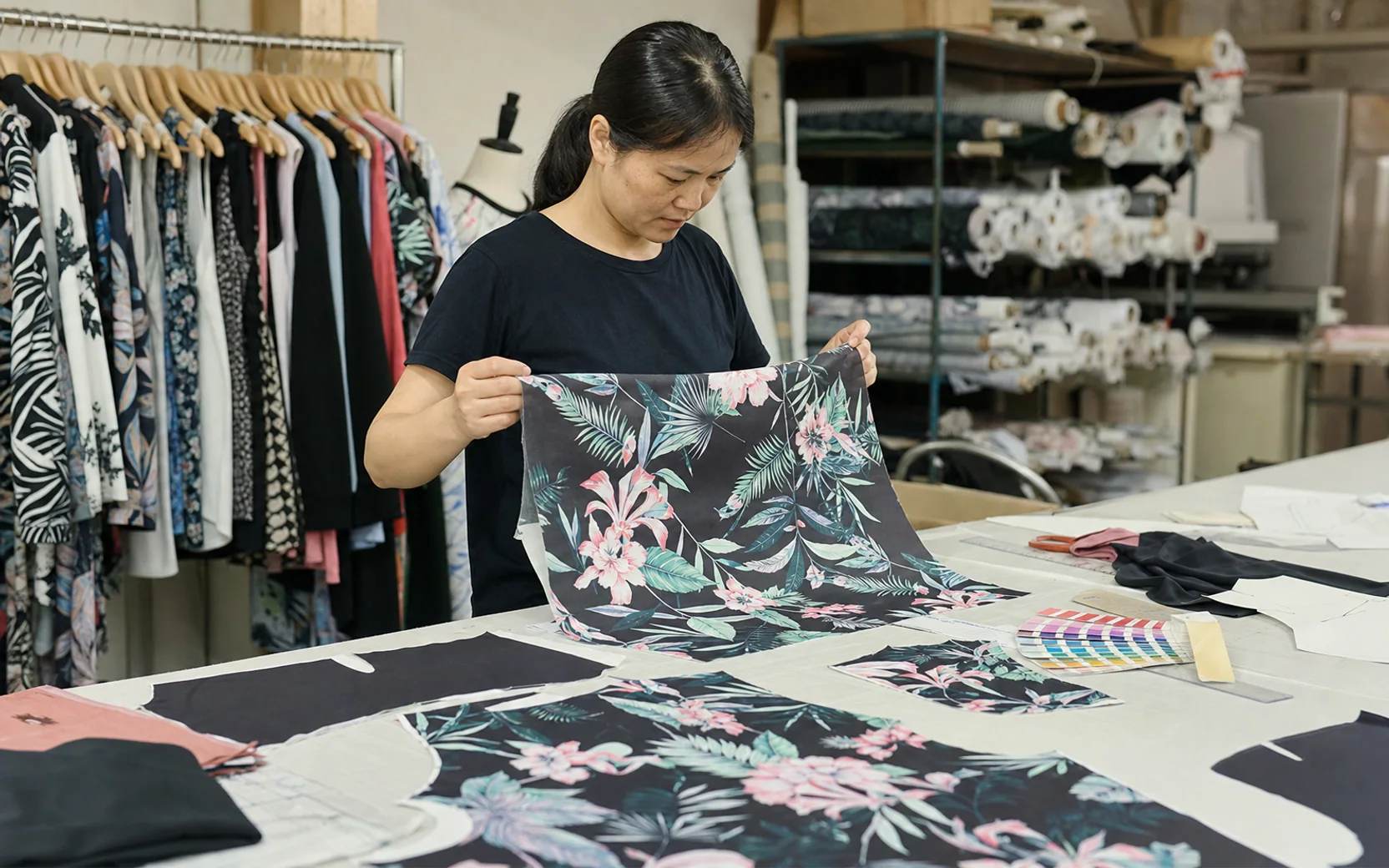
Choose sublimation when white or light polyester, full-colour artwork and flat-panel coverage fit the job. We confirm fibre, base colour, heat response and the sewn sample before bulk.
FIT CHECK
Pass Three Gates Before We Talk About Colour
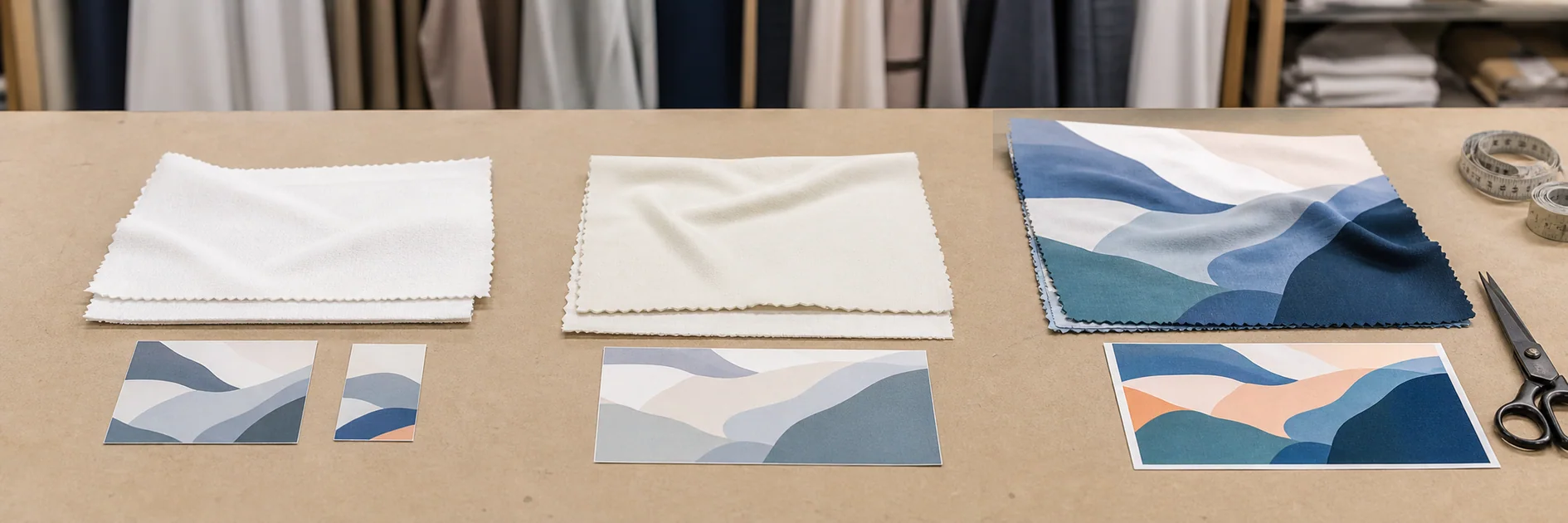
Check the actual fibre first, then the base colour, then whether coverage is flat-panel or a finished garment.
A project can be a good candidate, sample-first candidate or a reason to compare another route.
Fibre
Start with verified polyester; hold stretch, mesh, unknown blends and special finishes for sampling.
Base colour
White is the strongest start. Pale bases require a colour sample. Dark bases need an opaque alternative when the artwork needs white.
Coverage
Use flat panels for controlled all-over work; treat a finished garment as a separate, limited pressing route.
- Polyester is the main dye receptor for apparel sublimation.
- Finished garments can show white gaps near seams and folds; fabric-first cut-and-sew controls coverage better.
NO WHITE INK
The White Channel Is the Fabric
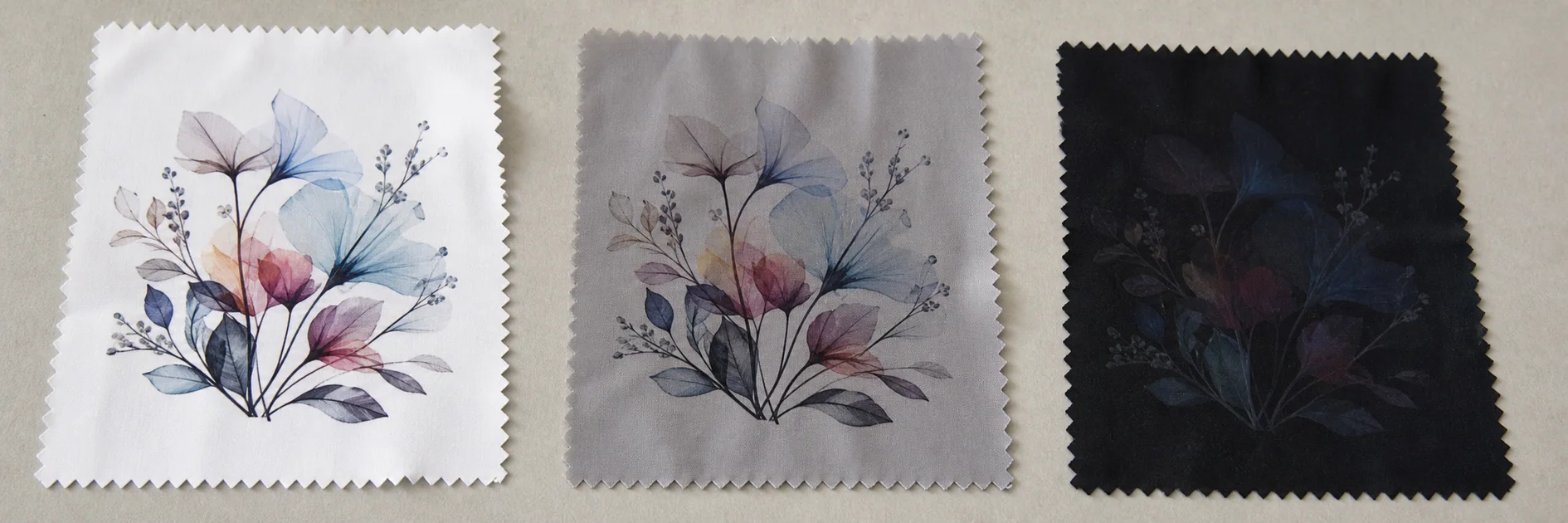
Standard sublimation prints colour, not opaque white. A white area in the file normally means show the garment.
Final colour depends on dye colour, actual fabric colour, construction and the heat process.
White polyester
Strong neutral starting point for the intended palette.
Pale polyester
Sample base-colour interaction on the actual lot.
Dark polyester
Compare an opaque method instead of trying to create white by adding CMYK.
- Standard dye sublimation does not use white ink.
- White or light polyester is the normal starting point for intended colour.
COVERAGE ROUTE
Choose the Coverage Route Before Sampling
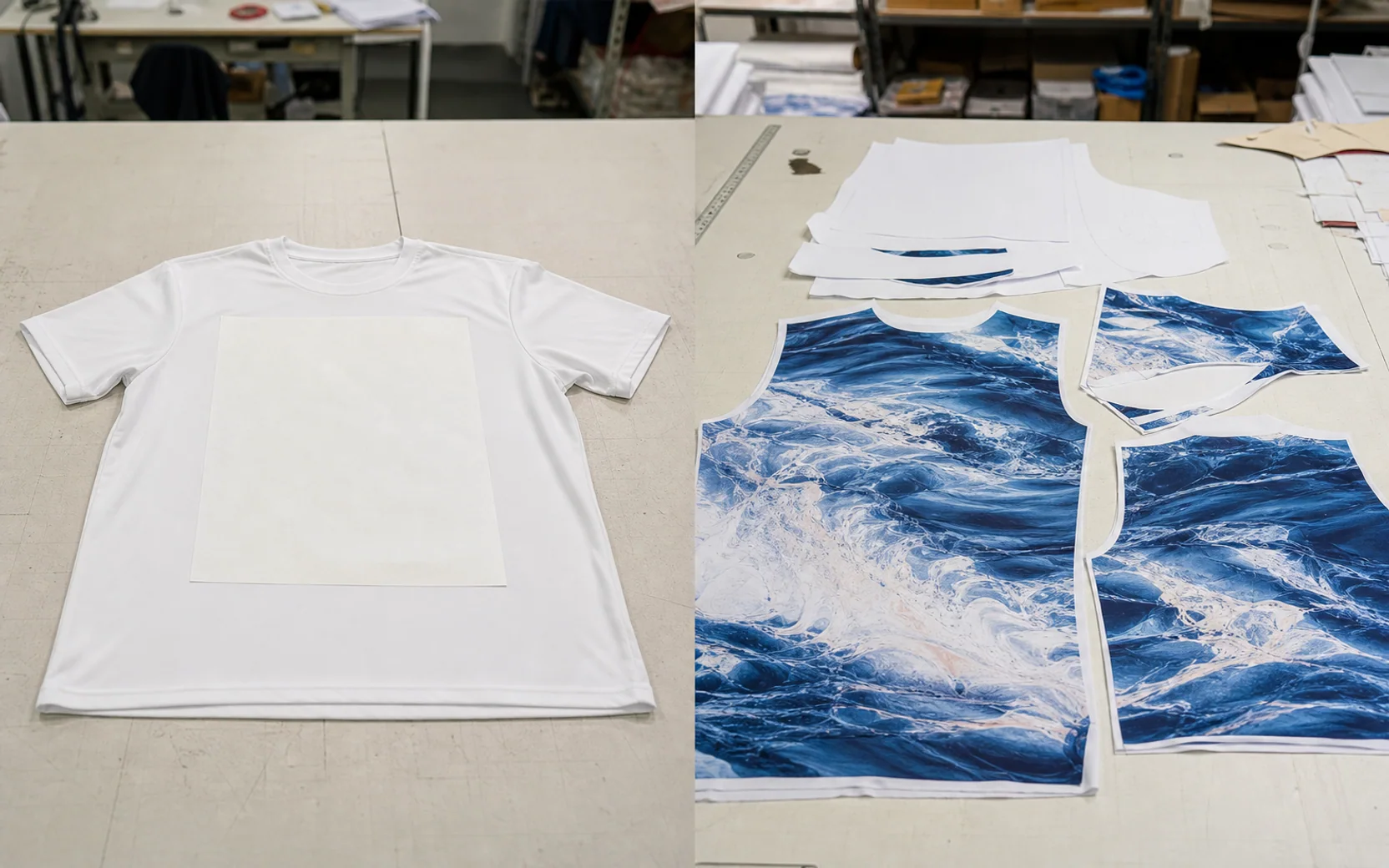
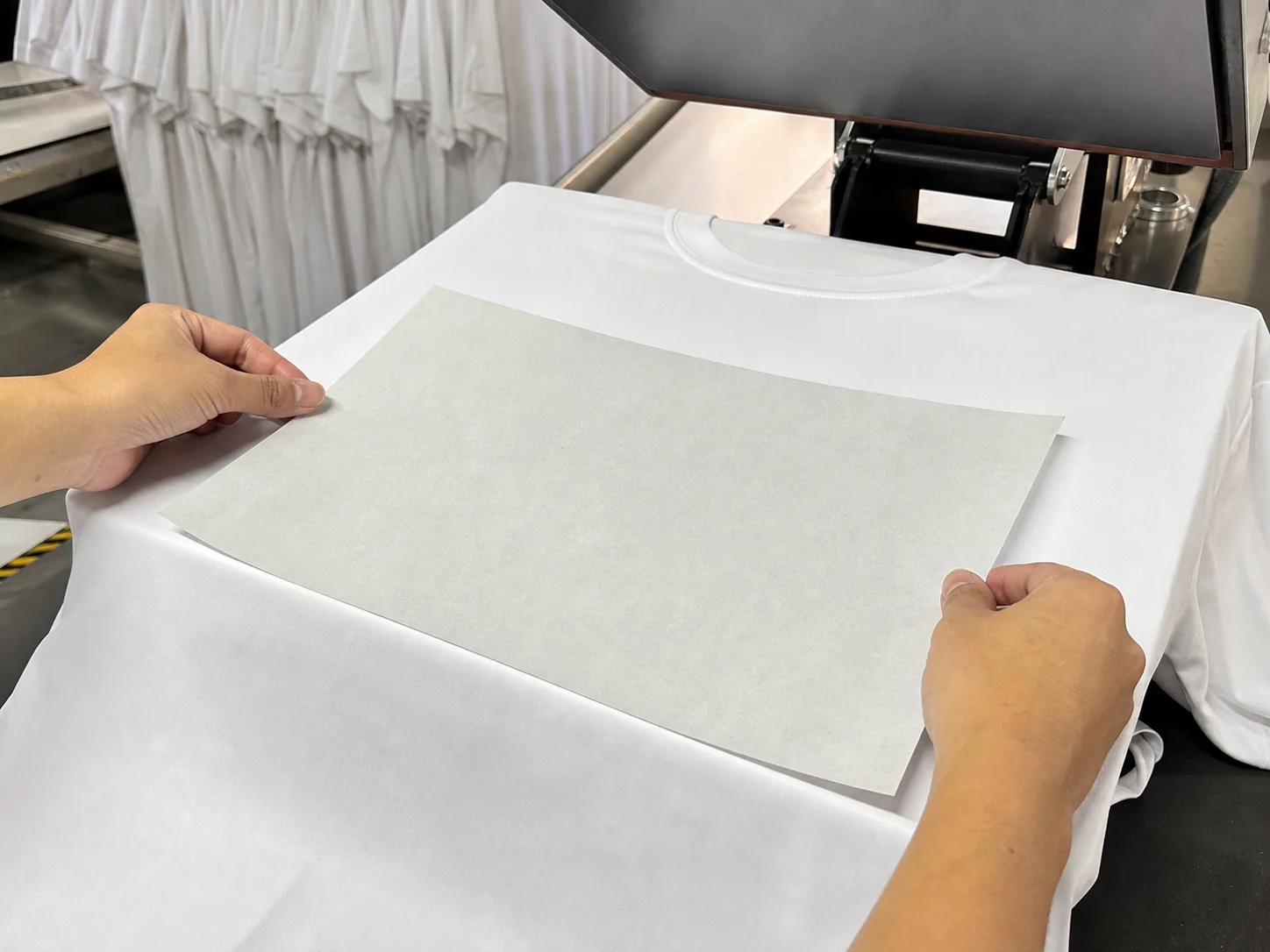
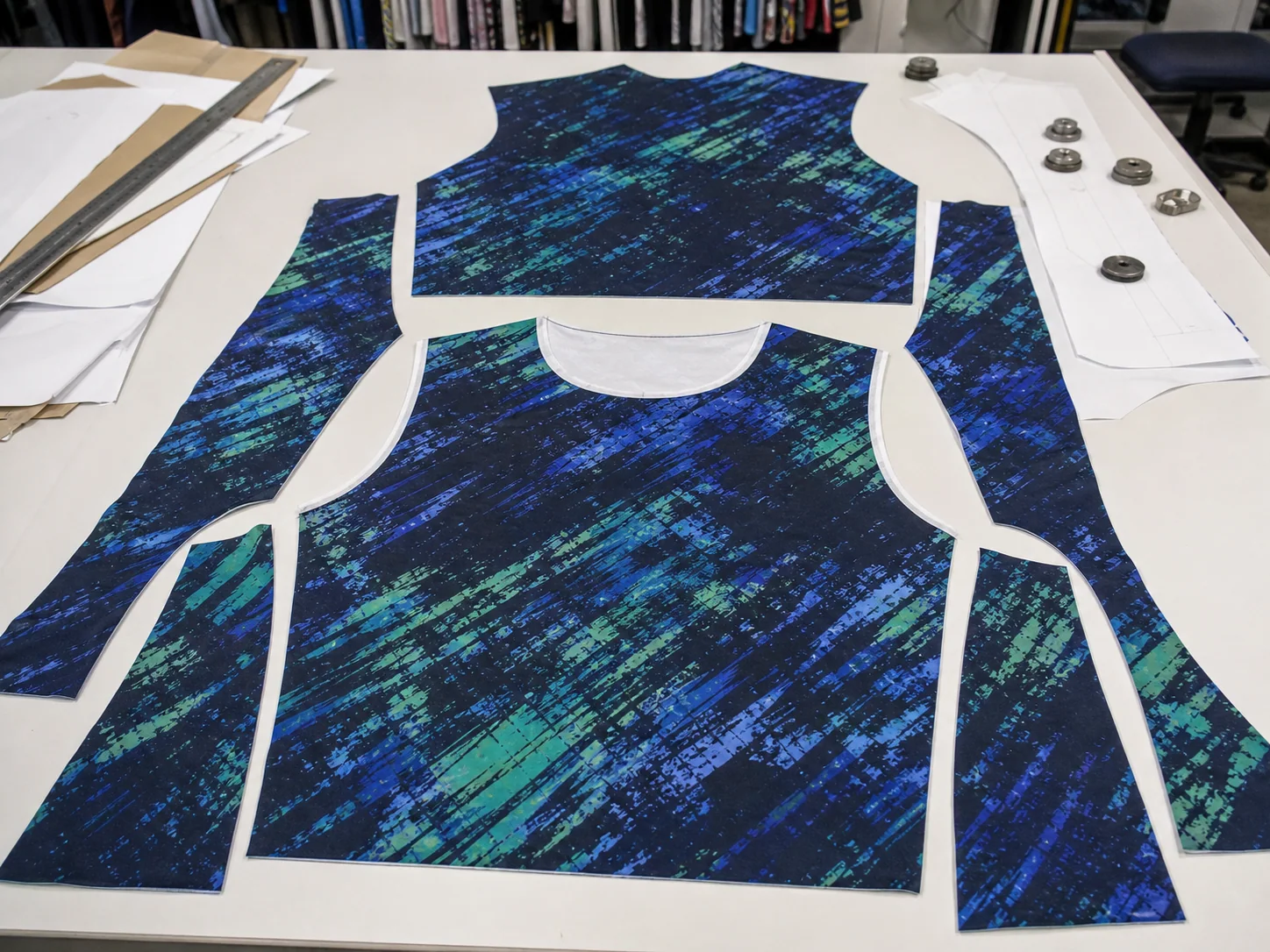
A small flat placement on a finished blank and full coverage across a garment are not the same production request.
All-over or engineered artwork is normally evaluated on flat fabric or panels before cutting and sewing.
Finished blank
Use for a selected flat area that avoids seams, zips and raised parts.
Flat panels
Use for repeats, engineered artwork and multi-panel garments, then approve the sewn sample.
Direct note
Direct sublimation needs its own printer, pretreatment and post-treatment confirmation.
- Cut-and-sew all-over production prints flat fabric before cutting and sewing.
- A pre-made item can show white streaks where seams or folds block transfer.
- Direct sublimation is a separate equipment and treatment route.
PANEL ENGINEERING
Map the Artwork to Real Pattern Pieces
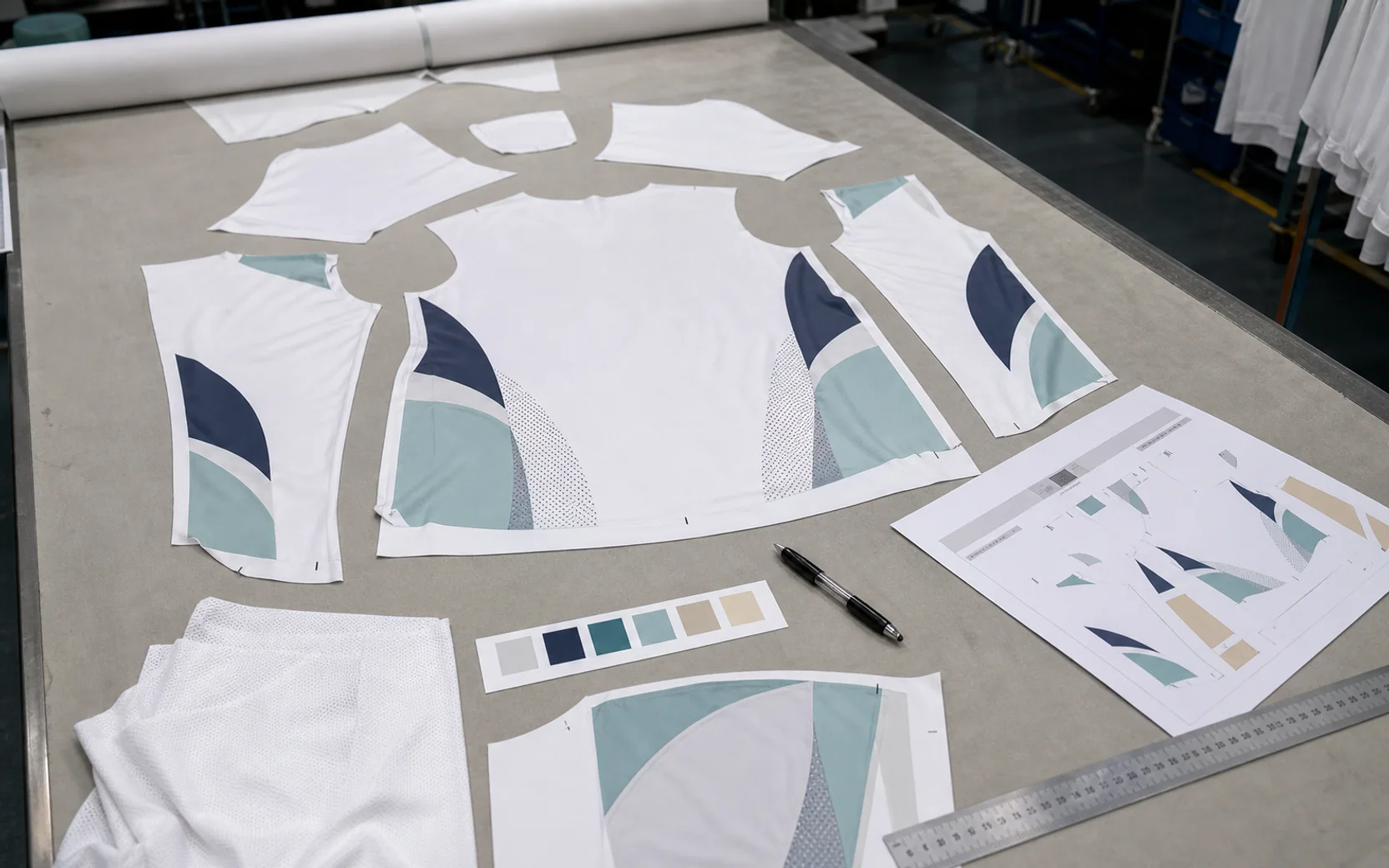
The documented route prints flat material and then cuts and sews it. Pattern, grading, grain-line, seam and critical-join fields are a project checklist, not a universal sublimation standard.
Approve the relationship on the sewn PP garment rather than promising automatic perfect cross-seam alignment.
Artwork mode
Mark repeat, engineered placement or a hybrid of both.
Project inputs
Supply the pattern/panel files, size range, direction, seam fields and joins that matter for this order.
Approval object
Use a sewn pre-production garment, not a screen mock-up, to approve real joins.
- Cut-and-sew all-over work prints flat material before cutting and sewing.
- Finished-garment pressing can leave coverage gaps at seams and folds.
- Bleed is a defined print term; exact fields and tolerance remain project-specific.
WHERE COLOUR LIVES
Dye in the Polyester, Not a Film on Top
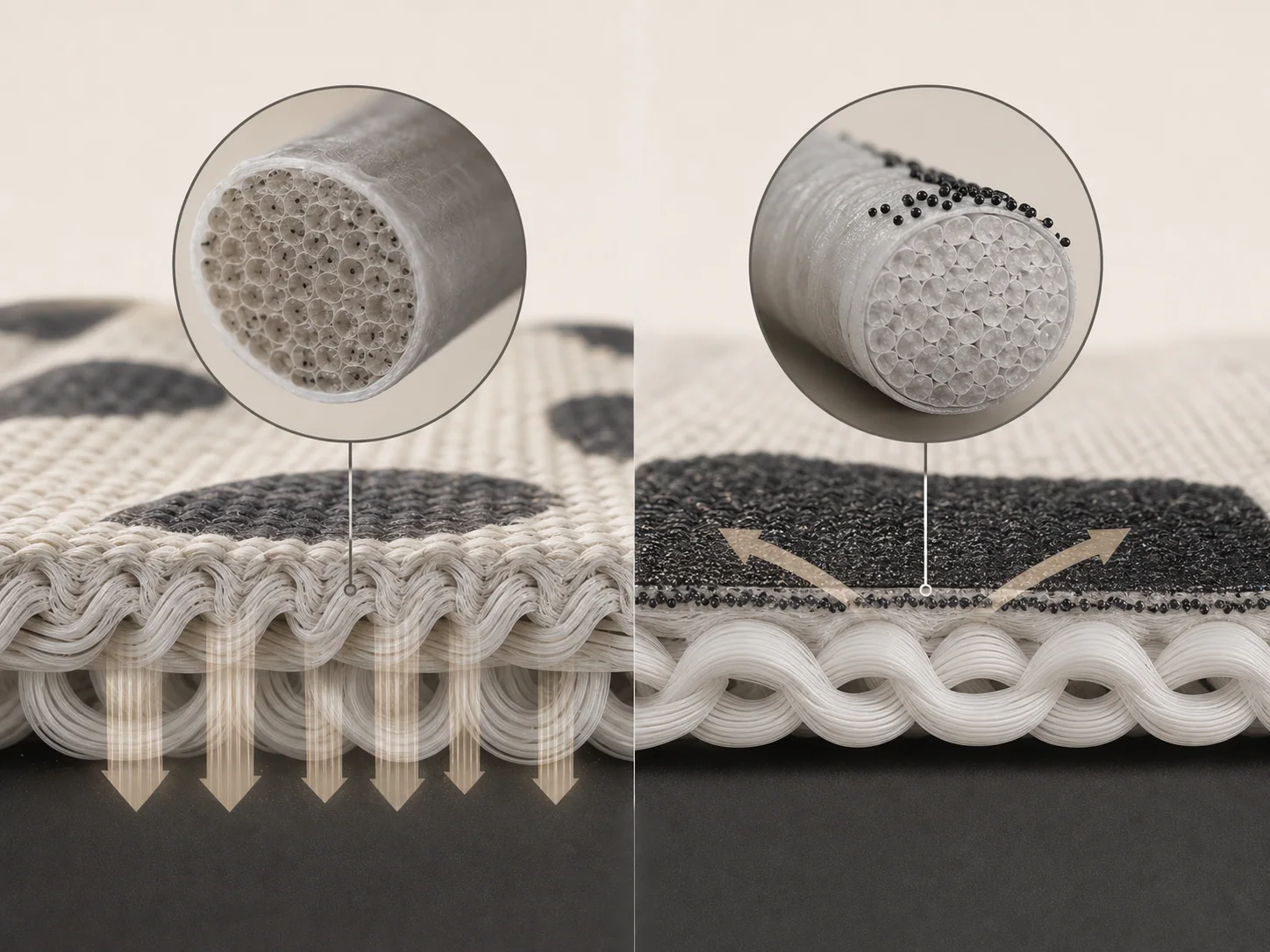
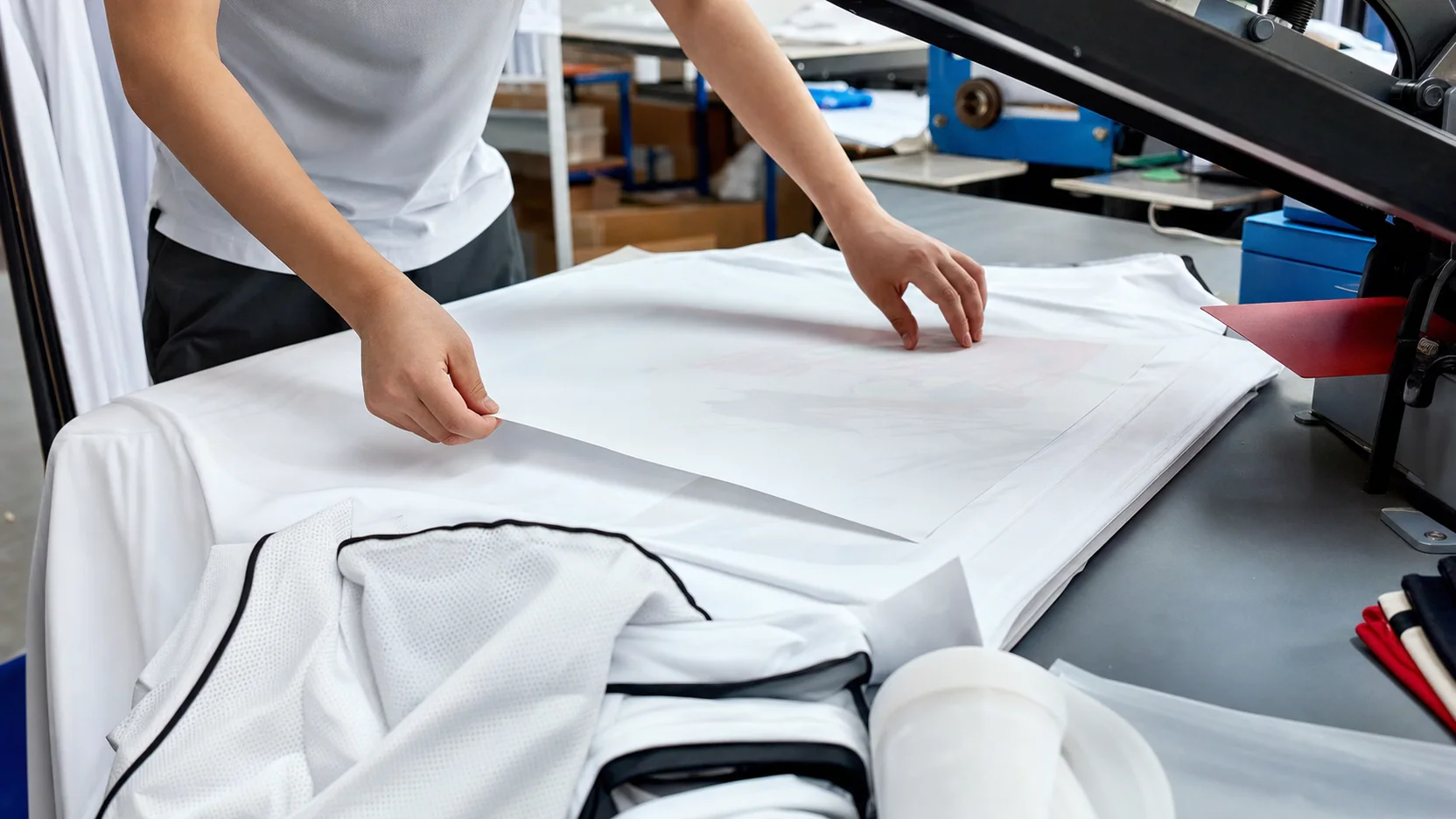
A standard transfer-sublimation route moves disperse dye into compatible polyester. It does not create the same independent film construction used by DTFilm routes.
The distinction affects hand, base-colour limits and which later process questions must be tested.
Sublimation
Dye enters the compatible polyester system.
Surface transfer
Film, ink and adhesive form a distinct surface stack.
- Sublimation uses heat to move dye into compatible polyester.
- DTF uses film, hot-melt powder and heat transfer.
MATERIAL GATE
Polyester Is the Start, Not the Approval
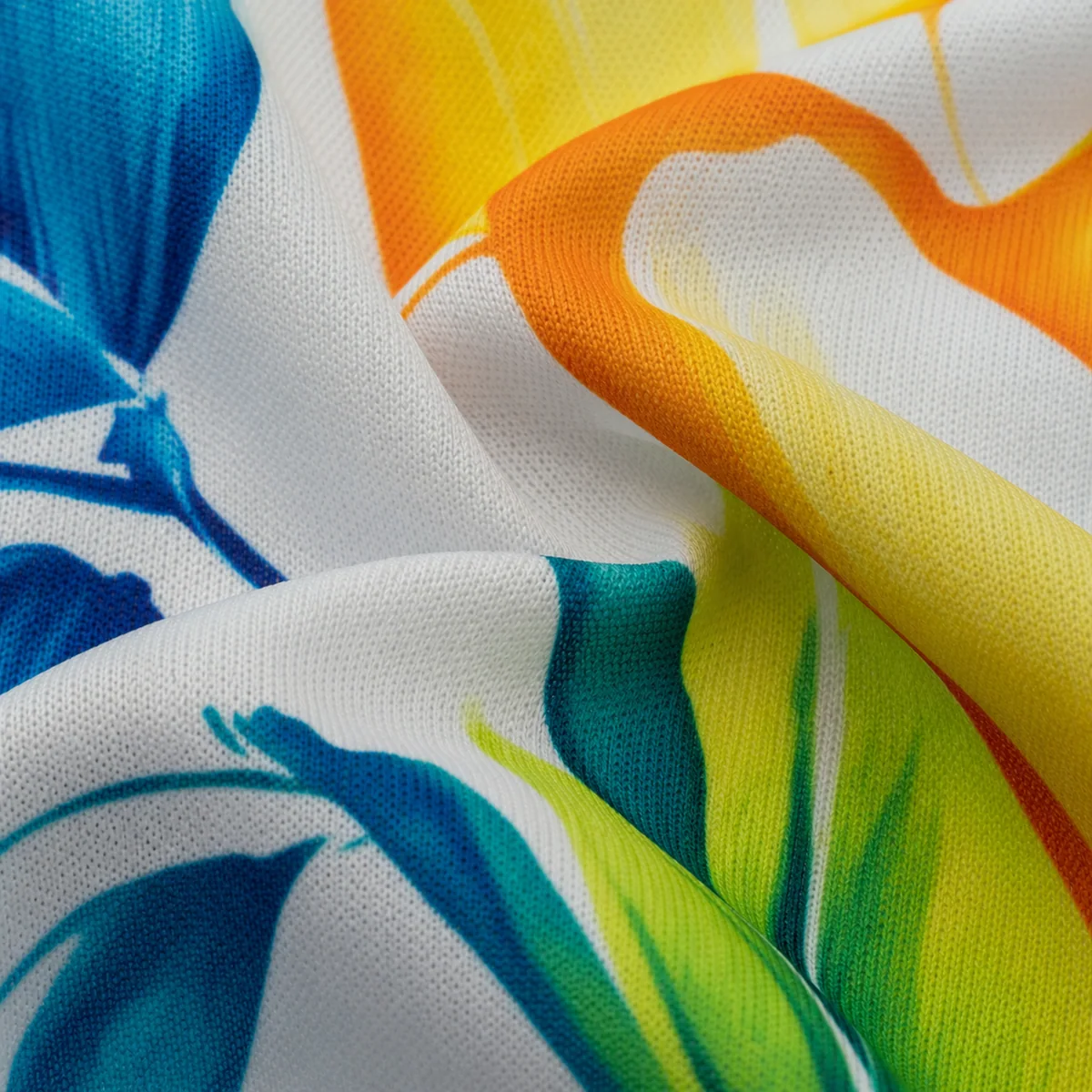
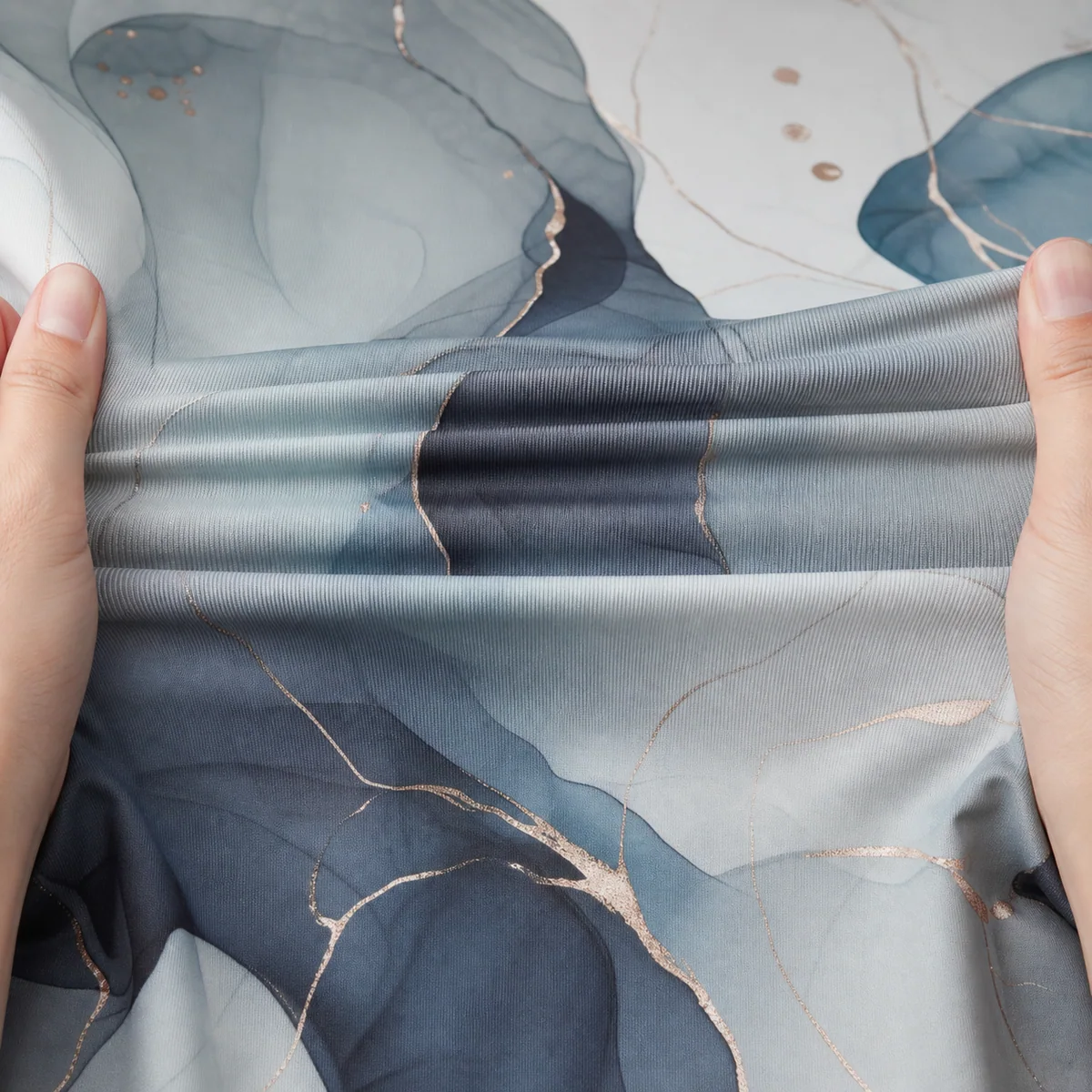
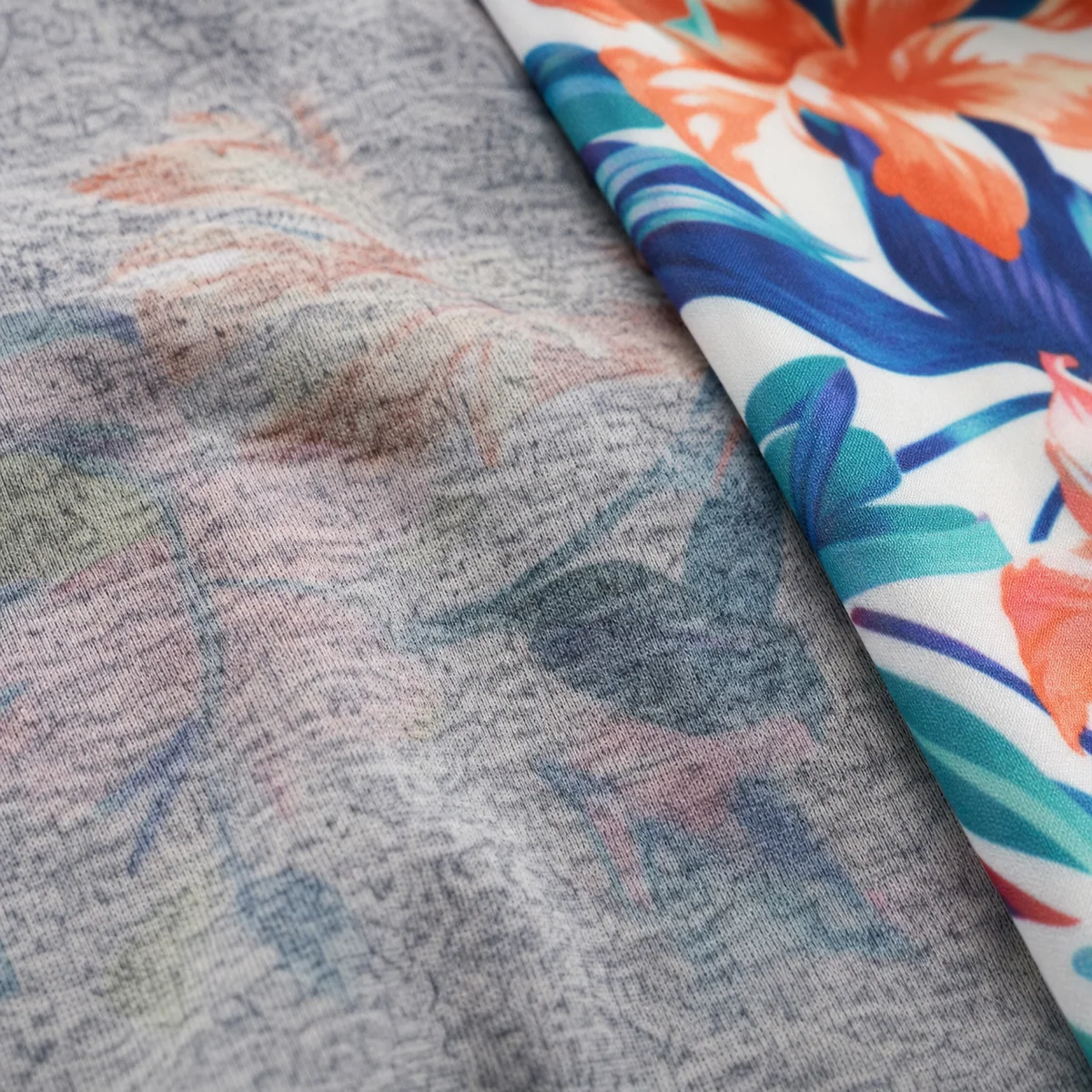
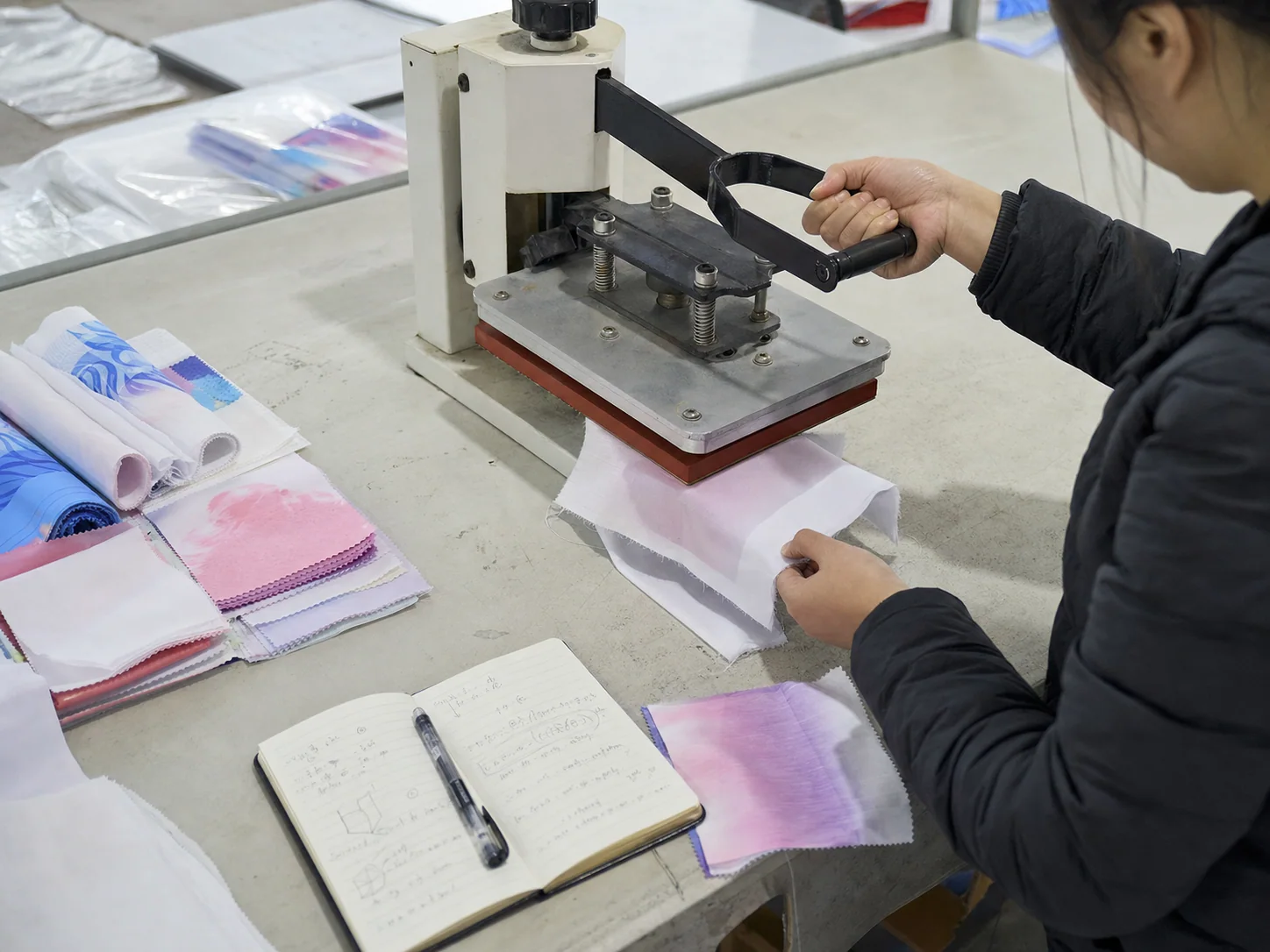
Polyester content is a starting condition, not a guarantee. Stretch, mesh, blend ratio, base colour, finish and trims can change the physical result.
Unknown or functional finishes stay on hold for an actual-fabric heat and colour test; the page does not predict one universal failure.
Good start
White 100% polyester jersey with actual material confirmation.
Sample first
Polyester/spandex, mesh, poly-cotton, pale colour and special finish.
Hold
Unknown finish, trim or heat response until a physical test is complete.
- Polyester and polyester/spandex appear across active, swim, jersey and performance apparel.
- Higher polyester content generally gives a stronger sublimation result, while actual blends must be sampled.
- Heat settings depend on the actual substrate and calibrated equipment rather than a universal recipe.
COLOUR APPROVAL
Approve Colour After Heat, on the Actual Fabric
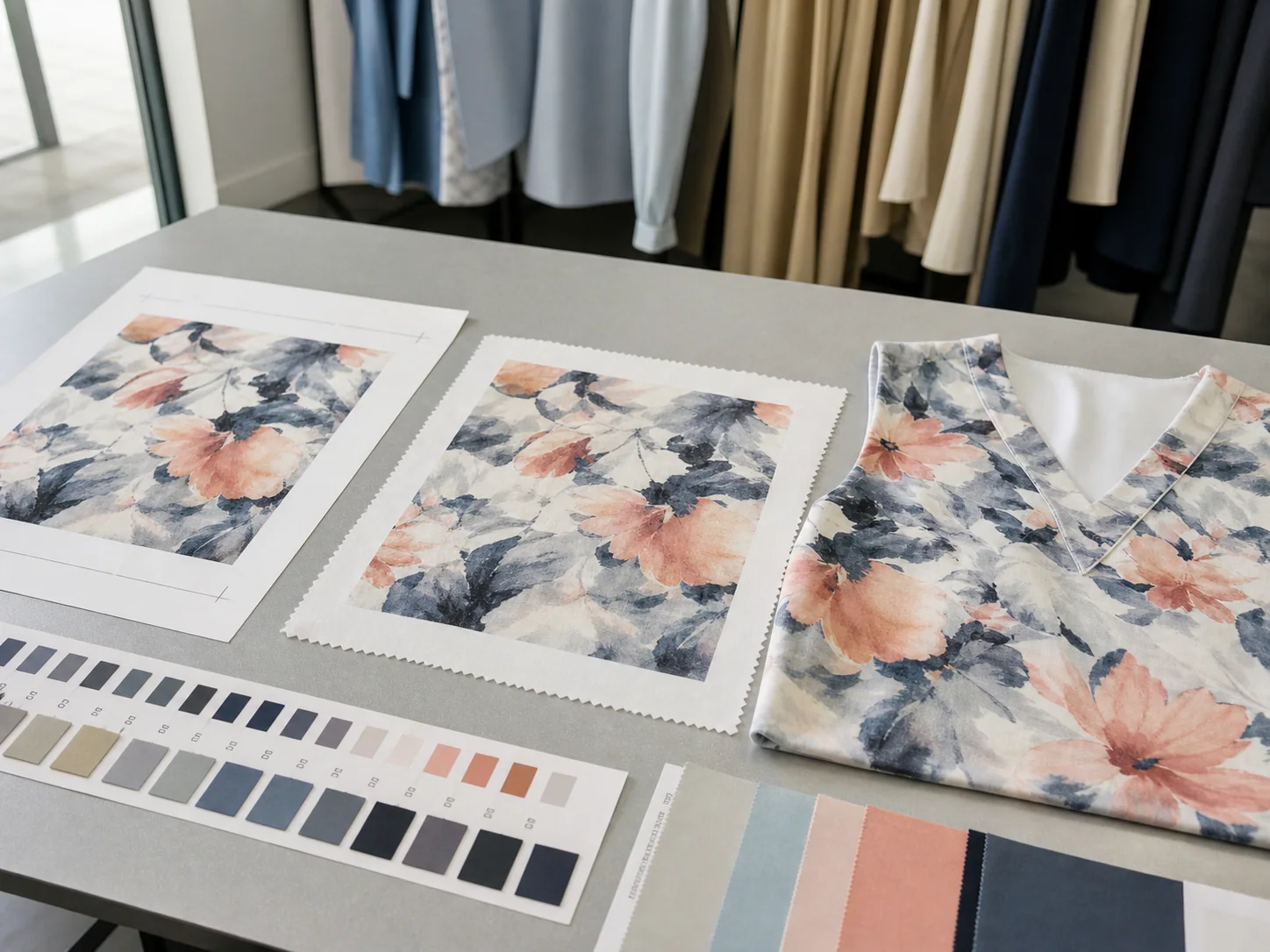
Screen, transfer paper, strike-off and sewn garment are different stages. The actual fabric and heat route set the final approval object.
Use the same material and conditions when an instrumental tolerance is agreed.
Screen
Design intent only.
Transfer paper
Intermediate mirrored output, not the final master.
Strike-off and garment
Approve colour after heat on the real base and finished construction.
- Transfer prints are mirrored and can look less vivid before pressing.
- Profile choices depend on the ink, paper and substrate system.
- Moisture can create fuzzy output and colour shifts.
- ISO 105-J03 covers colour difference calculation on the same material under the same conditions.
SECOND HEAT CYCLE
Plan the Second Heat Cycle Before the First
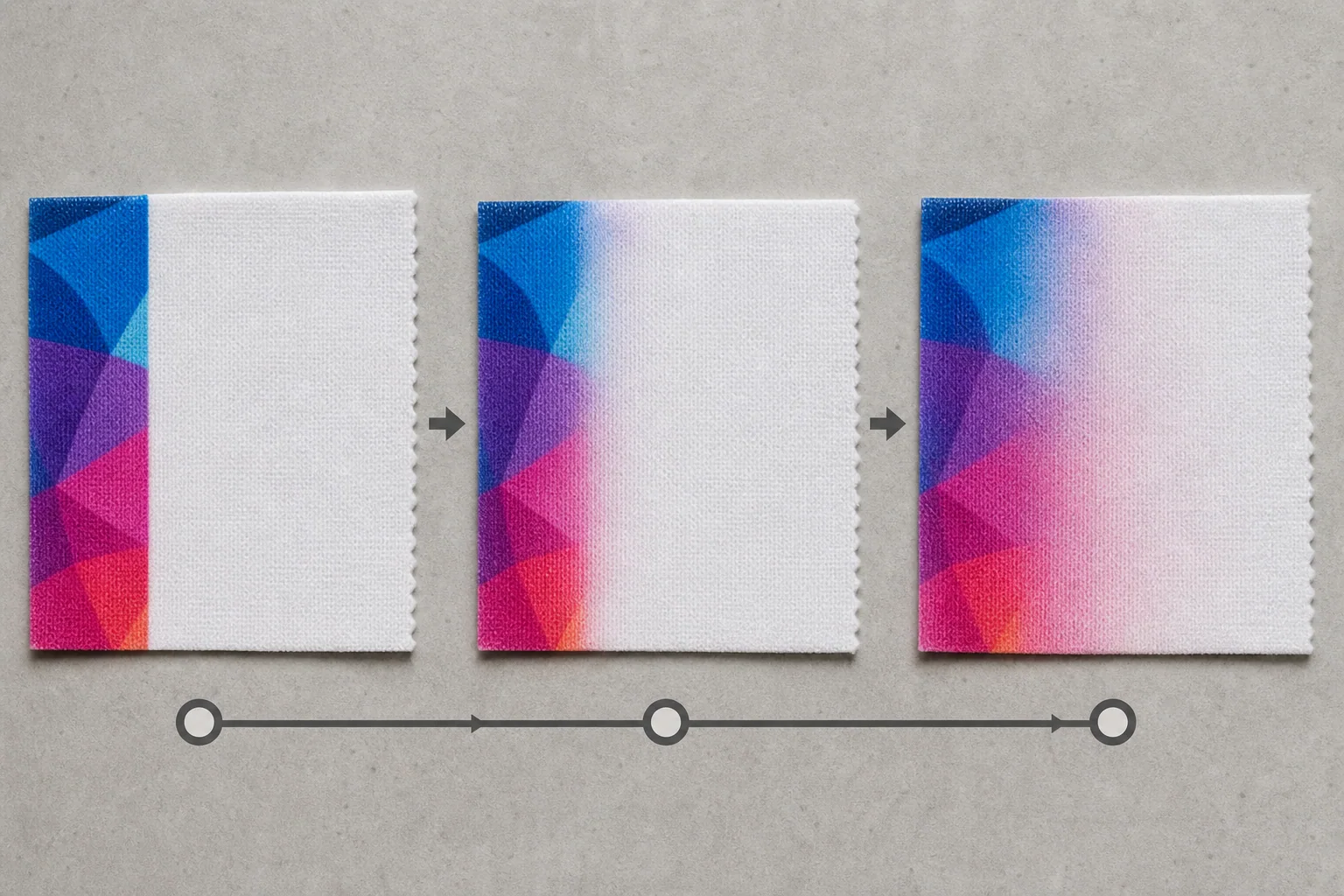
A later white name or logo can look clean at press and change later. S11 directly documents migration examples involving HTV or plastisol over sublimated polyester.
DTF, silicone, patches and other later layers need their own TDS and a complete-stack test; this page does not borrow S11 as proof for them.
Declare later decoration
List names, numbers, logos and patches in the first brief.
Test the full stack
Use the exact fabric, base, decoration system and heat history.
- Reheating sublimated polyester can release dye into later HTV or plastisol layers.
- A complete application test is needed for a high-bleed sublimated garment and the selected later layer.
FAILURE MODES
Six Defects, Six Different Causes
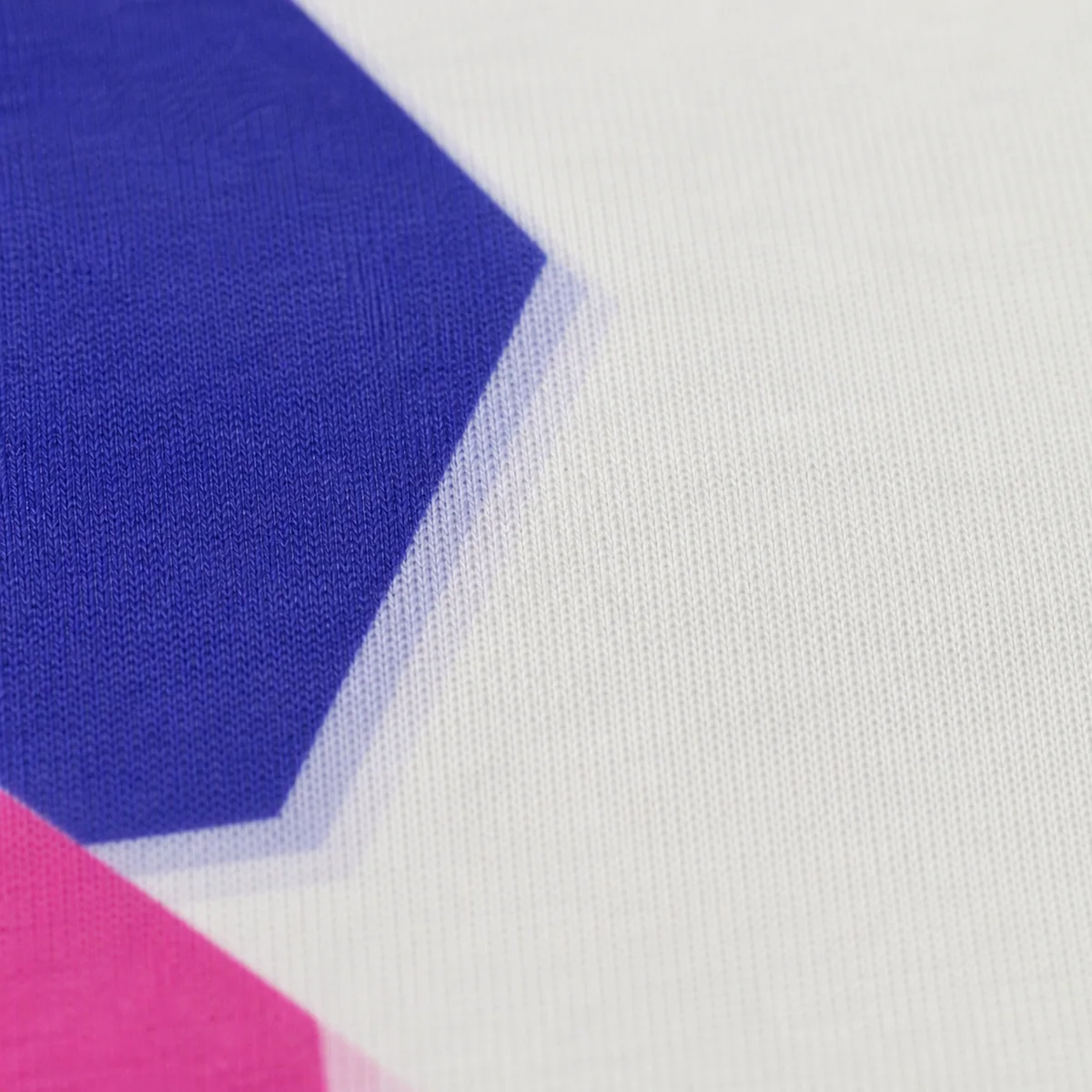
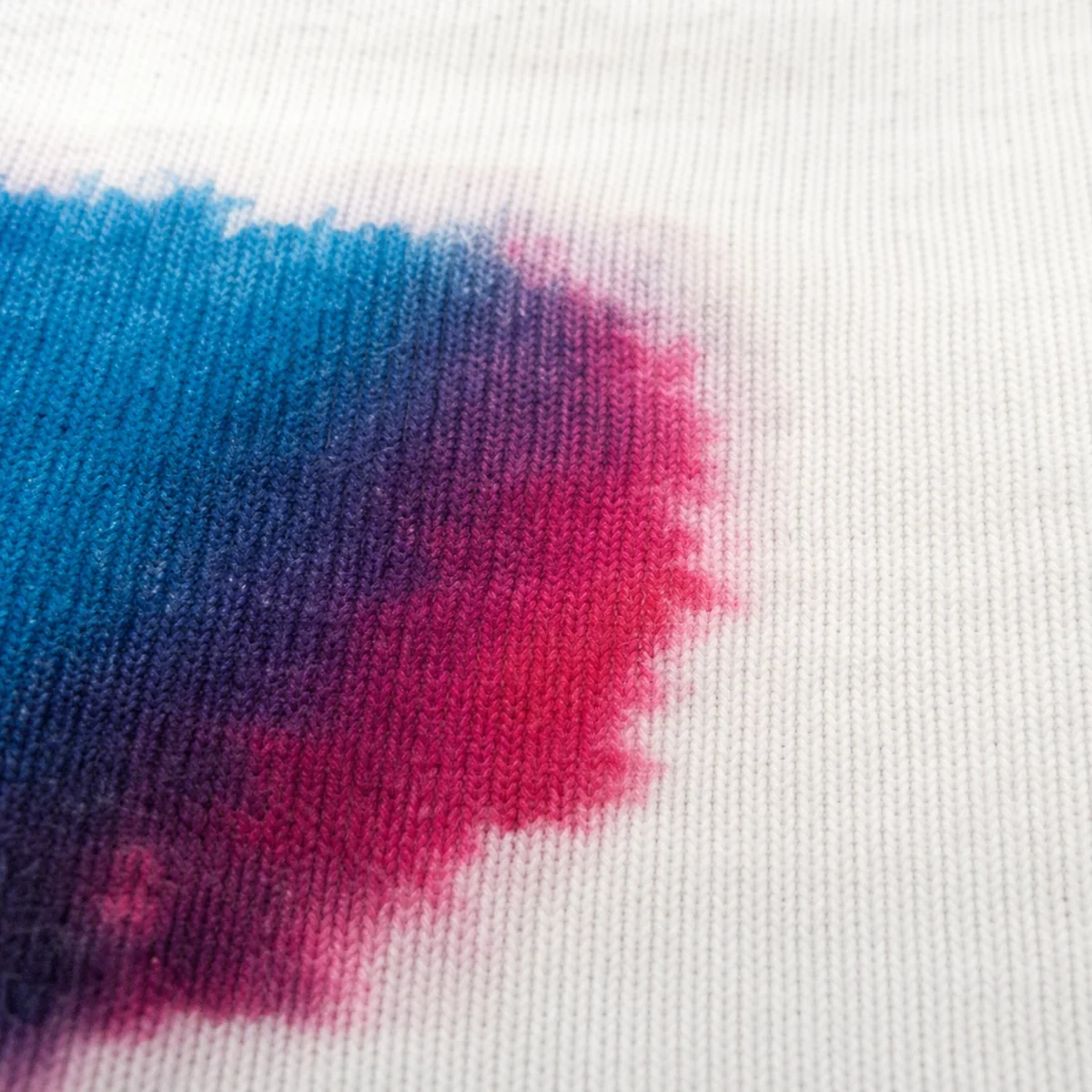
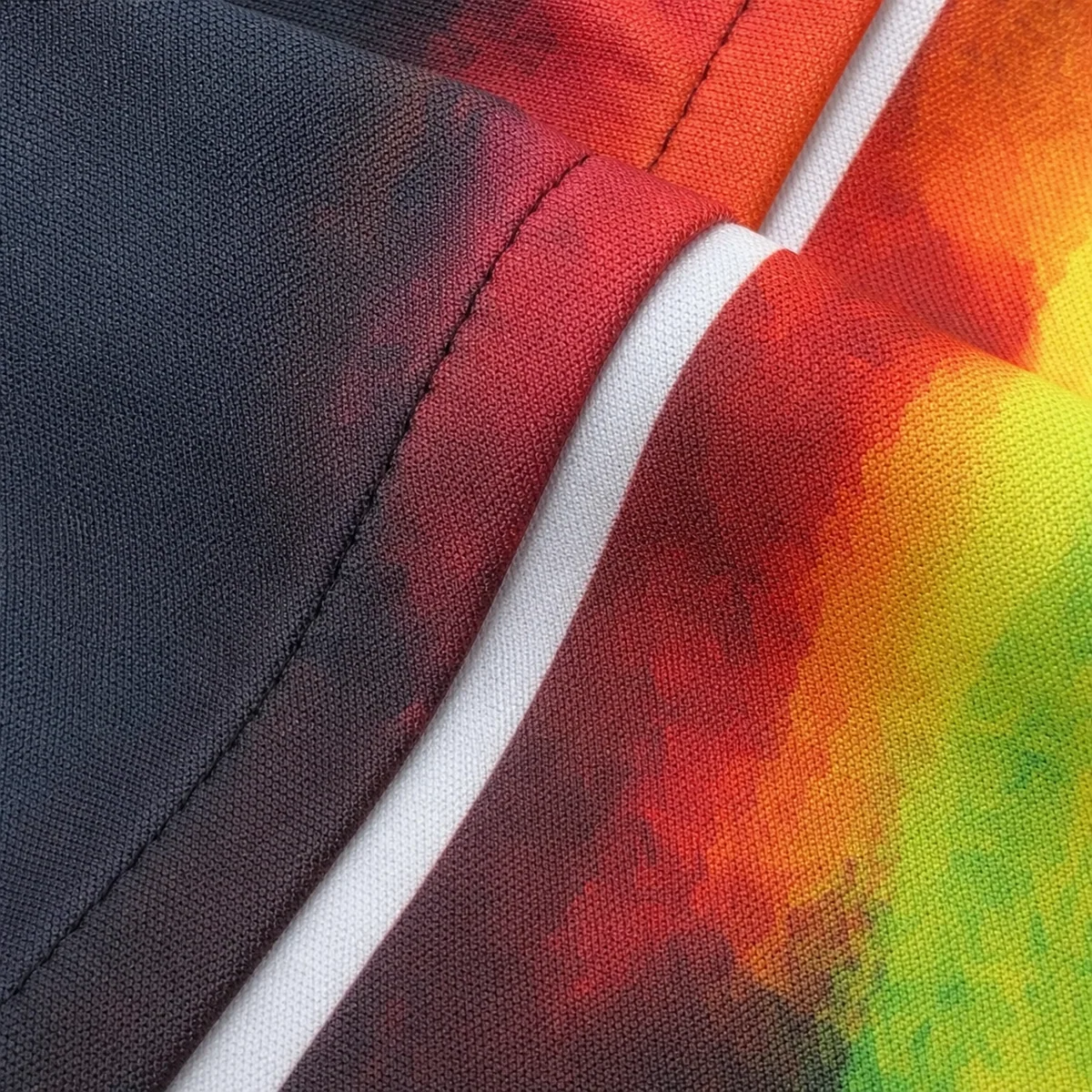
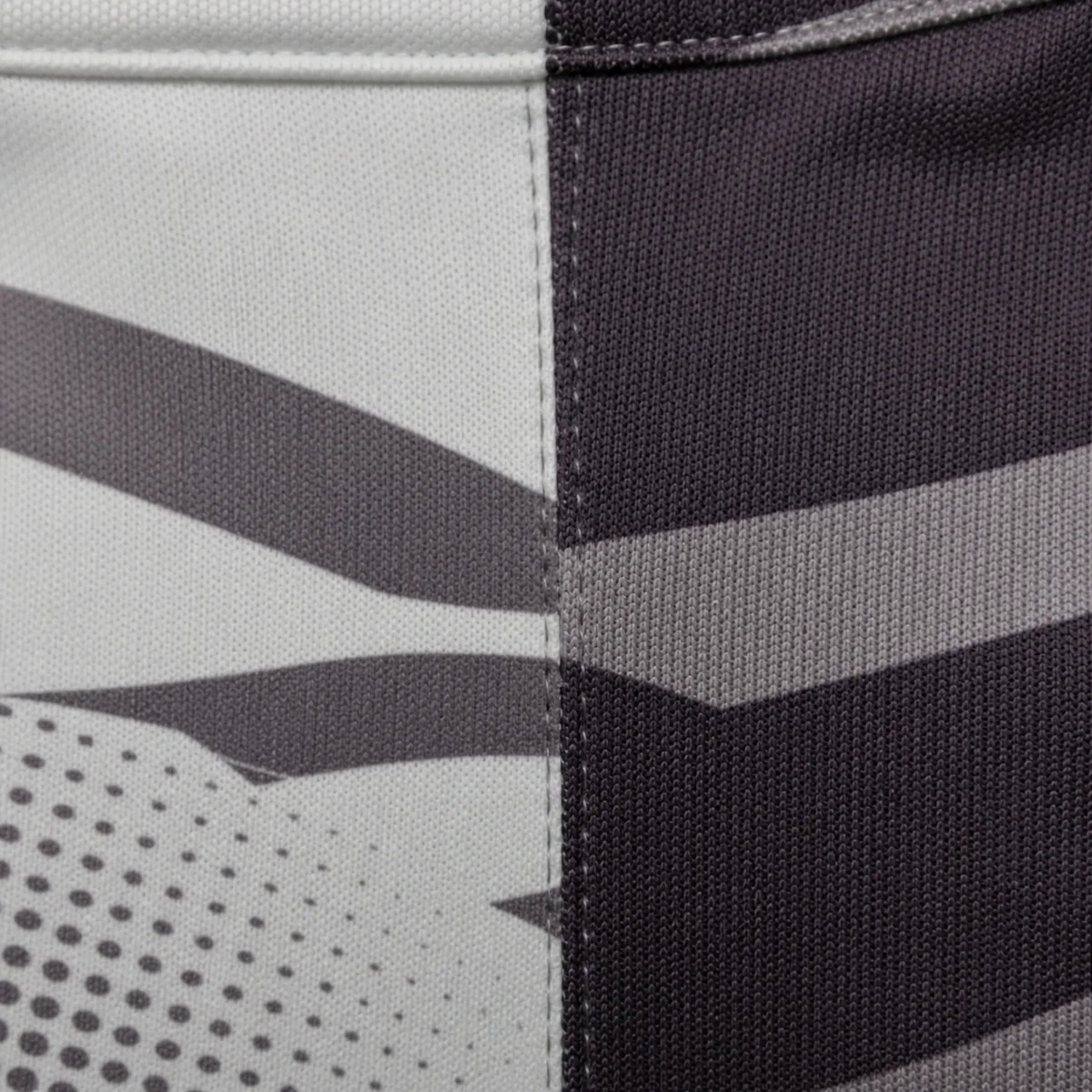
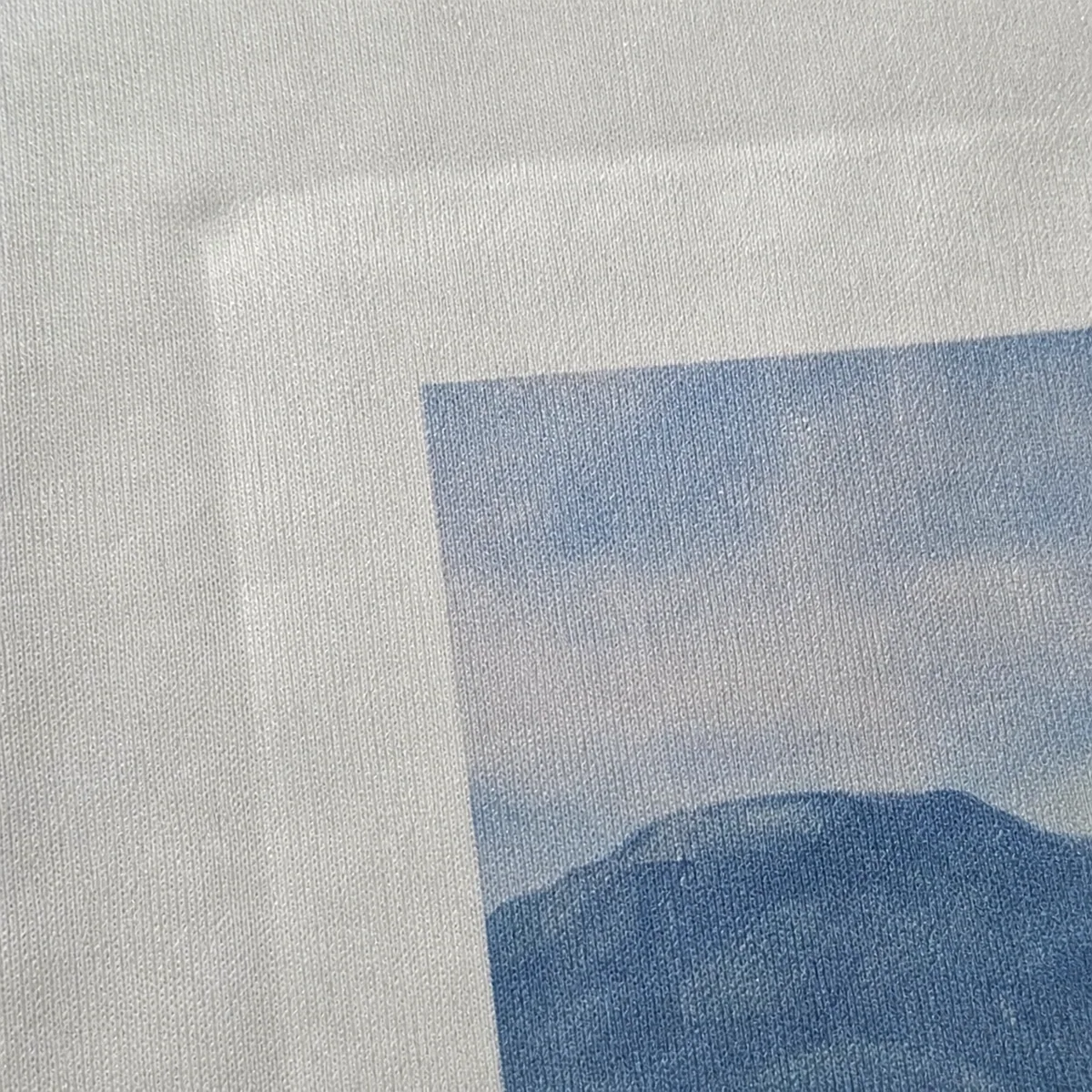
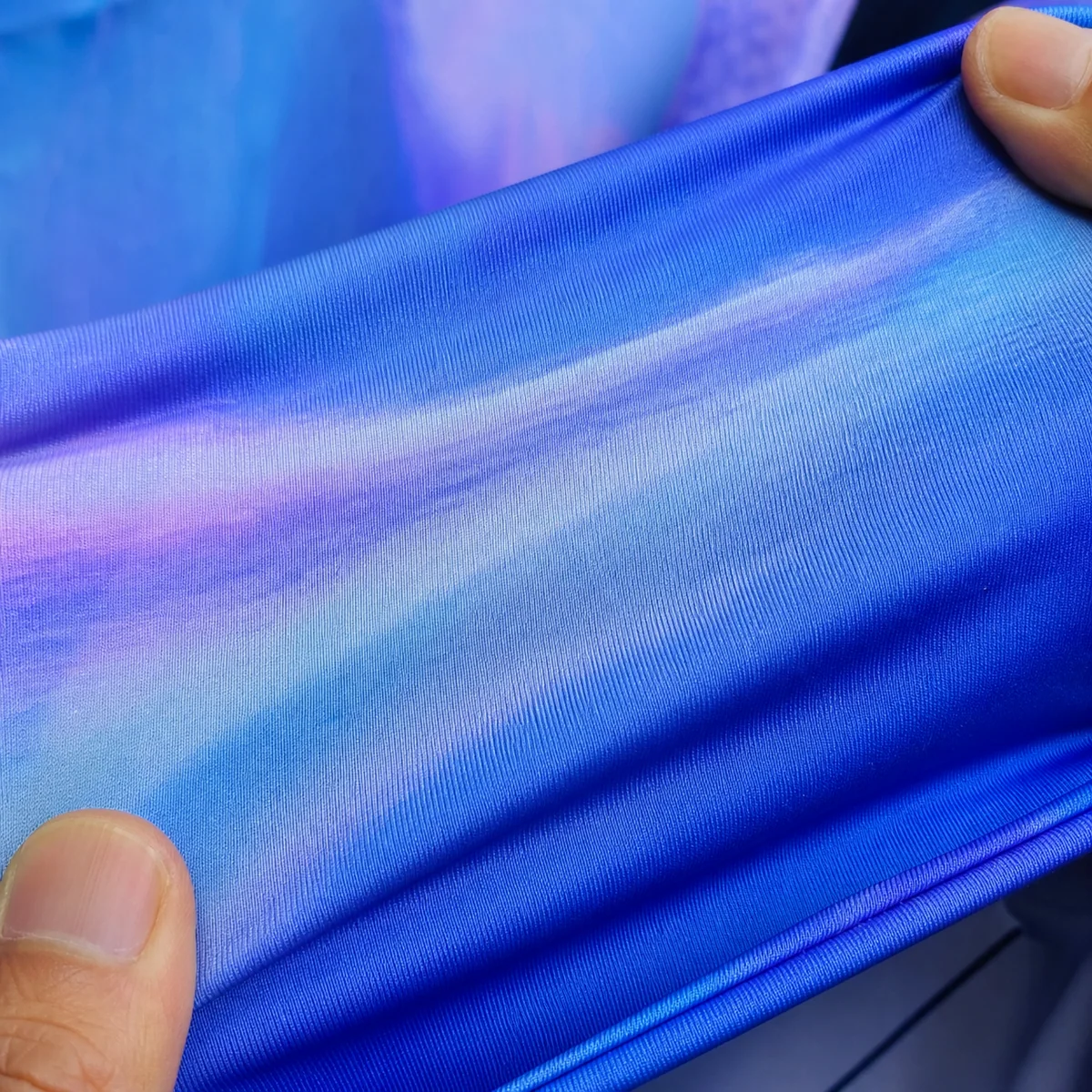
Ghosting, moisture fuzz, white creases, panel mismatch, heat-response marks and stretch whitening are not one generic printing problem.
Diagnose the exact material, route and physical sample rather than inventing a universal tolerance.
Transfer defects
Check ghosting, moisture fuzz and white creases separately.
Construction defects
Use the project panel files and sewn sample to diagnose joins.
Material response
Inspect heat marks and stretch whitening on the actual construction.
- Ghosting can result from paper or substrate movement; moisture is a distinct fuzzy-colour risk.
- Seams and folds on finished items can leave white coverage gaps.
- Stretch observation is relevant for polyester athletic garments.
SAMPLE AND QC
Approve Four Physical Gates
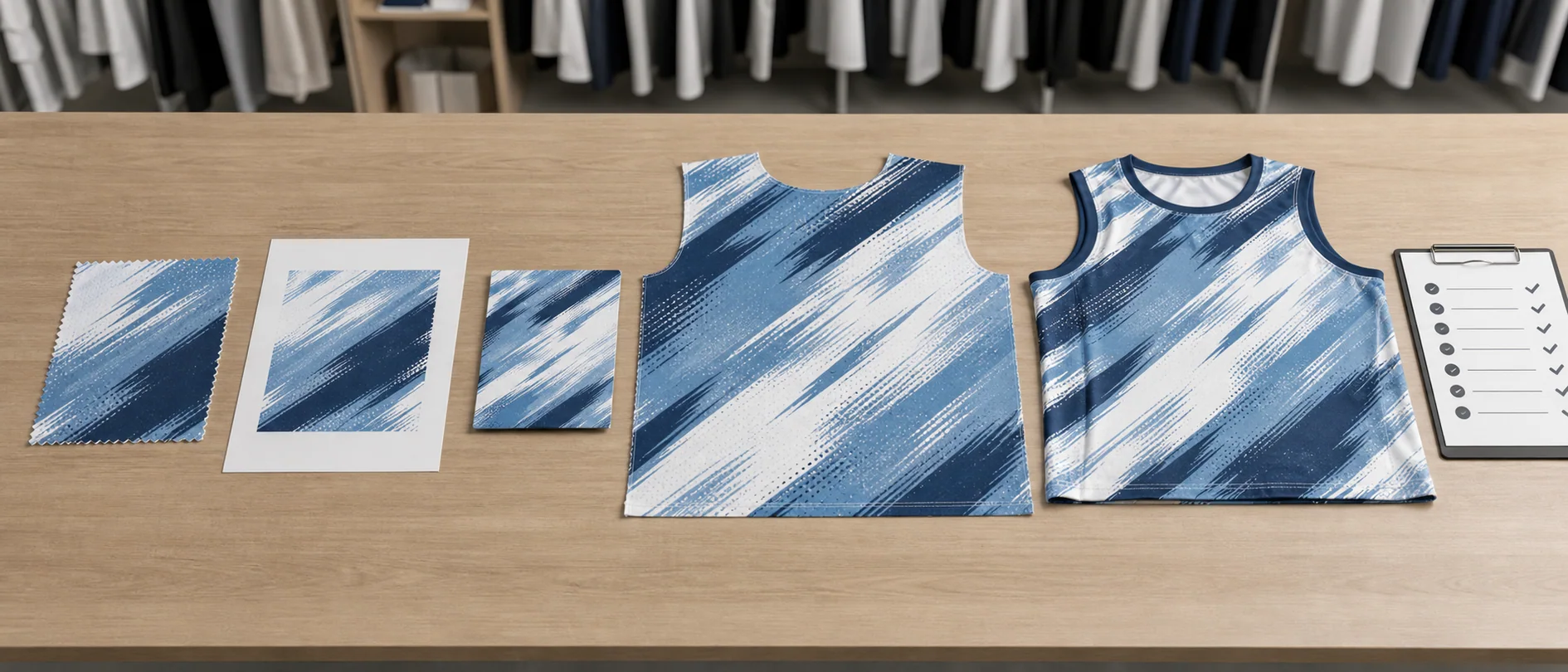
Approve an actual-fabric strike-off, full panel or placement, sewn PP garment and bulk first-off in sequence.
Test method, condition, grade and sampling plan are project inputs, not a universal page promise.
1. Strike-off
Approve colour, detail, heat response and stretch on actual fabric.
2. Panel
Approve the project-specific panel files, scale, direction and key joins.
3. Sewn PP
Approve seams, dimensions, stretch and any later decoration.
4. First-off
Lock first production colour, position, defect limits and records.
- Fabric-first cut-and-sew and finished-garment coverage have different physical limits.
- Colourfastness and hot-press tests have named method scopes that must be selected for the project.
TRADEOFFS
A Lightweight Print with a Heavy Material Decision
Sublimation can support detailed multi-colour work without a separate surface film, but it also creates material, panel, heat and approval work.
Our usual starting point is 100 pieces per style per colour. Material or style may require a different minimum.
Gain
Detailed colour on compatible polyester without a separate raised film.
Tradeoff
White/light base, paper/profile/heat control, panels and physical approvals.
Not fit
Opaque white on dark, cotton-dominant bodies and thick special-effect surfaces.
- Sublimation can produce detailed multicolour work without a separate surface film.
- All-over cut-and-sew adds pattern, cutting and sewing stages.
- Settings and performance remain substrate-specific.
- The approved Canton Fashion public MOQ baseline is 100 pieces per style per colour, subject to material or style.
METHOD CHOICE
Choose by Fibre, Base Colour and Surface
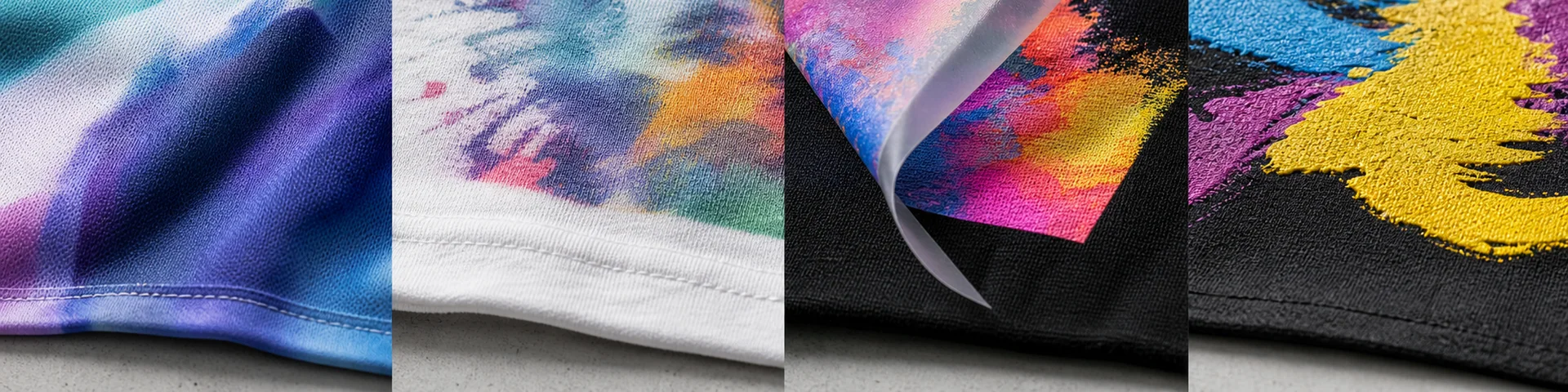
Sublimation, DTG, DTF and screen printing are not interchangeable labels. Compare their actual material, colour and surface structures before sampling.
The comparison is a routing tool, not a promise that any adjacent process fits without its own system test.
Keep sublimation
White/light compatible polyester, full colour and no raised film.
Compare digital or DTF
Cotton, dark bases or a named direct/film system that can be sampled.
Compare screen
A defined textile-ink, substrate, print-order and cure route.
- Sublimation is a digital route with distinct polyester and heat-fixation rules.
- Epson documents DTG direct printing and DTFilm film, white ink, adhesive powder and heat application boundaries.
- Screen printing uses textile inks, opacity categories, print order, ink-deposit controls and curing.
NEXT DECISION
Continue from the Decision You Still Need to Make
Route by the unresolved problem: material, panels, dark base, desired surface or garment type.
Product suitability remains conditional on actual fibre, base colour, stretch, construction, finish, heat tolerance, artwork and the approved sample.
Material not locked
Continue to Fabric and Trims Sourcing.
Artwork crosses panels
Continue to Pattern Making and Sampling.
Wanted surface is flock
Continue to Flock Printing rather than forcing dye into polyester.
- Product and technique suitability is conditional on the actual material, construction and approved sample.
BEFORE SAMPLING
Questions to Resolve Before the First Strike-Off
The front end should present the 15 source-bound answers in `page-plan.md`, including the no-white, cotton, seam, later-heat and MOQ boundaries.
Answers do not promise universal colour, wash, seam or temperature results.
Materials01
Resolve fibre, percentage, base colour and finish first.
Construction02
Resolve flat panels, seams, pattern files and sewn approval.
Later heat03
Resolve the complete decoration stack before the first sample.
- Standard sublimation is a compatible-polyester route without white ink.
- The company MOQ baseline is 100 pieces per style per colour, subject to material or style.
PROJECT INPUTS
Send the Fabric, Pattern and Artwork Together
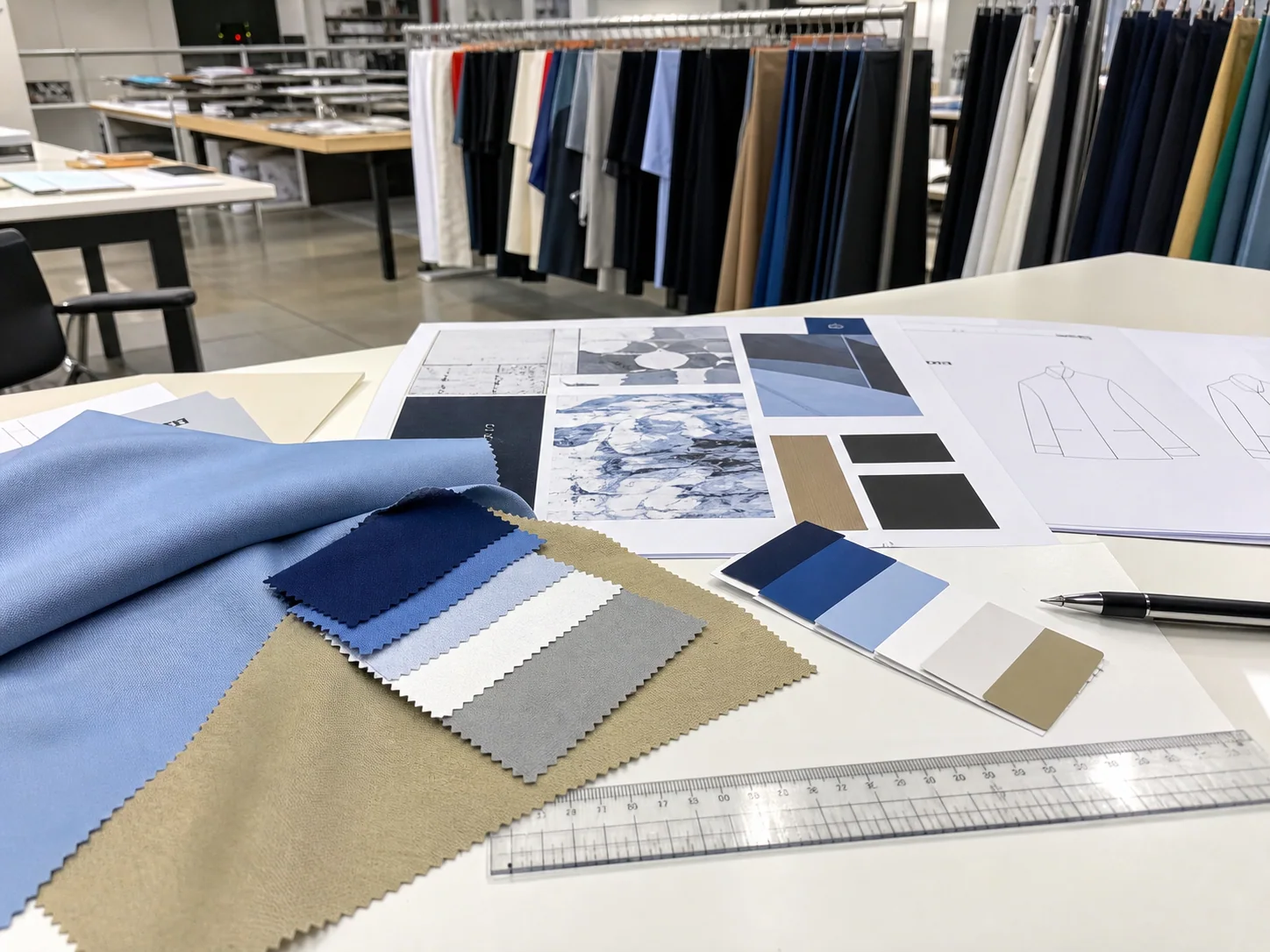
Tell us whether the artwork is a spot print, repeat or engineered panel layout. We confirm fibre, base colour, heat response and the sewn sample before bulk.
Our usual starting point is 100 pieces per style per colour. Material or style may require a different minimum.
Material
Fabric composition, code, construction, GSM, stretch, finish and base colour.
Artwork
Spot/repeat/engineered mode, size range, panel template, reference and critical colours.
Production
Quantity, project-critical joins, later decoration, tests, destination and target date.
- The approved public MOQ baseline is 100 pieces per style per colour, subject to material or style.