CONTROL THE CELLULOSE SURFACE
Enzyme Wash
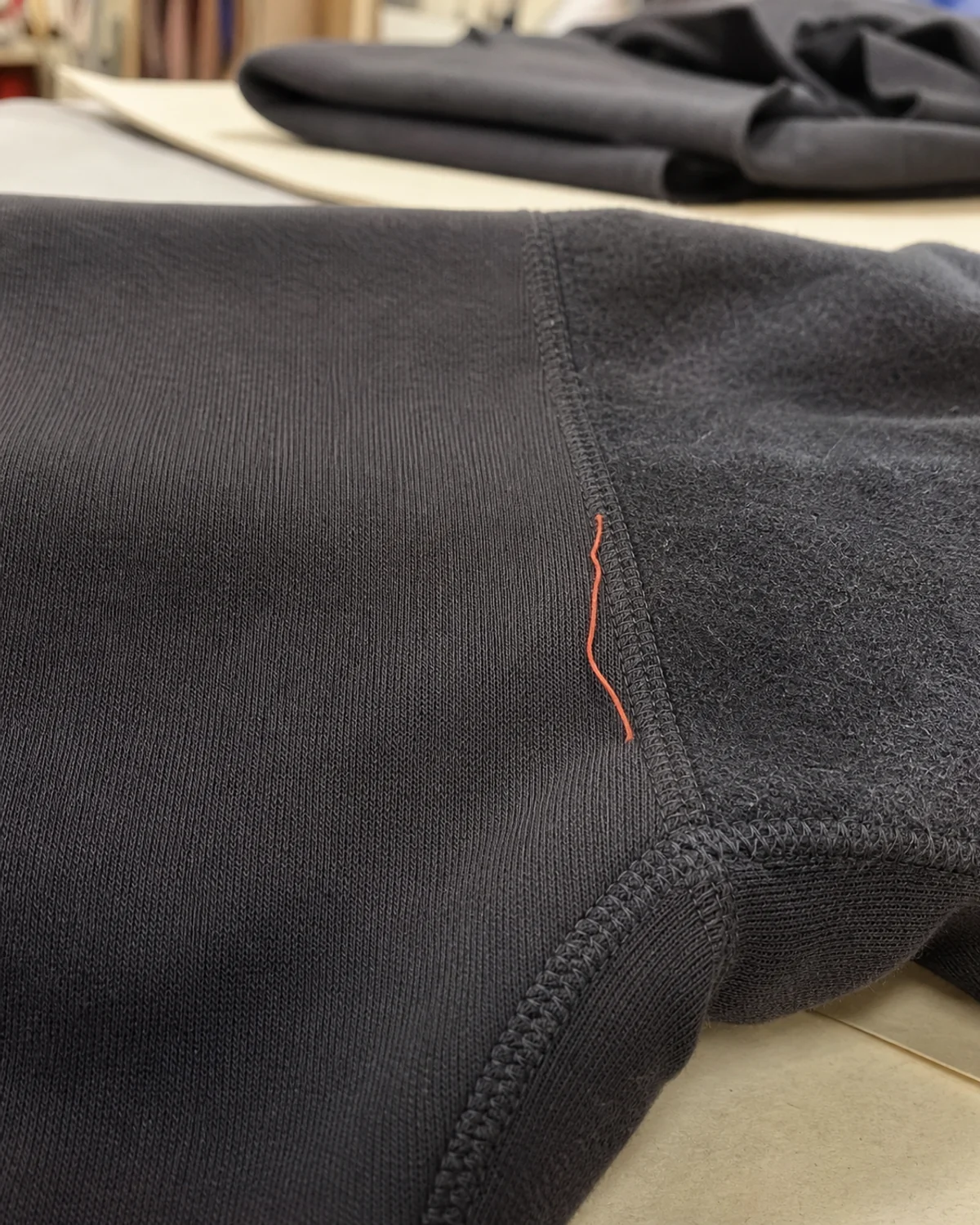
Cellulase removes exposed cellulose from a garment surface. Fibre, colour, construction, bath control and a complete processed sample define the safe effect window.
FIT FIRST
Does the garment have the right surface target?
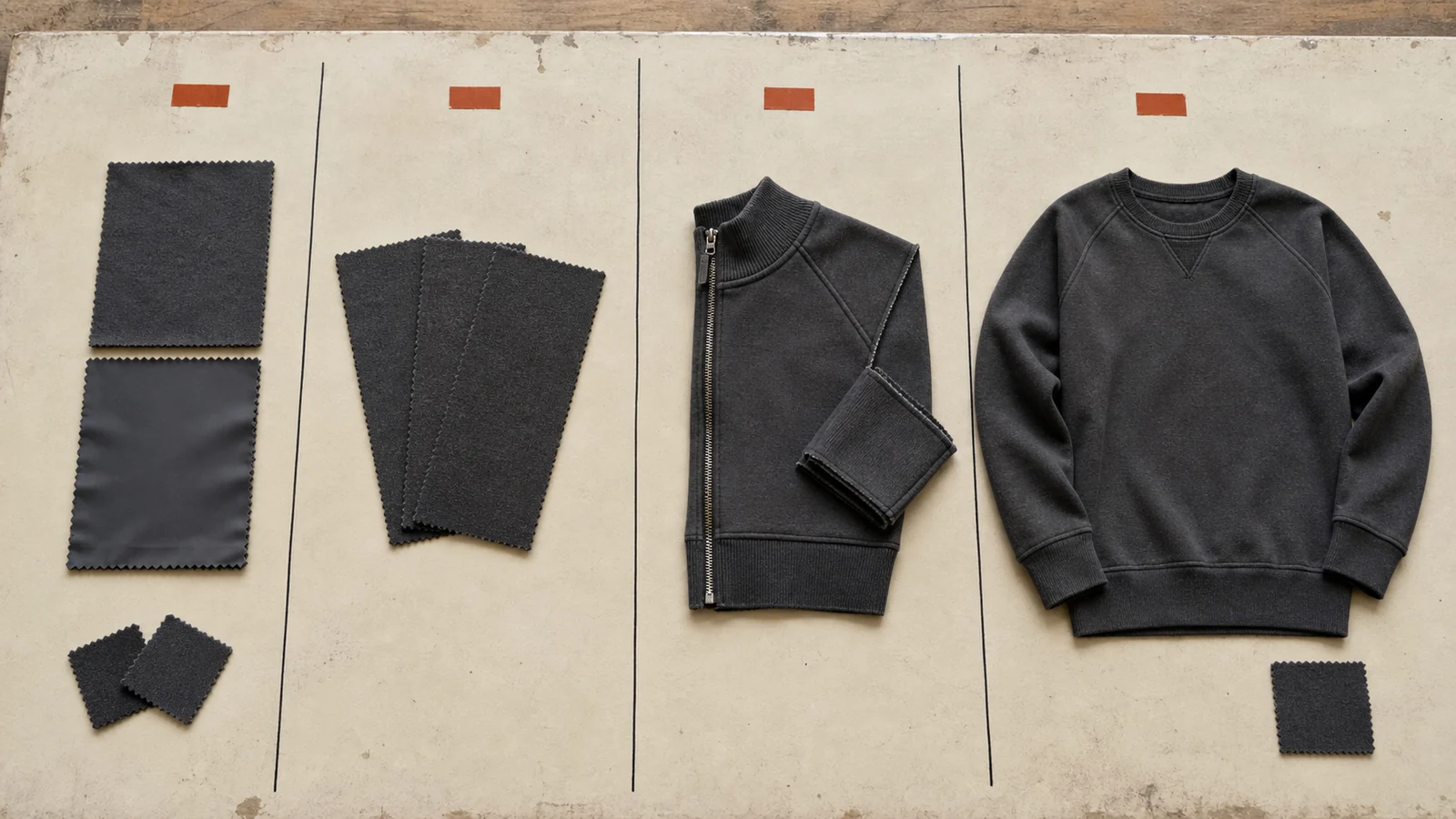
Start with fibre, intended result, complete construction and the ability to approve a processed sample.
If fibre, base colour or finish is unknown, identify and sample the material before discussing a stronger process.
Strong candidate
Known cotton or cotton-rich substrate, a named surface target, wet-process-tolerant construction and approval by physical processed sample.
Hold and test
MMCF, stretch, brushed or raised surfaces, heavy seams, mixed components, coatings, decoration or tight dimensional and strength margins.
Choose another route
No relevant cellulose target, newly added colour, dramatic discharge or a required pumice-led abrasion result.
- Cellulase acts on exposed cellulose; polyester, nylon, wool and silk are not default targets for the cotton-style route.
- Viscose, modal and lyocell are cellulosic, but supplier systems are substrate-specific and a cotton route must not be transferred automatically.
- Cotton and spandex constructions require wet- and heat-history checks for width, shrinkage, stretch, recovery and distortion.
- Canton Fashion technique compatibility remains conditional on material, colour, stretch, structure, design, quantity, heat or wash tolerance and sample testing.
NAME THE ENDPOINT
Choose the surface result before the recipe
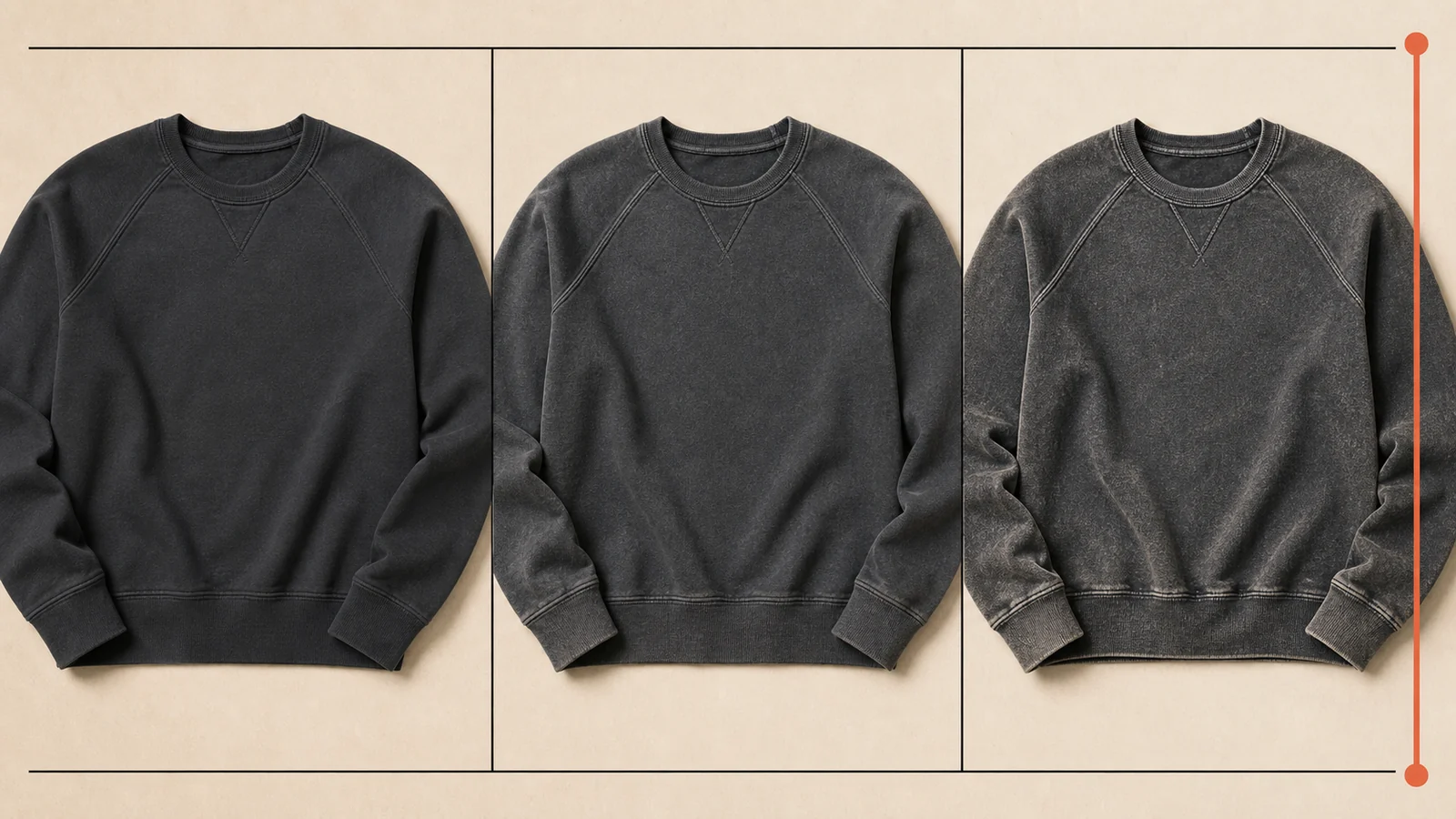
Enzyme Wash is not one promised look. Define an acceptable physical range and the line beyond which material or construction loss is unacceptable.
The three levels are buyer decision language, not universal industry grades.
Clean biopolish
Cleaner face, lower fuzz and improved surface clarity, approved with hand, surface, dimensions and material margin.
Controlled wash-down
Restrained colour and surface change, approved by a physical effect band, cleanliness, seam contrast and relevant fastness.
Construction-led high/low
Intentional seam, pocket and raised-zone character, approved with a hotspot map and maximum acceptable damage boundary.
- Cellulase processing can reduce exposed surface fuzz and improve surface cleanliness or softness on suitable cellulose-based substrates.
- On coloured cotton or denim, controlled surface removal can produce wash-down and construction-led highlights.
- Excessive process severity can cause fabric weight reduction and strength loss.
SURFACE MECHANISM
What the cellulase actually changes
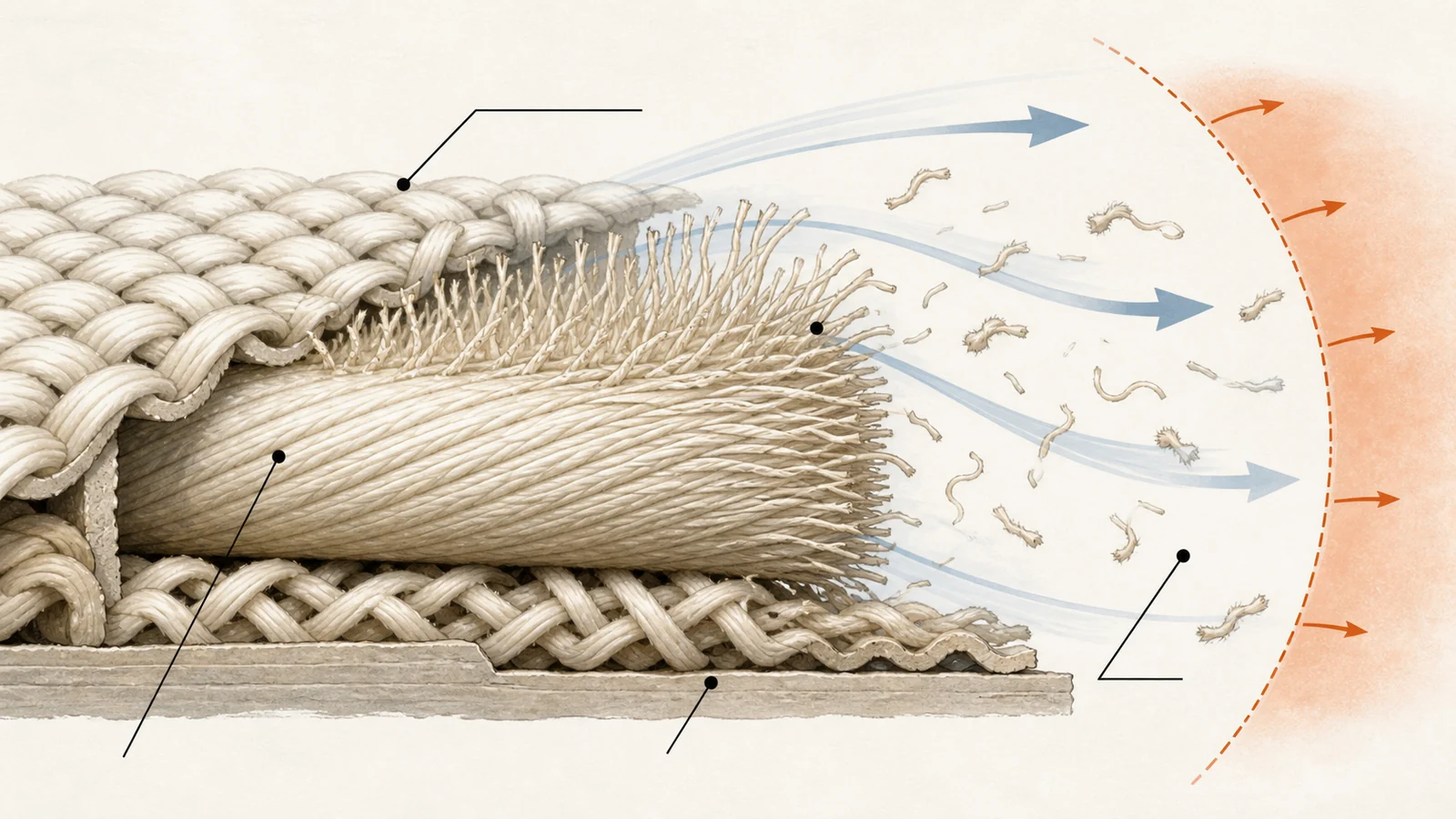
Read the diagram as controlled action at exposed surface fibrils, not as the whole yarn dissolving evenly.
Movement and rinsing are part of removing loosened material; enzyme treatment does not mean zero abrasion.
Exposed cellulose fibrils
The reachable surface fuzz.
Yarn body
The woven or knitted structure that must retain its required margin.
Controlled action and movement
Surface material is loosened and detached.
Rinse away
Detached material is removed rather than carried back onto light areas.
- Cellulase hydrolyses exposed cellulose at the fibre surface.
- Mechanical agitation helps remove the hydrolysed cellulosic material from the surface.
- Surface improvement and unacceptable material loss are outcomes of the same removal mechanism at different severities.
WHOLE PROCESS
A complete wash path, not one bath label
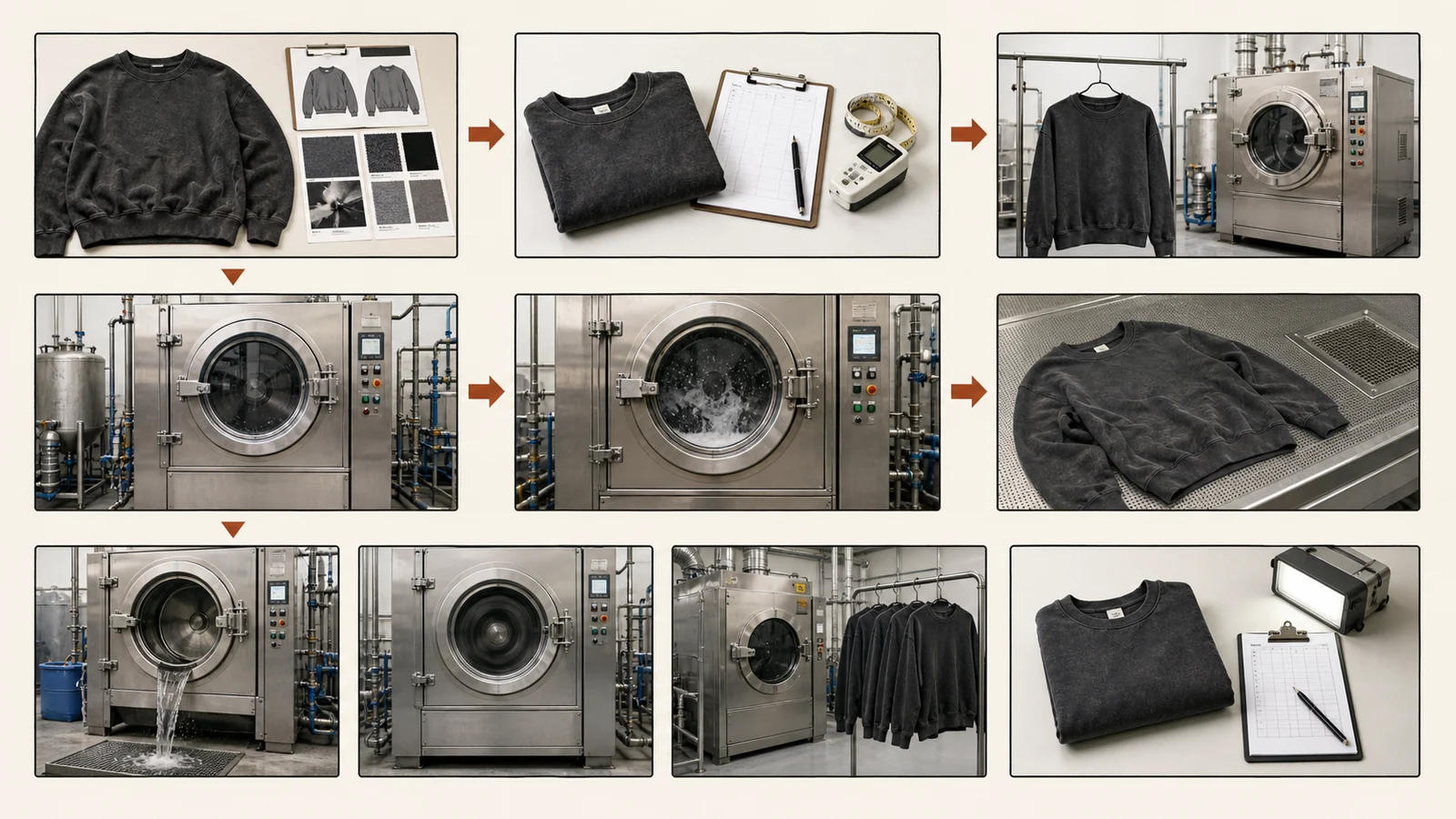
The actual supplier route must control the named substrate, full garment, loading, action, stop, rinse, drying and release record.
Optional softener, brightening or another afterfinish remains project-specific.
1–3
Lock target and substrate; inspect and measure input garments; prepare only when required.
4–6
Establish the validated bath; run controlled cellulase action; stop at the approved endpoint.
7–9
Drain and rinse; extract, dry and condition; inspect and release by lot.
- Alpha-amylase desizing removes starch size and is a separate preparation task from cellulase abrasion or biopolishing.
- Enzyme identity, pH, temperature, time, concentration, liquor ratio, mechanical action, auxiliaries and fabric characteristics interact.
- The enzyme action must be deactivated at the validated endpoint before final release.
- Garment wet finishing includes extraction, drying and inspection after the controlled wet process.
CONTROL WINDOW
Nine variables move the endpoint
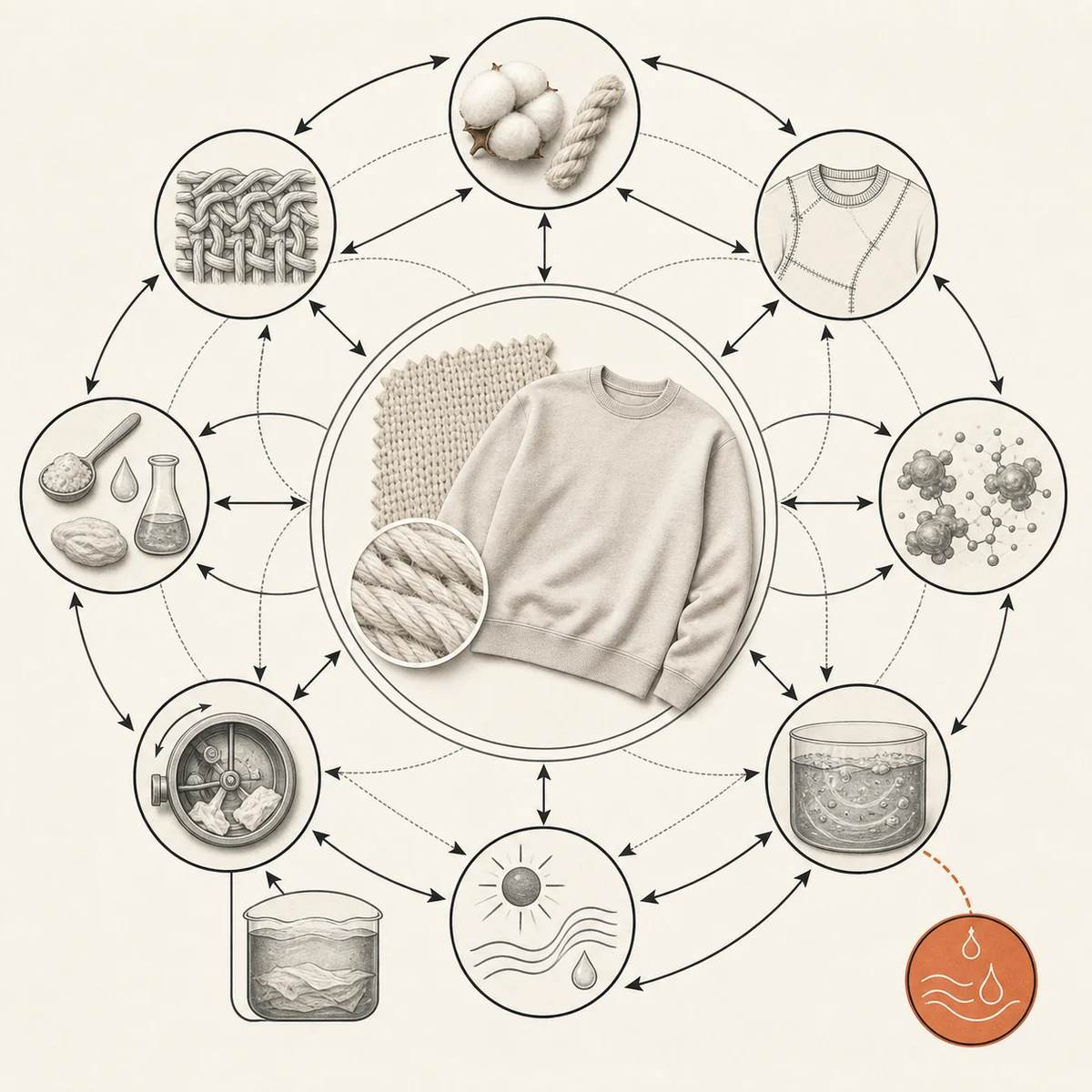
Exact substrate sits at the centre. Enzyme identity, bath controls, exposure, liquor and load, movement, auxiliaries, rinsing and complete construction change the result.
No study or supplier value is copied into a universal public recipe.
Substrate and construction
Exact fibre, yarn, surface, finish, colour and complete garment.
Enzyme and bath
Named system, pH, temperature, concentration, time and liquor ratio.
Load, movement and rinse
Representative loading, contact pattern, auxiliaries, drainage and cleanliness control.
- Enzyme type, pH, temperature, time, concentration, liquor ratio, mechanical action, auxiliaries and fabric characteristics jointly affect cellulase processing.
- Acid and neutral cellulase systems have different operating and result behaviour and are not interchangeable labels.
- Supplier systems distinguish cotton from man-made cellulosic substrates.
STOP IS A GATE
The target is not approved until the action is stopped
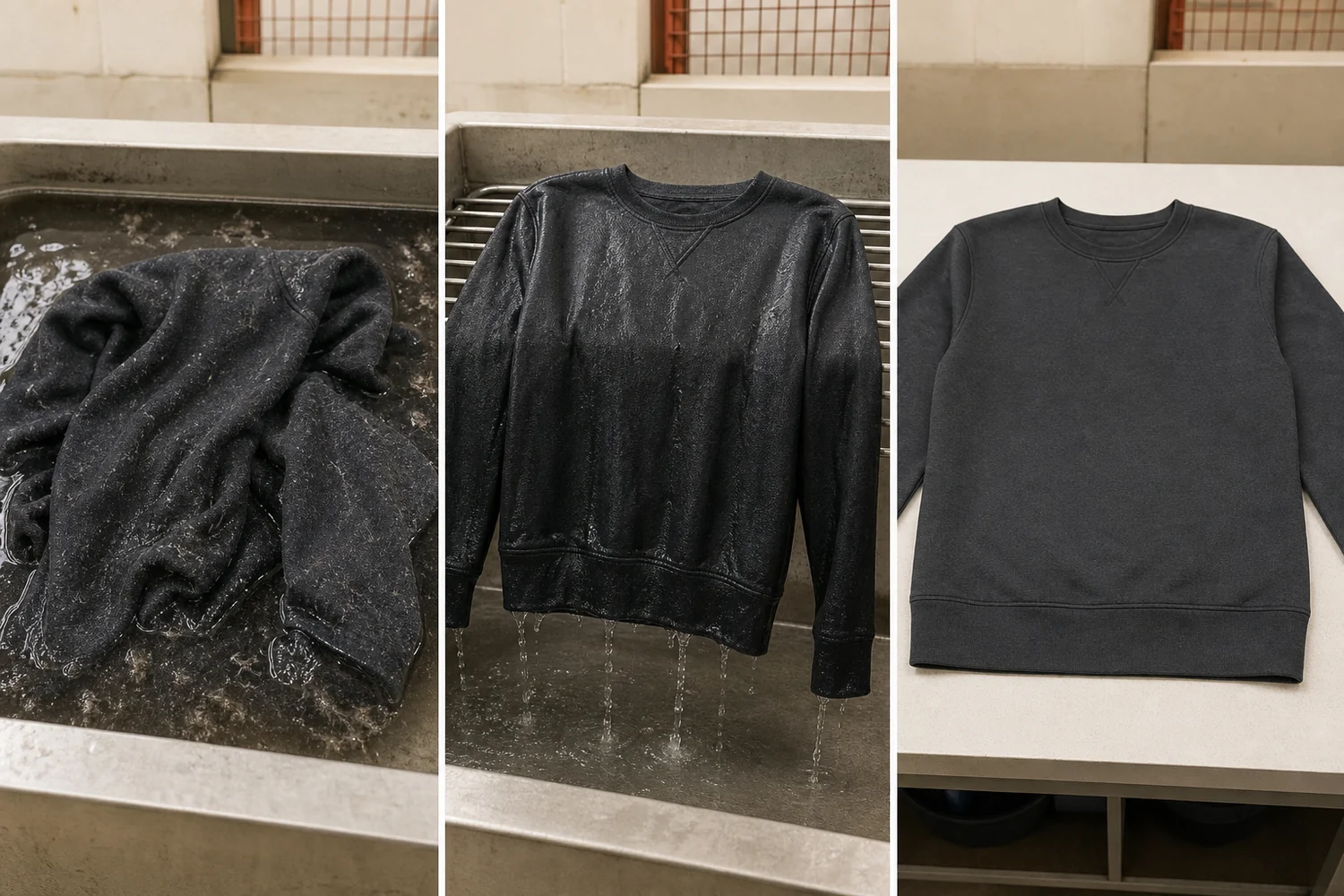
More treatment is not a safety margin. The endpoint includes termination, rinsing and the dried garment result.
The actual supplier or laundry defines the validated stop route; this page publishes no universal stop condition.
Target reached
The wet visual result is near the sealed target but is not yet bulk release.
Action terminated and rinsed
Use the validated system-specific stop and remove loosened material.
Dry, condition and recheck
Approve final effect, dimensions, shape, stress zones, components and required performance.
- Cellulase treatment may weaken material if allowed to continue beyond the intended endpoint, and enzyme action must be deactivated.
- Loading, bath conditions, auxiliaries and rinsing affect detached-material redeposition and backstaining risk.
- Final appearance, dimensions, spirality and stretch response are judged after the applicable complete washing, drying and conditioning route.
GARMENT ANATOMY
Where the garment pays first
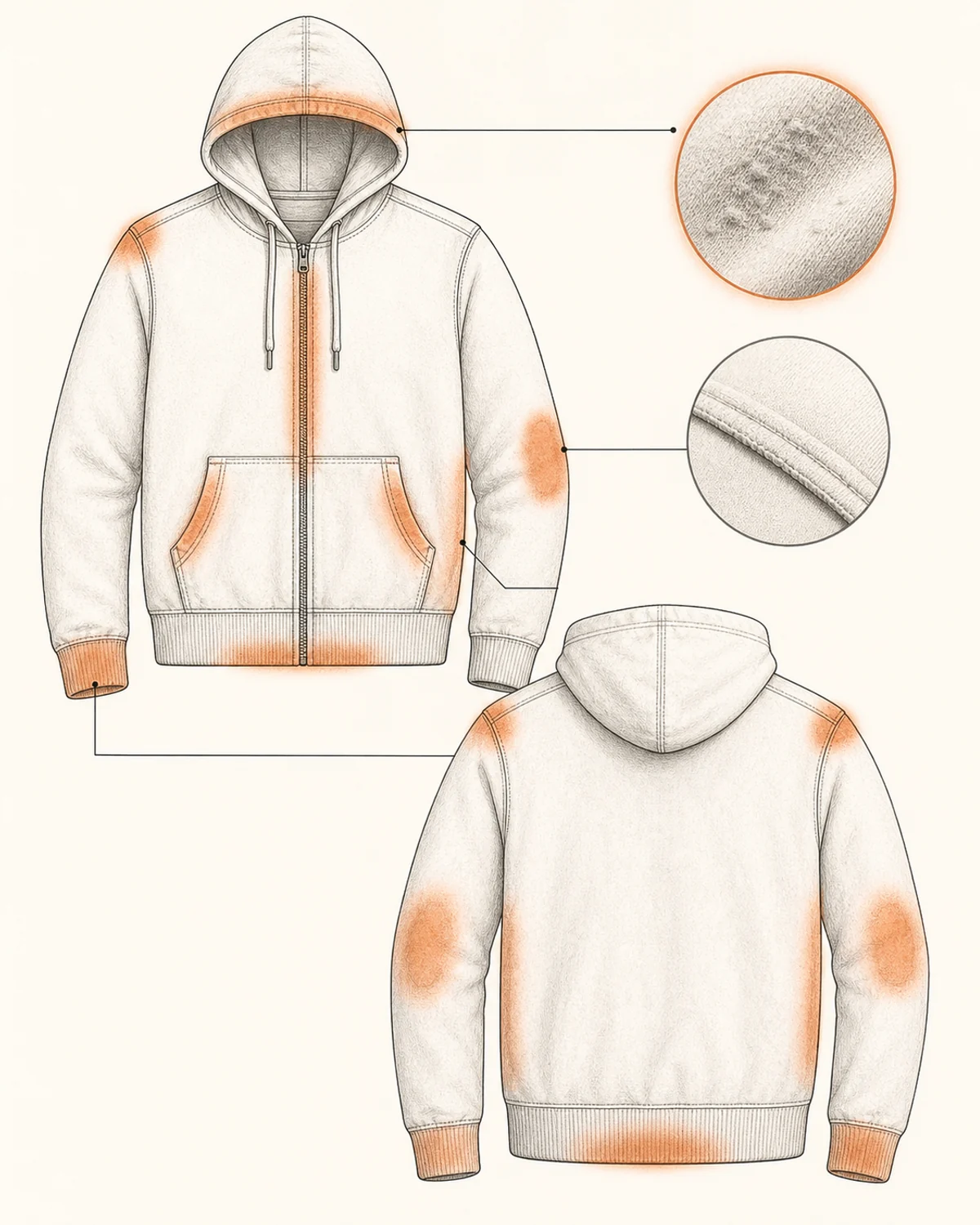
The same zone may gain wanted high/low character or cross into fraying, holes, distortion or component damage.
The final risk ranking belongs to the actual style and complete process.
Seam ridge and topstitch
Approve highlight before seam exposure, break or excessive contrast.
Pocket, belt loop and bartack
Approve construction character before fraying, holes or hardware marks.
Rib, cuff and waistband
Check mismatch, distortion and recovery.
Knee, elbow, seat and underarm
Separate intended movement character from thinning or patches.
Hem, zip, button, rivet and label
Check rolling, twist, abrasion, staining, chipping and label damage.
- Mechanical action and garment construction affect where abrasion and high/low effects concentrate.
- Knit spirality and cotton/spandex shrinkage, width, stretch and recovery require post-process checks where relevant.
TRADE-OFFS
Every surface gain has a control cost
Possible value is conditional on the exact substrate, supplier system, complete garment and approved sample.
Supplier product benefits do not prove a Canton Fashion facility, capability or environmental result.
Cleaner face and lower fuzz
Control the weight and strength margin.
Softer hand
Confirm substrate, severity, afterfinish and drying.
Controlled wash-down
Approve shade distribution, backstaining and edge concentration.
Garment-stage control
Dimensions, trims and decoration share the wet and dry route.
- Cleaner surface and lower fuzz share a mechanism that can also reduce weight or strength when treatment is excessive.
- Enzyme processing can replace or complement some stone-led abrasion, but mechanical action remains and the result is not identical to stone washing.
- Wet-processing environmental performance depends on actual facility water, energy, chemistry, emissions and wastewater controls.
- Usually 100 pcs per style per colour; material or a specific style may change the minimum.
CHOOSE THE MECHANISM
Choose the mechanism, not the mood-board label
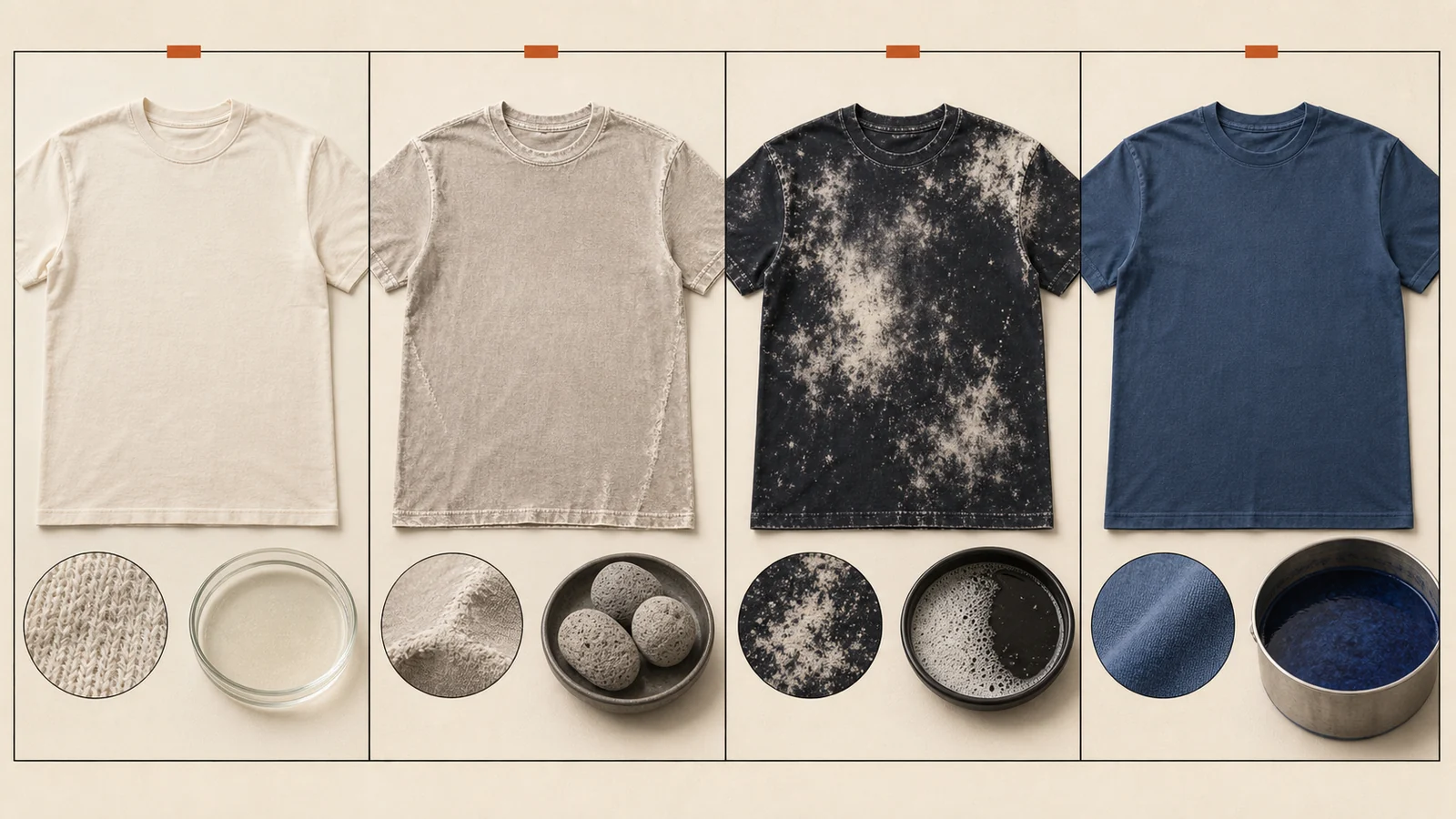
Enzyme, Stone, Snow/Acid and Garment Dyeing solve different primary tasks.
A combined sequence must be specified and approved as a complete route.
Enzyme Wash
Cleaner cellulose surface, lower fuzz or restrained wash-down and high/low.
Stone Wash
Pumice-led irregular mechanical abrasion.
Snow / Acid Wash
Dramatic irregular colour discharge.
Garment Dyeing
New colour applied at garment stage.
- Enzyme Wash modifies an exposed cellulose surface with controlled mechanical action.
- Stone Wash uses pumice-led mechanical abrasion and is not identical to cellulase surface treatment.
- Snow or acid-wash effects are discharge routes with separate chemistry and neutralisation controls.
- Garment Dyeing is a garment-stage colour route rather than cellulose-surface removal.
STYLE FIT
Start with material, then test the complete style
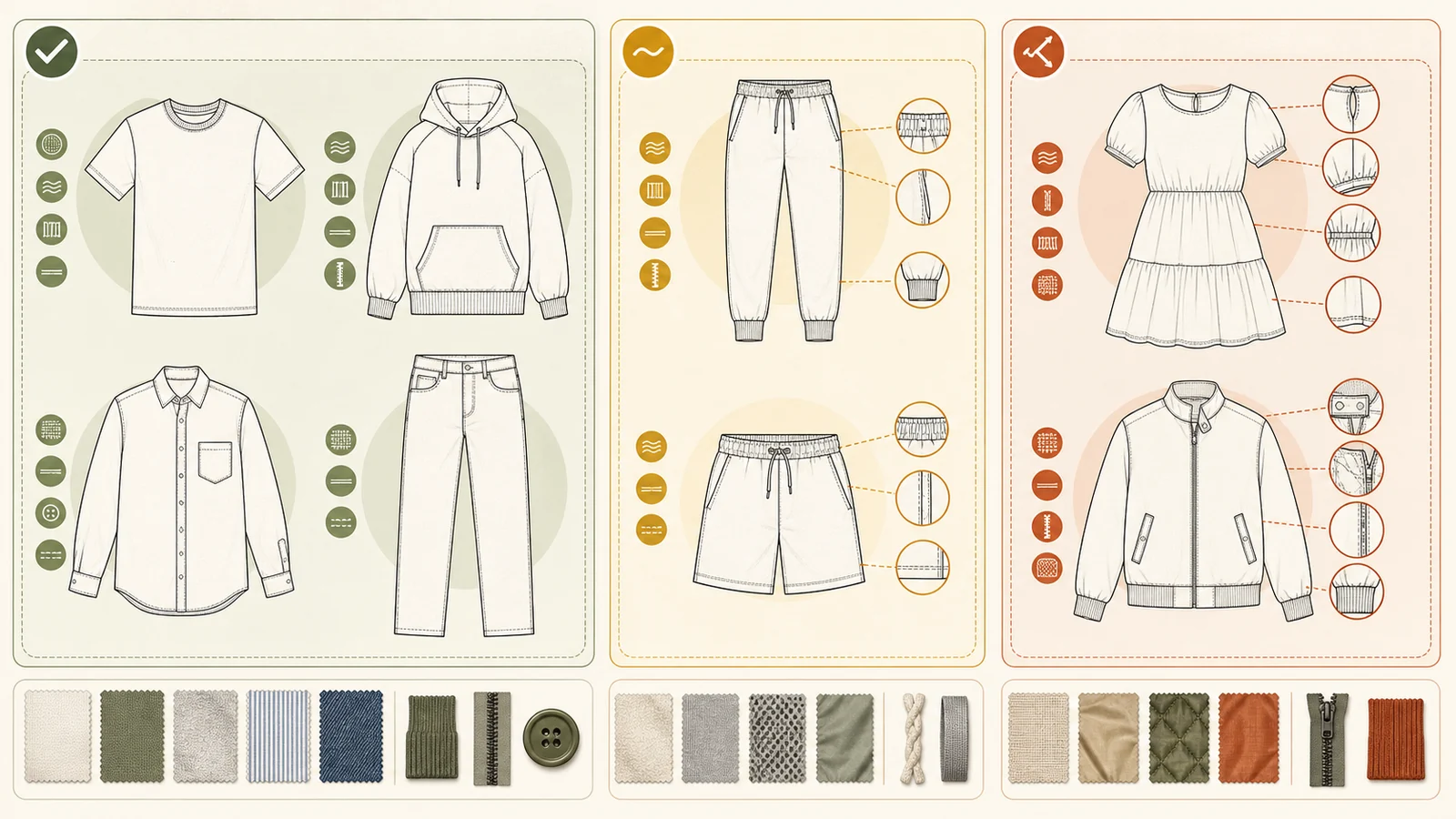
A product name does not prove Enzyme Wash suitability. Review shell, rib, pocketing, elastic, interlining, hardware, labels and decoration together.
All product routes remain conditional until the exact garment passes sampling.
T-shirts and hoodies
Check jersey or fleece surface, neck or body rib, pocket, print order, torque, drawcord or zip and finished measurements.
Pants, joggers and shorts
Check waistband, pocketing, bartacks, fly, hardware, elastic, recovery, knee or seat and inseam.
Shirts and jackets
Check collar, cuff, placket, interlining, lining, zips, pocket bags, thick seams and crispness or structure.
Dresses and MMCF styles
Hold for exact fibre, drape, length, seam, lining, zip and supplier-system trial.
Synthetic or protein-fibre styles
Choose another route unless a defined cellulosic component is the intended target.
- Cotton and cotton-rich garments are stronger starting candidates for cellulase surface treatment than synthetic-only or protein-fibre garments.
- Man-made cellulosic and cotton/spandex garments require exact-substrate or wet/dry recovery trials rather than a copied cotton recipe.
- Every product-to-technique recommendation remains conditional on the approved project compatibility rule and sample result.
SAMPLE TO BULK
Approve the endpoint on the complete garment
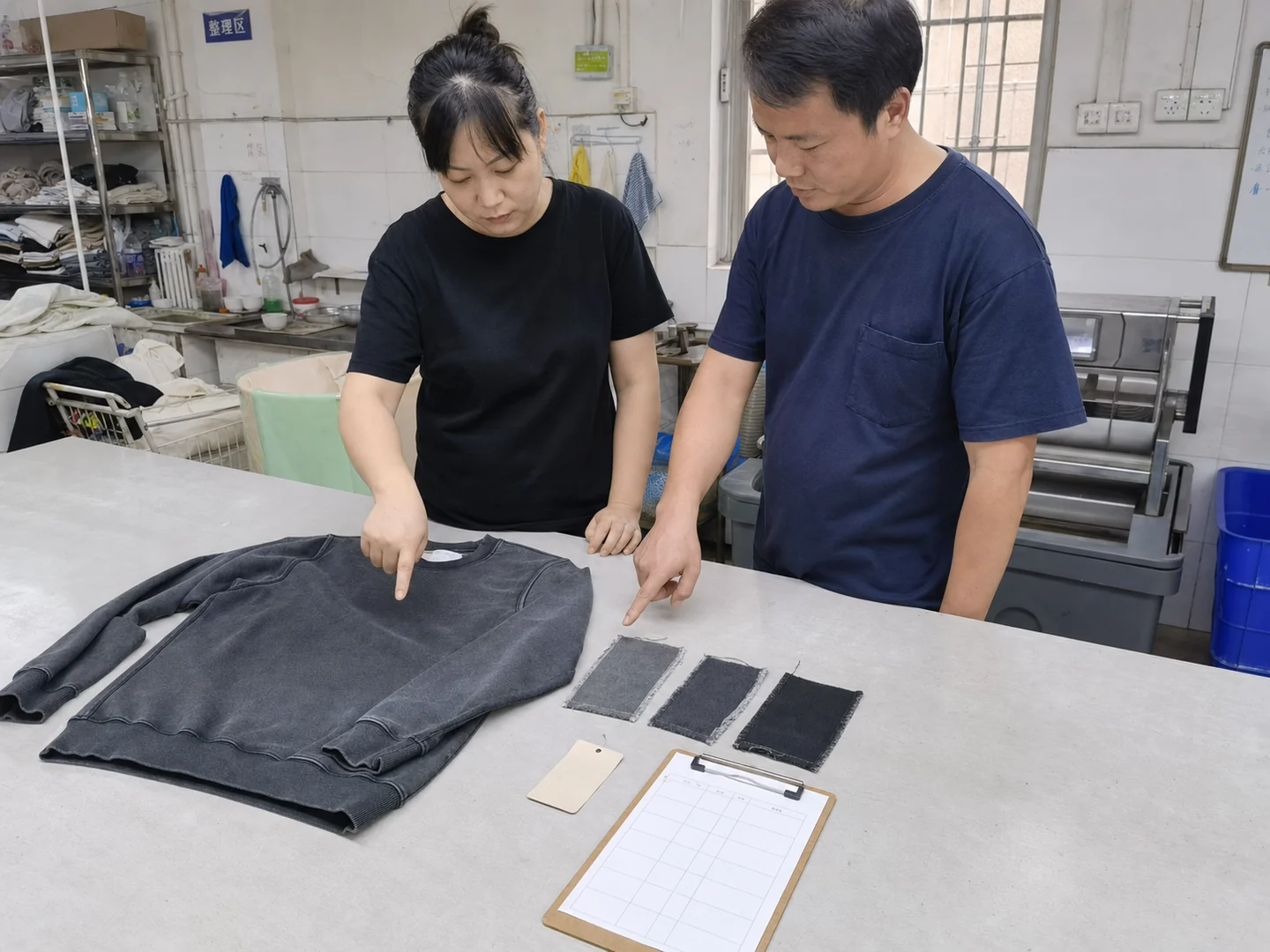
A swatch can isolate surface response but cannot release seams, trims, dimensions or a complete decorated garment.
Record material, colour lot, enzyme identity, bath, equipment, load, stop, rinse, dry, afterfinish, physical reference and agreed checks.
1. Material swatch trial
Learn fibre and surface response without treating it as garment release.
2. Complete garment sample
Include seams, pockets, rib, elastic, labels, hardware and decoration order.
3. Physical effect range
Seal too light, target and too strong or another explicit acceptable band.
4. Representative pilot load
Check movement, distribution, backstaining and the dried result.
5. First bulk-off
Compare production-representative garments before continuation.
6. Lot release
Record effect, shade, dimensions, defects and required test results.
- The exact material, enzyme system, process variables and mechanical action determine the result and must be correlated from sample to production.
- The complete wet and dry route can change cotton/spandex dimensions, width, stretch, recovery and distortion.
- Dimensional change, washing and drying, post-laundering appearance and spirality have applicable ISO method frameworks.
- Product-relevant strength, pilling, colourfastness and pH methods can be selected by buyer specification.
DIAGNOSE BEFORE ADJUSTING
Read the failure before changing the recipe
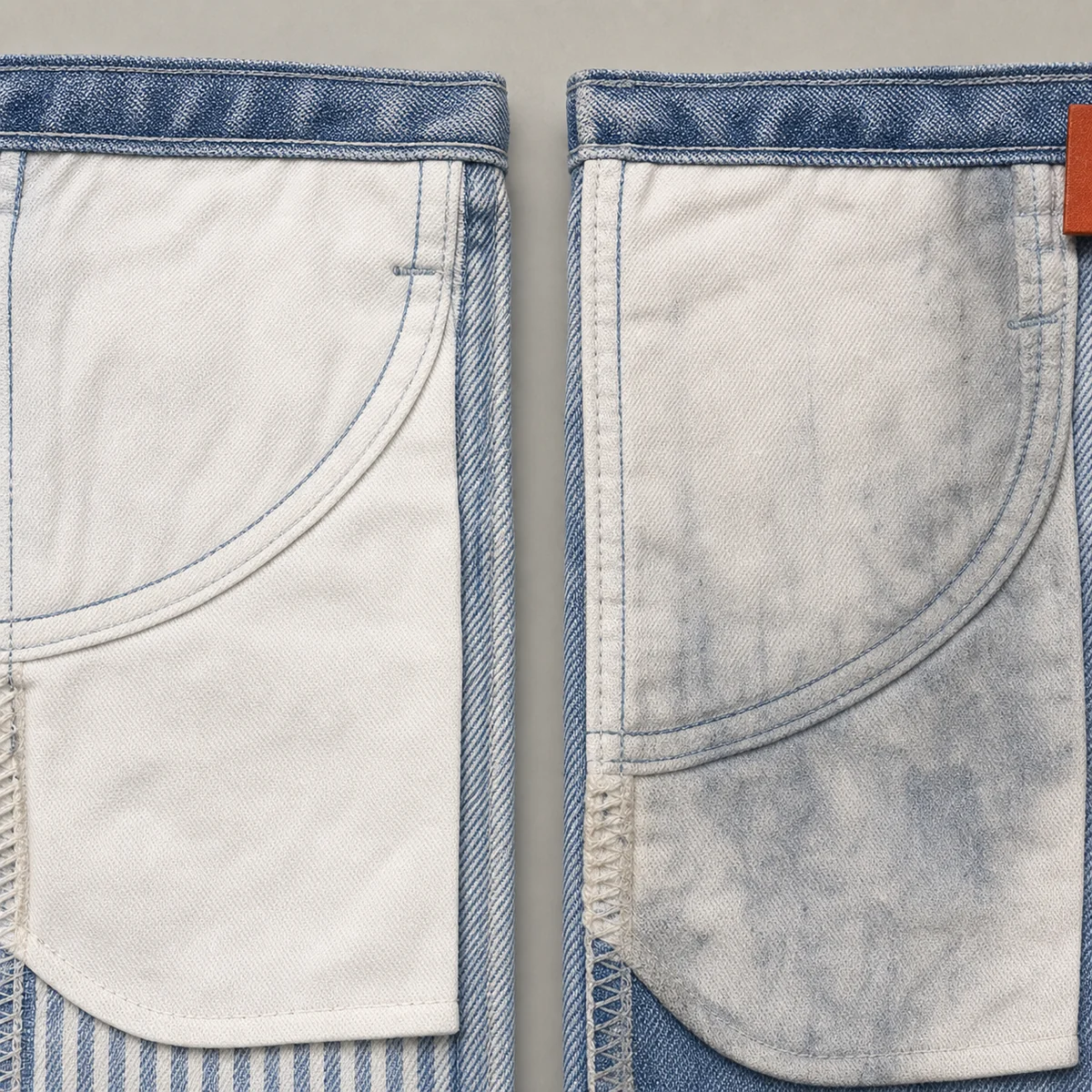
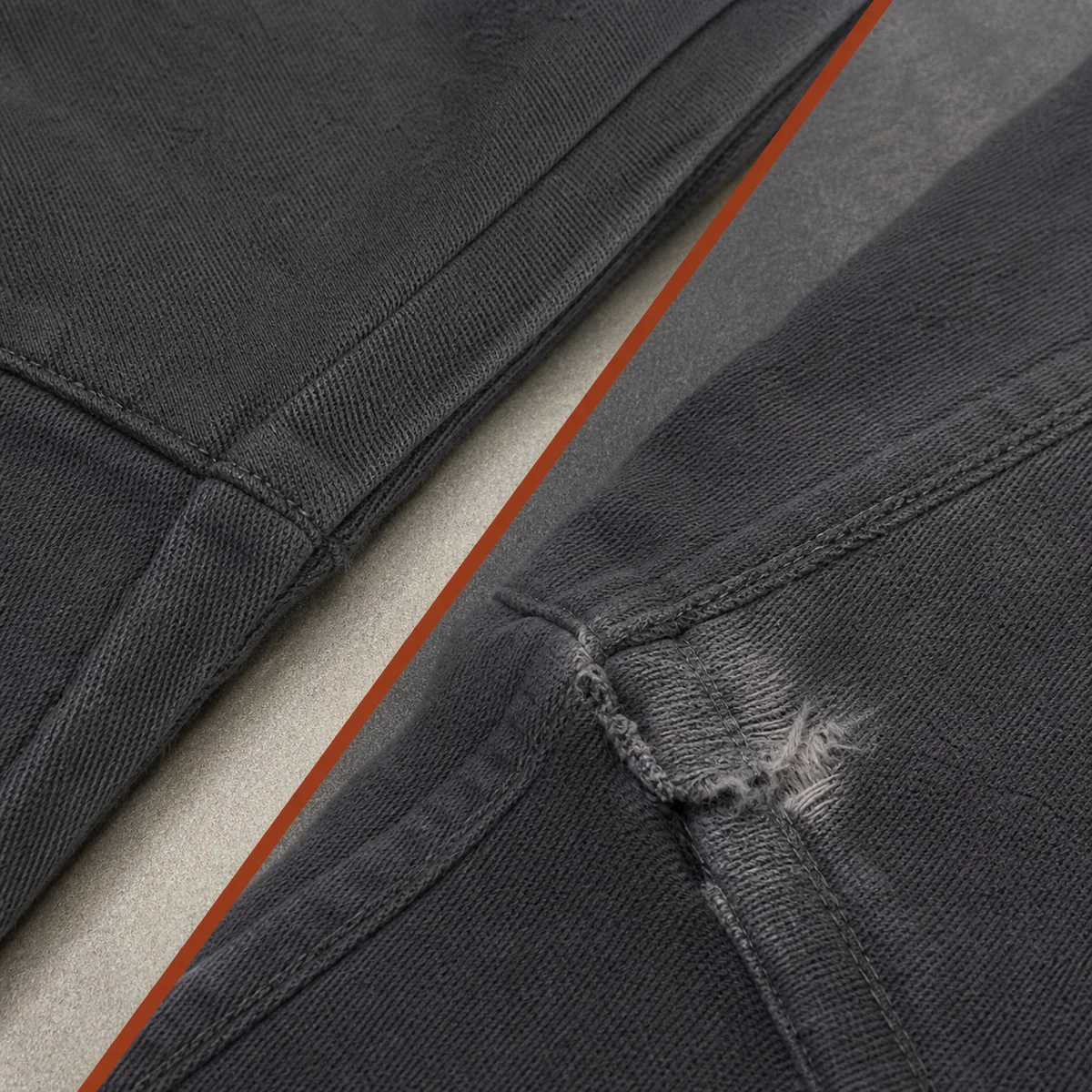
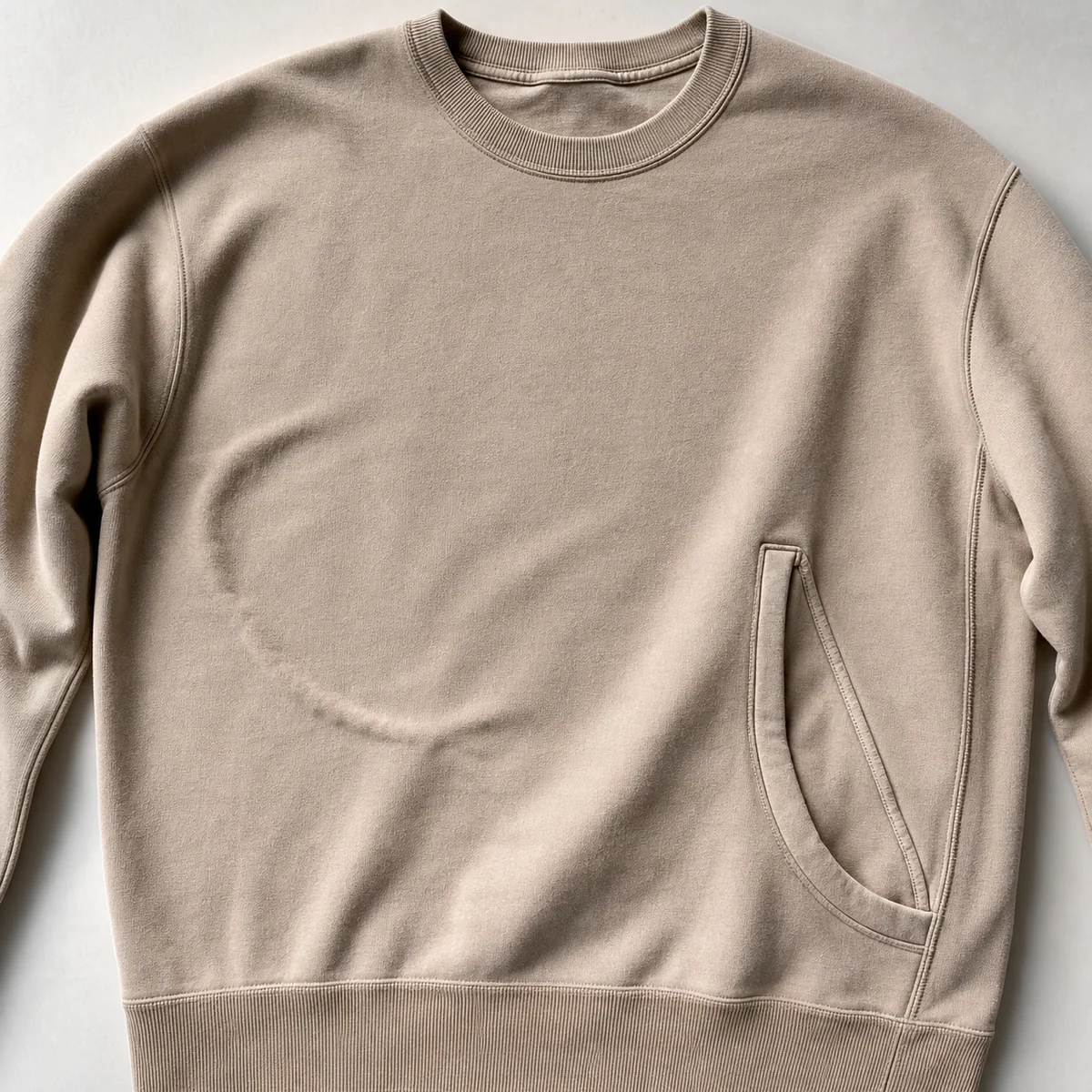
Do not extend time blindly when the effect is weak, and do not sort away a process or material-margin failure.
Generated defect studies explain what to inspect; they are not customer failures or laboratory proof.
Backstaining or dirty light areas
Hold release; review route, load, bath, auxiliaries, drainage and rinsing; resample against an agreed cleanliness boundary.
Overprocessed or weak stress zone
Compare pre/post data and the garment map; reduce severity or change route through a new sample.
Uneven wash, crease or rope mark
Map the pattern across pieces; review representative loading, entanglement, movement and construction; resample.
- Backstaining is affected by detached colour, enzyme route, loading, bath conditions, auxiliaries and rinsing.
- Over-severe cellulase treatment can cause weight loss, strength loss and stress-zone damage.
- Dimensional change, appearance, spirality and cotton/spandex response require the applicable complete washing and drying assessment.
- Laundering fastness, rubbing fastness and aqueous-extract pH can be checked by agreed ISO method frameworks.
RELEASE RECORD
Release the dried garment, not the bath impression
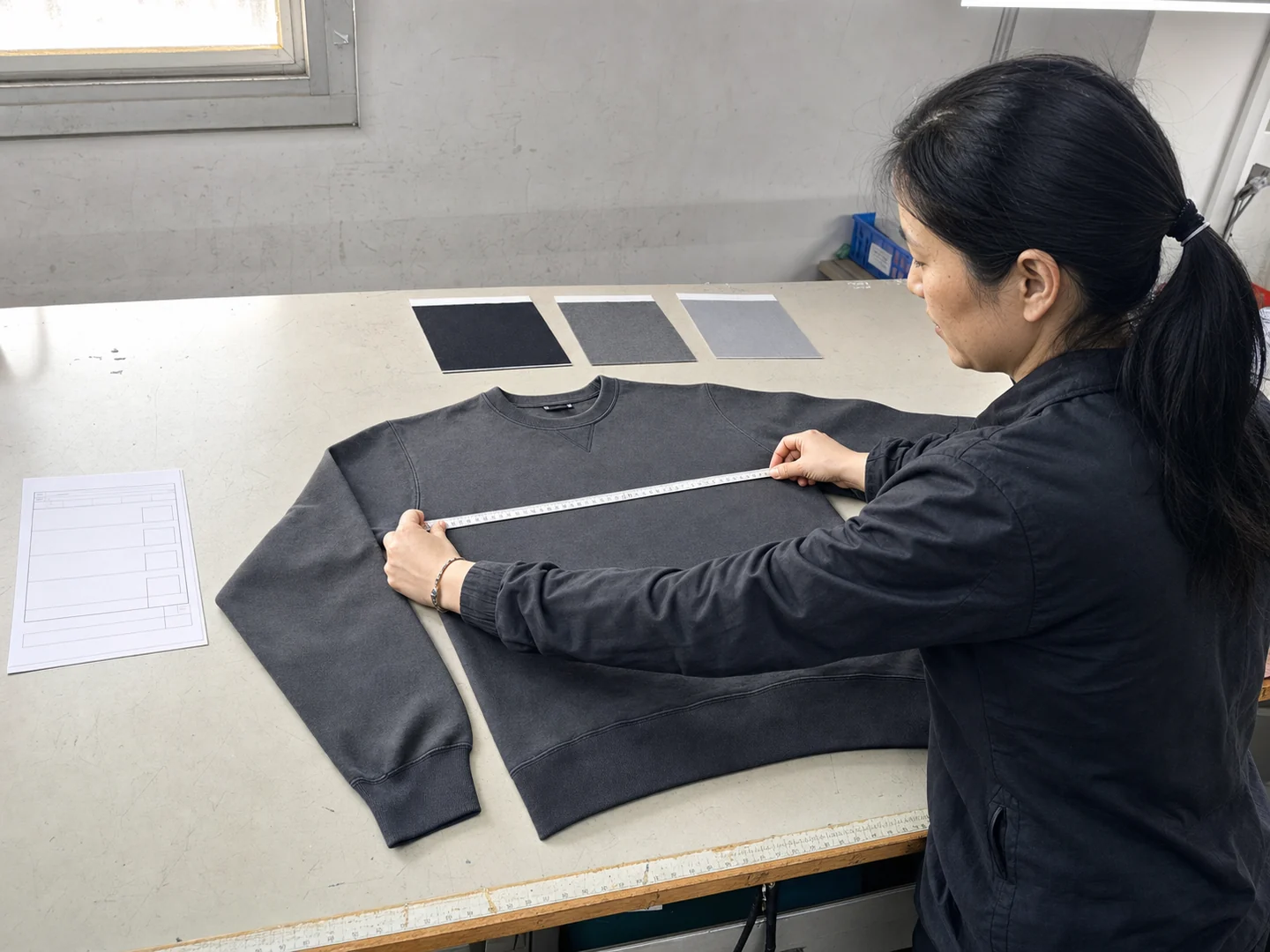
Agree the method, conditioning, sample size, frequency and pass value for the actual product.
The page names method frameworks but does not invent grades, tolerances or reports.
Visual effect
Sealed garment and range, lighting, all garment zones, surface, cleanliness, crease, holes, seams, trims and decoration.
Finished dimensions and shape
Conditioning, pre/post measurements, dimensional change, spirality or torque and stretch or recovery where relevant.
Product-relevant performance
Select strength, pilling, fastness, pH and buyer-specific checks by material, end use, market and specification.
- ISO 5077 and ISO 6330 provide frameworks for dimensional-change measurement and specified washing and drying procedures.
- ISO 15487 and ISO 16322-3 provide frameworks for post-laundering appearance and garment spirality or torque.
- Relevant tensile, tear, pilling, laundering-fastness, rubbing-fastness and textile-pH methods can be chosen for the actual product risk.
- Cotton/spandex processing history can affect shrinkage, width, stretch, recovery and distortion.
BUYER FAQ
Enzyme Wash questions buyers should close before sampling
Every answer is conditional on the actual substrate, garment and supplier route.
FAQ structured data is permitted only when the same complete questions and answers are visibly rendered.
What is an enzyme wash?01
A cellulase-based surface treatment followed by termination, rinsing, drying and inspection; the actual result depends on the garment.
Is it only for denim?02
No. Other identified cellulosic garments can be candidates, subject to exact-material and complete-style trials.
Does it work on polyester?03
Cellulase targets cellulose. A synthetic-only base needs another route.
Can viscose, modal or lyocell be treated?04
Possibly, with a substrate-specific system and exact-garment trial; do not copy a cotton route.
Will the colour always fade?05
No. A light route may focus on surface fuzz and hand; colour response depends on material, dye and severity.
Is it the same as Stone Wash?06
No. Stone Wash is pumice-led abrasion, though specified routes can combine mechanisms.
Is it the same as Snow / Acid Wash?07
No. Snow and acid-wash effects are discharge routes with separate chemistry and neutralisation controls.
Is it the same as Garment Dyeing?08
No. Garment Dyeing adds colour at garment stage; Enzyme Wash controls an existing cellulose surface.
Does it mean no abrasion?09
No. Mechanical action helps remove loosened cellulose and creates construction-specific risk.
Can it weaken fabric?10
Yes, if severity crosses the material margin; approve the physical endpoint and relevant checks.
Can stretch garments be processed?11
Sometimes, after exact cotton/elastane construction, wet/dry dimensions, recovery and shape are approved.
What is backstaining?12
Detached colour-bearing material redeposits on lighter yarns or components.
What should be approved before bulk?13
The complete dried garment, effect range, stress zones, dimensions, component condition and agreed test results.
What is the MOQ?14
Usually 100 pcs per style per colour; material or a specific style may change the minimum.
Is the process automatically sustainable?15
No. Ask for actual product, bath, water, energy, chemical, wastewater and facility evidence.
- Enzyme Wash here means a cellulase-based garment wet treatment that removes exposed cellulose, followed by termination, rinsing, drying and inspection.
- Cotton jersey, fleece, twill and other identified cellulosics may be candidates; the technique is not limited to denim.
- Cellulase does not target polyester, while cotton in a blend may show a different response from its synthetic share.
- Viscose, modal and lyocell require exact-substrate supplier systems and trials rather than automatic transfer of a cotton route.
SEND A COMPLETE BRIEF
Send the garment, surface target and approval limits together

If fibre or finish is unknown, send the material information first. A complete garment sample is required before bulk approval.
The live form must preserve input after errors, show understandable success or failure, use a real backend and pass privacy, anti-spam and delivery checks.
Garment and material
Product category, tech pack, fibre percentages, construction, weight, yarn or surface, stretch, base colour, dye route and finish history.
Surface target
Clean biopolish, controlled wash-down or construction high/low, plus a physical target and acceptable range.
Complete style
Seams, pockets, rib, elastic, drawcord, interlining, labels, zips, buttons, hardware, decoration and operation order.
Commercial and approval
Sizes, colours, quantities, pre-wash and finished tolerances, required tests, destination market, sample date and bulk window.
- Fibre, substrate, colour, construction, process window, complete sample and agreed QC inputs are required to define a defensible Enzyme Wash route.
- Industrial enzyme review requires the supplier SDS and exposure controls because respiratory sensitisation is a key occupational-health concern.
- Usually 100 pcs per style per colour; material or a specific style may change the minimum.
- Technique fit remains conditional on the approved full material, colour, stretch, structure, design, quantity, heat or wash and sample rule.