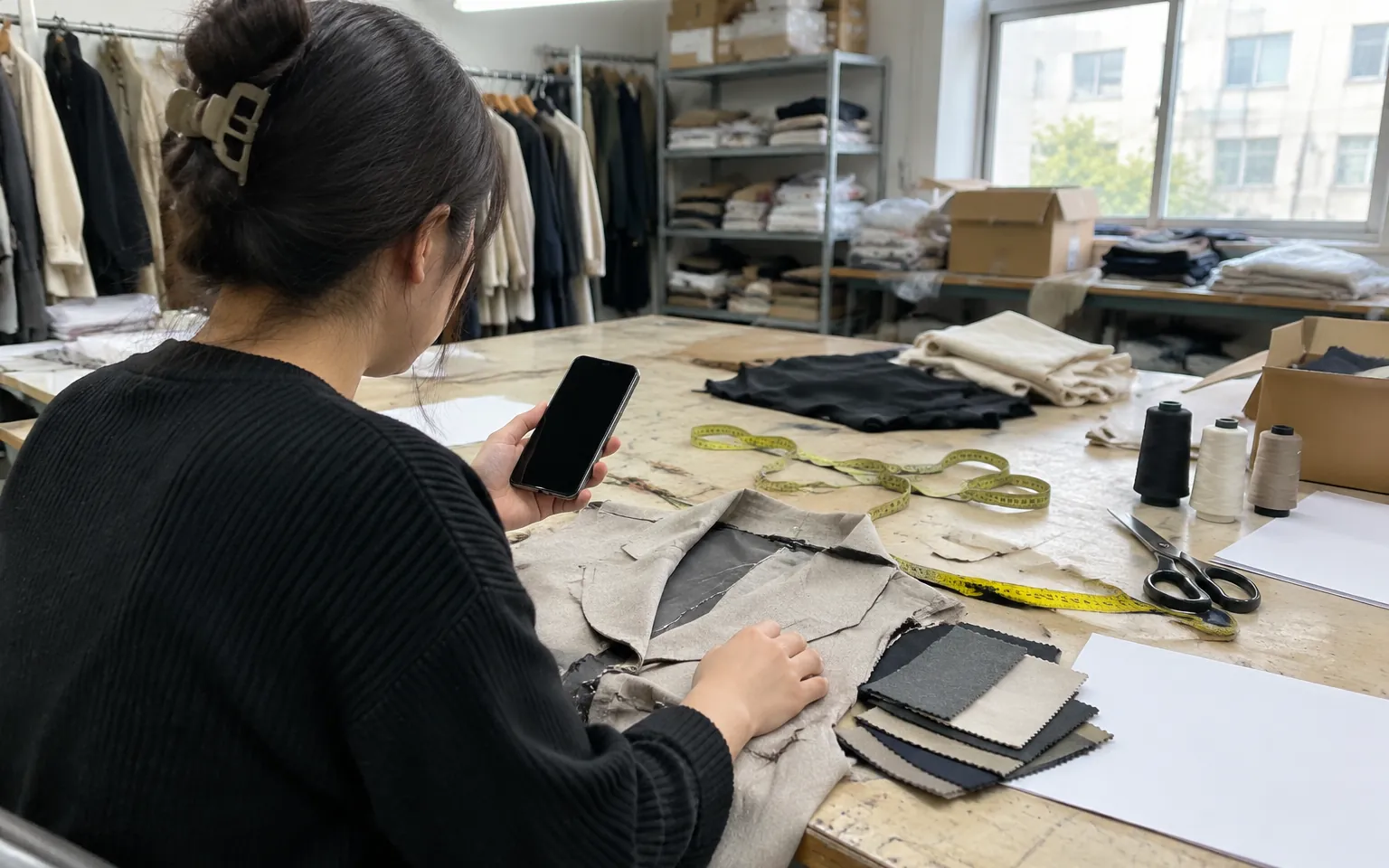
What Should I Ask a Clothing Supplier in the First Contact?
Ask about product fit, MOQ, sampling and quotation requirements.
Give the supplier your purchasing background before asking for answers. Include the garment you want to make, reference images or a technical pack, your intended quantity, material requirements and expected launch date. If you are planning 100 pieces, say so at the start. If you have not chosen a fabric or finished the technical pack, explain what you know and where you need advice.
Then establish whether the supplier can make that particular garment and accept your intended quantity. Canton Fashion’s usual minimum order quantity is 100 units. We can discuss special quantity requirements, but we will not accept every requested quantity. Ask for examples of relevant work so you can assess the supplier’s experience with your style, decoration and intended quality level.
Next, ask what information is still needed for a quotation and how sampling would be arranged. Canton Fashion’s sample fees usually range from $50 to $150 per piece, depending on the style, and sampling generally takes 7–14 days. Use those numbers to decide whether to proceed. A request for the lowest price, without a defined garment, leaves the supplier guessing about what you actually want priced.
Which Supplier Questions Can I Remove, and Which Should I Keep Asking?
Keep questions that affect your buying decision; remove unrelated or repeated ones.
From our supplier side, a long questionnaire creates a problem when most questions have no connection to the proposed garment. It can make the buyer seem difficult to communicate with and reveal gaps in their understanding of the project. Consider an inquiry requesting prices for 50, 100, 250, 500 and 1,000 pieces, plus a general price list, before specifying the style, fabric or decoration. The supplier has five quantities to consider but no clear product to quote. Begin with the quantity you actually intend to buy and ask what specifications are needed to price it.
Use the edits below to keep, combine, rewrite or move questions. The wording is a suggestion you can adapt to your project. Each question should help you decide what to do with your proposed 100-piece order.
| Question or request | Action | Suggested replacement |
|---|---|---|
| Ability to make your garment, accept your quantity and arrange samples | Keep | Can you make this style in our intended quantity, and what are the sample fee and timing? |
| Examples of previous work | Keep and narrow | Can you show examples relevant to this garment, decoration and intended quality level? |
| Five quantity-based prices, a general price list and a question about quantity discounts | Combine and rewrite | What information do you need to quote our intended trial quantity? |
| All available fabrics, colours, embroidery, printing, buttons, zips and hardware | Rewrite | Can you achieve the result shown in our references, and what details do you need? |
| Product categories or services already clearly explained on the website | Remove the repeated question | Ask only if something is still unclear about your garment and quantity. |
| General bulk lead time and whether quantity affects it | Combine | What production timing applies to our quantity and fabric plan, considering our intended launch? |
| Packaging requirements | Raise early and confirm with the order | Can you accommodate our packaging requirements, and what artwork needs approval when we place the order? |
Quantity comparisons only help once you have a defined product and a real purchasing decision. If you genuinely plan to compare a 100-piece trial with a 500-piece repeat order, ask for those two quantities under the same specifications. Combine the question about volume discounts with that request. A list of every possible quantity just creates extra back-and-forth when you will not order most of them.
Use the same approach for materials and production timing. Give the garment reference and the fabric, colour, logo and trim requirements you already know; ask for recommendations where you are undecided. For example, a suggested question is: “What production schedule would apply to our 100-piece order with this fabric and logo?” Do not substitute the 7–14-day sampling period for an unconfirmed bulk production schedule. Website information can answer general questions, but keep asking when it does not establish whether your own project fits. If sample approval, payment, inspection or packaging is still unclear, ask again.
Which Missed or Late Questions Have Caused Real Order Problems?
Missed or late confirmations of the final logo file and sample, inspection requirements, and packaging or custom bags have caused real order problems.
- A buyer pushed for bulk production before confirming the sample. The logo version used on the garments did not match the final design file. It also differed from the brand logo displayed on the buyer’s website, affecting how consistent the branding looked to consumers. This was a problem with the approved design version, rather than a garment quality issue. Before moving into bulk production, confirm the final logo file and the sample that uses it.
- Another buyer had not agreed the inspection requirements before placing the order. At final inspection, the buyer raised very detailed objections to things most people would not regard as defects in ordinary consumer garments. In our assessment, that shipment could have passed under AQL 2.5 and 4.0, but the buyer expected a different level of acceptance. The disagreement over standards meant we could not ship the goods. Agree the intended quality level, defect criteria and inspection standard when placing the order, rather than leaving those decisions until final inspection.
- A buyer waited until the order was about to ship to request custom zipper bags. Producing those bags required approximately 3–4 weeks, which the remaining schedule could not accommodate. The buyer had to switch to ordinary transparent bags without a logo. The garments’ packaging therefore differed from the presentation the buyer had wanted. Confirm packaging, hangtags and other accessory artwork when you place the order, so we can include their production time in the schedule.
How Do I Move From the First Conversation to an Approved Sample?
Confirm project fit, agree what the sample must show, then approve it in writing.
Before sampling, agree the garment information, material requirements and logo version the supplier will use. Confirm the sample charge and the sampling period for your project. At Canton Fashion, the usual range is $50–$150 per sample, with sampling generally taking 7–14 days. T-shirts and hoodies tend to sit toward the less expensive end, while suits and shirts tend to cost more. Those figures describe sampling; ask separately about the production schedule for your actual order.
When the sample arrives, check it against what you asked for: fit, material, logo placement and any packaging or accessory artwork you want to see. Write down every change and get the revised version approved before you talk about production. A clear, written sample approval keeps the later order paperwork short, because the order can simply refer to the approved sample.
This article only covers the questions to ask early. Order paperwork, supplier selection, fabric costs and inspection methods are separate decisions. Continue with the full procurement guide and related articles when you need to work through those wider decisions.
How Can I Send Canton Fashion an Inquiry That Moves My Project Forward?
Send project details and the questions you need answered next.
You do not need to know every garment production term before contacting Canton Fashion. You do need to explain what you are trying to make and what is still undecided. Our usual MOQ is 100 units, so include your intended quantity and flag any different requirement for discussion. This lets us assess the project rather than work through a general questionnaire without knowing the garment.
Include these details in your inquiry:
- Style references or a technical pack, if available.
- Intended order quantity.
- Fabric requirements, or the result you want help achieving.
- Logo, decoration, colour and trim requirements.
- Target market and intended launch or delivery timing.
- Packaging needs and any inspection requirements you already have.
- Items you have not decided and would like help with.
For a 100-piece order, try wording like this: Adapt it to your actual project and only mention attachments you are sending. Include your real timing and specifications alongside it.
We are planning a first order of 100 pieces. The attached references show our intended style, and we have included the material and logo requirements we currently know. Please tell us whether this project fits your production, what information you still need for a quote, and the sample fee and timing. We would also like to confirm the production schedule for our intended launch.
Keep packaging and inspection in the conversation if they affect your purchasing decision or launch plans. A requirement for a custom bag taking 3–4 weeks belongs in the order planning, even if the garment itself is ready sooner. If a reply leaves an important requirement unresolved, ask a focused follow-up. A shorter inquiry gets you to clear answers faster. Keep the checks your order needs.
Contact Canton Fashion through the inquiry option or the WhatsApp button on this page. We generally respond within 1 working day. Share your garment references, intended quantity and current questions so we can discuss whether the project fits and what is needed for quotation and sampling.
Frequently Asked Questions
What is Canton Fashion's usual minimum order quantity, and can I start with 100 pieces?
Canton Fashion's usual minimum order quantity is 100 units, so a 100-piece trial order can be discussed. Special quantity requirements can be discussed, but not every requested quantity will be accepted.
How much are sample fees and how long does sampling usually take?
Sample fees usually range from $50 to $150 per piece, and sampling generally takes 7–14 days. T-shirts and hoodies tend to sit toward the less expensive end, while suits and shirts tend to cost more.
When should I confirm packaging and custom bags to avoid schedule problems?
Confirm packaging, hangtags and other accessory artwork when you place the order so their production time can be included in the schedule. In one case, custom zipper bags required approximately 3–4 weeks, and the remaining schedule could not accommodate them.
What inspection terms should I agree before placing an order?
Agree the intended quality level, defect criteria and inspection standard when placing the order, not at final inspection. In one case, a shipment could have passed under AQL 2.5 and 4.0, but the buyer expected a different level of acceptance, so the goods could not ship.